Thursday, May 08, 2008

Marriage Bondage

An engagement too long
is an expectation too much
Unfulfilled, Empty, Blank

Joy it is
of presence and discovery
But attention always
is on the culmination

A seed sown
watered with tears,
has sprouted,
but awaits flowering

Freedom hurts!
This knowledge is ignorance
This bondage is liberation

Tuesday, April 22, 2008

Candle Glows


You are the glow
who has set on fire,
the thread
running through this frame

The glow in this candle
of radiance and joy
is not coz its feasting on darkness
but because its burning itself out

This combustion is the tapasya
of this frame
As it rises as smoke
and dissolves in the void.

Some transformations
are the end of form
Some beginnings
are the end of endings.

Some lives are lived to live
Some lives are lived to die
Few, just to turn alive

Oh Life, How Long!

Sunday, March 30, 2008

Shiva Shiva Shankar Adi Deva

Even though fabric of Indian music in the northern part of Indian got hued with Persian colours, owing to Islamic invasion, a style of rendition called Dhrupad survived this onslaught. Rooted in Samveda , Dhrupad uses minimum letters and its probably the most difficult style to sing and appreciate. Orthodox in its nature, there are few experiments allowed in dhrupad unlike its popular counterpart khayal.

A rendition by gundecha brothers


and while we enjoy Dhrupad another gem from Indian orthodoxy, a Thillana by BMK the mahanubhav ! the champion !

Saturday, March 29, 2008

tere naina talaash karein jise


चुनरी में कोई दाग नहीं
चुनरी भी नहीं
कोई घर भी नहीं
कहीं जाना भी नहीं
अब क्या ? फिर क्या ?

Friday, February 22, 2008

Hansadhwani -Laagi Lagan

This is my fav raga. I was told, it was inducted into Hindustani style by Ustad Amir Khan(?). This is a very popular raga in carnatic style.

here is an excellent rendition by Ustad Ghulam mustafa khan saab

Another good rendition of this compostion is by Ajoy Chakravarthy.

Those who know carnatic would like to compare it with Vatapi Ganaptim, best sung IMHO by Maharapuram Santhanam.

Table


Element Sense Chakra Colour Direction Planet
Prithvi Smell Mooladhara Red Mercury
Jal Taste Swadhisthana Orange West Moon,Venus
Agni Vision Manipoora Yellow South West Sun, Mars
Vayu Touch Anahata Green North West Saturn
Akasha Hearing Vishuddha Blue North East Jupiter

Saturday, February 16, 2008

Love and its usage

Love is just a label that you attach to a human reaction.
In reality you respond uniquely to every moment.This response is dependent on your state of consciousness, means your awareness -- your intelligence, your accumulated past impressions, your worries your tensions your frustrations and your expectations from this moment.

As long as u understand this and realize its just a label, a utility that u call love, its fine.

Its for purpose of pointing to a unique feeling.

You dont love your wife ! or mother or brother or father. In reality you undergo all emotions , love, hate, detachment, sympathy with the same person at different instances of time.

While verbalizing, You just stitch these responses together and give it this name, Love. All of this is socially conditioned.

Monday, February 11, 2008

dohe

मन मे रखूं तो मोरा मन जले
कहूँ तो मुख जल जाए
जैसे गूंगे को सपना भयो
समझ समझ पछताए

पीतम हम तुम एक हैं
कहन सुनन में दो
मन को मन से तोलिए
दो मन कभी न होय

Sunday, February 10, 2008

Wounds

Some wounds are nursed
not to be healed
but to suffer

For sometimes
with the end of suffering
the sufferer also ends

And those times mark
the beginning of an ending

Saturday, February 09, 2008

Ramana Speaks-2

Absence of thoughts does not mean a blank. There must be one to know the blank.
Knowledge and ignorance are of the mind. They are born of duality. But the Self is beyond knowledge and ignorance. It is light itself. There is no necessity to see the Self with another Self.

Wednesday, February 06, 2008

Bhaja Govindam

---------------This post will be updated soon ----------------

There are two version of Bhaja Govindam that i have read, one is the south indian one rendered by MSS, the other is available in the gita press works, as Charpat Panjakrika strotam. Both are similar with minor differences.

here are my fav verses from the chant


नलिनी दलगत जल मति तरलम
तद वज्जीवितम अतिशय चपलम
विद्धि व्याध्य अभिमाना ग्रसतम
लोकं शोकहतम च समस्तं

काते कांता कस्ते पुत्रः
संसारो यमतीव विचित्र:
कस्य त्वं क: कुत आयातः
तत्त्वं चिन्तया तदिह भ्रातः

सत्संगत्वे निस्संगत्वं
निस्संगत्वे निर्मोहत्वं,
निर्मोहत्वे निश्चलतत्वं
निश्चलतत्वे जीवनमुक्तिः

वयासिगते कः काम विकारः
शुष्के नीरे क: कासारः
क्षीणे वित्ते क: परिवार:
ज्ञाते तत्त्वे कः संसार


भजगोविन्दम भजगोविन्दम
गोविन्दम भजमूढ़मते
संप्राप्ते सन्निहिते काले
नही नही रक्षति डुंक्रुजकरणे

Sunday, February 03, 2008

QnA-4

Q:What is moksha?

It is freedom.

Q: Freedom what kind of freedom, freedom from this endless cycle lives?

I cant say about that. In my own way we live many lives in this one life itself. Think about this. Every life situation which occupies you emotionally is a new life in that sense, and you go on entering them, hunting for pleasure, trying to eradicate pain and all this business goes on and on. In the process you accumulate, memories of struggle-pain-joy etc. All these are our multiple lives in this one life.

Freedom then is nothing but freedom from this. Freedom from creating these multiple lives. This realization, that life is not a life situation is Moksha. Your life is not a victim of circumstances. Your life is not a victim of an outer scenario, job, wealth, prestige, relationship, adventure, excitement and all what you think is important. Unfortunately one doesn’t understand this early.

One has his own logic of life and is governed by these life situations, trying to improve on them or running away from them, unless Life (note personification) itself shakes his body and says, Enough ! Your falling hair, your wrinkles, your debilitating health with age, is life’s own way of telling you, Enough! Enough of trying to change life situations. Life situation is not life. But who understands this?

Q: I Do, in a way I do, I realize that there is something beyond all this madness of survival, accumulation, ego and all. But then again I don’t understand some things, I am sure life is not this, then what is Life ?
A: Aah!!, the answer has the question, holding on with your reason and using this method not this, not this not this, has the answer. Just like when u strike out all whats not real, what will remain is real. This is the famed neti neti neti technique.

Now


Now that you are here
Now that we are near
Why cant I see you ?

Will this strife
End with my life ?

Sunday, January 27, 2008

Birth

what should I do?
To finish this
and be through

Let me die a death
before I turn dead

So that i wake into life
while i am alive

and be born anew
a new birth

Wednesday, January 09, 2008

UG speaks

All the questions are born out of the answers you already have.
If you dont have any answers, there are no questions. As I very often emphasize, over emphasize this,You are not interested in answers at all. I am not giving any answers at all. No body is giving any answers.

What you are interested in is to get an answer to maintain the continuity of the answers you already have. Other wise there wont be any question answer.

Actually if there is any answer, the answer, puts an end to the questions you are asking. The fact that you are asking questions again and again means that, that is not the answer.

The questioner and question are one and the same. There is no questioner who is asking the questions. So if the question comes to an end, the questioner automatically comes to an end. The questioner is the answer. All the questions are variation of the same question. If one question come to an end the questioner comes to an end. You want to keep the questioner going.
-UG

Tuesday, January 08, 2008

QnA-3

Whats new about new year?

The new and old are both, dimensions of change(time). Since change is movement, hence both are relative, the new is here to become old, the old was once new.

Between the new and the old lies the present and the present is defined by presence. This presence is consciousness. This presence brings in observer. This presence is alive. This presence is the zone where everything happens. This is the only thing which has existential value. Your new year has a social value; it’s a new calendar a new financial milestone, may be, but it has no existential value.

Our awareness unfortunately is never here(present), our awareness is never in sensing , our awareness is mostly in our minds, in thought patterns which are either remembrance(mostly guilt) or future (fear and expectation). That’s how we are missing life. This is a problem and also an opportunity, to see that unchanging self which is the spectator of this new-old drama.

What then you mean is, there is no reason to celebrate New? No reason to party?

Its your choice entirely. To react the way you want. Party or not party. Think why do you want to party? Perhaps we want to escape our emptiness and deep under we are craving for some completeness which we think we can find by putting parts together. That’s party for you, adding human beings together thinking that parts will make full. This search for full, is the search for fulfillment. But it never happens, party’s happen, parts come together but we never feel fulfilled. This is because parts themselves are empty, how can they form a full? Can many zeros be added to get a one?

Nanak says Ek Omkar Satnam. Means just add that one. That one is full. Any incompleteness added to that full is still complete. This is the key to fulfillment. This is the novelty.

While the world celebrates change, I wish you stillness, For Truth is stillness (Sat Sri Akaal-- Truth is time less)

Tuesday, January 01, 2008

Eternal Thirst

tears roll down the cheeks
onto the parched lips

a thirst of million years
can it be quenched by drinking tears ?

i am near the ocean
Resounding waves tell me

Should i drink or drown ?

Jhoom Le Hans Bol Le Pyaari Agar hai Jindagi

झूम ले हंस बोल ले प्यारी अगर है ज़िंदगी
साँस के बस एक झोंके का सफर है ज़िंदगी

देर ही बनते बिगड़ते कुछ इसे लगती नही
फूल की दीवार पर शबनम का घर है ज़िंदगी

साँस के बस एक झोंके का सफर है ज़िंदगी

अजनबी हालात से भी हँसके मिलना चाहिए
हर कदम पर मुड़ने वाली रह गुज़र है ज़िंदगी

ज़िंदगी में जो भी करना चाहता है कर गुज़र
क्या ख़बर बरसों की है या लम्हा भर है ज़िंदगी

साँस के बस एक झोंके का सफर है ज़िंदगी

Sunday, December 30, 2007

Shri Raam Naamam

Few composers have touched my heart in the way Bhadrachal Ramdas has.
I was blessed to have colleague who introduced me to Ramadasu indirectly by reciting the famed stuti Ramachadra Mangalam. This stuti was soon then translated on stutimandal and very soon i discovered this. Enchanting music , endearing voice (BMK who else !)
and lovely words( Telegu).


The love affair with Rama and his name never ends. To bhaktaas he is the sweetest name to sing,to the inquiry minded he is the "Truth", to the vedantis he is "Tat", to yogis he is the zone where you lose yourselves (रमन्ते योगिना यस्मिन सा राम). No wonder Shiva himself said to Parvati राम राम रामेति रमे रामे मनोरमे . सहस्रनाम तत्तुल्यं रामनाम वरानने !

If you are hungry for more, enjoy this rendition too by Prince Rama Verma (another great singer)

Friday, December 28, 2007

come to the orchard

Come to the orchard in spring
There is light and wine
And sweethearts
In the pomegranate flowers
If you do not come
These do not matter
If you do come
These do not matter
-Rumi

Wednesday, December 26, 2007

gaze

these dreams keep me awake
they need my open eyes

between the seeing and the not seeing
I see you.

Between the concealed and the expressed
I gaze at you.

Monday, December 24, 2007

Tulasi das in puri

What happens read here :)

jeevan ki kalika

क्षणभंगुर जीवन की कलिका
कल प्रात को जाने खिली न खिली

मलयाचल की शुची शीतल मंद
सुगंध समीर मिली न मिली

कलि काल कुठार लिए फिरता
तन नम्र है चोट झिली न झिली

ले ले हरिनाम मेरी रसना
फिर अंत समय ये मिली ना मिली

kshanbhangur jeevn ki kalika
kal praat ko jaane khili na khili

malayachal ki shuchi sheetal mand
sugandh sameer mili na mili

kali kaal kuthaar liye phirta
tan namr hai chot jhili na jhili

le le hari naam meri rasnaa
phir ant samay ye mili na mili

-any idea who composed it ?

Tuesday, December 18, 2007

Fire


With the spark of your grace
and the fuel of my patience
flames rose in me
and the immolation happened.

In this fire
My everything got burned
I was happy until I realized
I remained.

Now its your turn
to keep your promise
and burn me

Let the annihilation happen.

Saturday, December 15, 2007

QnA-2

How does the mind become quiet?
No, I don’t agree with the question. Mind can never become quiet. This understanding that you are not the mind is fundamental to your pursuit. Mind is personified thought ensemble. Till there is mind the question of being quiet does not arise. It’s a logical absurdity. May be you wanted to ask something else !

What did I want to ask ?
Ha Ha, nothing but this. The more you become a questioner, an observer. You see the space between you and your thoughts. The more this space becomes accessible, the more conscious you become. Till now you are just an unconscious entity in the background of thought clouds. The more focused you become the more distinct becomes the gap between you and your thoughts. One fine moment you will just sink in the gap.The true “You” then shines when the gap is established between you and your thoughts.

Tuesday, December 11, 2007

Be the Void

Be empty like a flute
And let Him be the flautist

only when you are blank
He can pen his story
only on the vacuous
the light dawns

the secret of having
is in the renouncing
the secret of being full
is in becoming vacant

for the fulfillment
be ready to be filled and for it
be the void

Sunday, December 09, 2007

Pain

I am carrying this pain
as your gift
I dont know if it will end before I end
or I transform
Give me a shoulder or glimpse of your presence
I need strength, I need hope
As i labour to give birth to myself

Saturday, December 08, 2007

Q n A

Q: Just sitting , will it do ?
A: No, it wont because you dont have to "do" and nothing needs to be done
Q: Then?
A: Dont do! thats all!
Q: Okay, so what should i do then?
A: When there is no "do" there is no "I" :)
Q: So?
A: It just happens, Infact it is happening ha ha ha

Thursday, December 06, 2007

Sloka Ramcharitmanas

वर्णानामर्थसंघानां रसानां छन्दसामपि ।
मङ्गलानां च कर्त्तारौ वन्दे वाणीविनायकौ ॥ १ ॥

भवानीशङ्करौ वन्दे श्रद्धाविश्वासरूपिणौ ।
याभ्यां विना न पश्यन्ति सिद्धाःस्वान्तःस्थमीश्वरम् ॥ २ ॥

वन्दे बोधमयं नित्यं गुरुं शङ्कररूपिणम् ।
यमाश्रितो हि वक्रोऽपि चन्द्रः सर्वत्र वन्द्यते ॥ ३ ॥

सीतारामगुणग्रामपुण्यारण्यविहारिणौ ।
वन्दे विशुद्धविज्ञानौ कबीश्वरकपीश्वरौ ॥ ४ ॥

उद्भवस्थितिसंहारकारिणीं क्लेशहारिणीम् ।
सर्वश्रेयस्करीं सीतां नतोऽहं रामवल्लभाम् ॥ ५ ॥

यन्मायावशवर्तिं विश्वमखिलं ब्रह्मादिदेवासुरा
यत्सत्वादमृषैव भाति सकलं रज्जौ यथाहेर्भ्रमः ।
यत्पादप्लवमेकमेव हि भवाम्भोधेस्तितीर्षावतां
वन्देऽहं तमशेषकारणपरं रामाख्यमीशं हरिम् ॥ ६ ॥

नानापुराणनिगमागमसम्मतं यद्
रामायणे निगदितं क्वचिदन्यतोऽपि ।
स्वान्तःसुखाय तुलसी रघुनाथगाथा\-
भाषानिबन्धमतिमञ्जुलमातनोति ॥ ७ ॥

मूलं धर्मतरोर्विवेकजलधेः पूर्णेन्दुमानन्ददं वैराग्याम्बुजभास्करं ह्यघघनध्वान्तापहं तापहम ।
मोहाम्भोधरपूगपाटनविधौ स्वःसम्भवं शङ्करं वन्दे ब्रह्मकुलं कलंकशमनं श्रीरामभूपप्रियम ॥ १ ॥

सान्द्रानन्दपयोदसौभगतनुं पीताम्बरं सुन्दरं पाणौ बाणशरासनं कटिलसत्तूणीरभारं वरम राजीवायतलोचनं धृतजटाजूटेन संशोभितं सीतालक्ष्मणसंयुतं पथिगतं रामाभिरामं भजे ॥ २ ॥

१ ||
प्रसन्नतां या न गताभिषेकतस्तथा न मम्ले वनवासदुःखतः, मुखाम्बुजश्री रघुनन्दनस्य मे सदास्तु सा मञ्जुलमंगलप्रदा ||
२ ||
नीलाम्बुजश्यामलकोमलाङ्गं सीतासमारोपितवामभागम, पाणौ महासायकचारुचापं नमामि रामं रघुवंशनाथम ||
३ ||

कुन्देन्दीवरसुन्दरावतिबलौ विज्ञानधामावुभौ शोभाढ्यौ वरधन्विनौ श्रुतिनुतौ गोविप्रवृन्दप्रियौ, मायामानुषरूपिणौ रघुवरौ सद्धर्मवर्मौं हितौ सीतान्वेषणतत्परौ पथिगतौ भक्तिप्रदौ तौ हि नः || १ ||
ब्रह्माम्भोधिसमुद्भवं कलिमलप्रध्वंसनं चाव्ययं श्रीमच्छम्भुमुखेन्दुसुन्दरवरे संशोभितं सर्वदा, संसारामयभेषजं सुखकरं श्रीजानकीजीवनं धन्यास्ते कृतिनः पिबन्ति सततं श्रीरामनामामृतम || २ ||

शान्तं शाश्वतमप्रमेयमनघं निर्वाणशान्तिप्रदं
ब्रह्माशम्भुफणीन्द्रसेव्यमनिशं वेदांतवेद्यं विभुम् ।
रामाख्यं जगदीश्वरं सुरगुरुं मायामनुष्यं हरिं
वन्देऽहं करुणाकरं रघुवरं भूपालचूड़ामणिम् ॥ १ ॥

नान्या स्पृहा रघुपते हृदयेऽस्मदीये
सत्यं वदामि च भवानखिलान्तरात्मा ।
भक्तिं प्रयच्छ रघुपुङ्गव निर्भरां मे
कामादिदोषरहितं कुरु मानसं च ॥ २ ॥

अतुलितबलधामं हेमशैलाभदेहं
दनुजवनकृशानुं ज्ञानिनामग्रगण्यम् ।
सकलगुणनिधानं वानराणामधीशं
रघुपतिप्रियभक्तं वातजातं नमामि ॥ ३ ॥

रामं कामारिसेव्यं भवभयहरणं कालमत्तेभसिंहं योगीन्द्रं ज्ञानगम्यं गुणनिधिमजितं निर्गुणं निर्विकारम ।
मायातीतं सुरेशं खलवधनिरतं ब्रह्मवृन्दैकदेवं वन्दे कन्दावदातं सरसिजनयनं देवमुर्वीशरूपम ॥ १ ॥

शंखेन्द्वाभमतीवसुन्दरतनुं शार्दूलचर्माम्बरं कालव्यालकरालभूषणधरं गंगाशशांकप्रियम ।
काशीशं कलिकल्मषौघशमनं कल्याणकल्पद्रुमं नौमीड्यं गिरिजापतिं गुणनिधिं कन्दर्पहं शङ्करम ॥ २ ॥

यो ददाति सतां शम्भुः कैवल्यमपि दुर्लभम ।
खलानां दण्डकृद्योऽसौ शङ्करः शं तनोतु मे ॥ ३ ॥

केकीकण्ठाभनीलं सुरवरविलसद्विप्रपादाब्जचिह्नं शोभाढ्यं पीतवस्त्रं सरसिजनयनं सर्वदा सुप्रसन्नम, पाणौ नाराचचापं कपिनिकरयुतं बन्धुना सेव्यमानं नौमीड्यं जानकीशं रघुवरमनिशं पुष्पकारूढरामम ||१ ||

कोसलेन्द्रपदकञ्जमञ्जुलौ कोमलावजमहेशवन्दितौ, जानकीकरसरोजलालितौ चिन्तकस्य मनभृङ्गसड्गिनौ ||२ ||

कुन्दइन्दुदरगौरसुन्दरं अम्बिकापतिमभीष्टसिद्धिदम, कारुणीककलकञ्जलोचनं नौमि शंकरमनंगमोचनम ||३ ||

Monday, November 19, 2007

Nama Ramayana

Here is the complete text of Nama Ramayanam.
shuddha brahma. Composer: Lakshmanachar.

bAlakANdam

1. shuddha brahma parAtpara rAm
2: kAlAtmaka paramEshvara rAm
3: shESa talpa sukha nidrita rAm
4: brahmAdyamara prArtitha
5: caNDa kiraNakula maNDana rAm
6: shrImad-dasharatha nandana rAm
7: kausalyA sukha vardhana rAm
8: vishvAmitra priyadhana rAm
9: ghOra tATakA dhAtaka rAm
10: mArIcAdini pAtaka rAm
11: kaushikamaka sam rAm
12: shrImadahlyOddhAraka rAm
13: gautama muni sampUjita rAm
14: sura muni vara gaNa samstuta rAm
15: nAvikadhAvita mrdupada rAm
16: mithilApura jana mOhaka rAm
17: vidEha mAnasa ranjaka rAm
18: tryambaka kArmuka bhanjaka rAm
19: sItArpita vara mAlika rAm
20: krtavaivAhika kautuka rAm
21: bhArgava darpa vinAshaka rAm
22: shrImad ayOdhyA pAlaka rAm

ayOdhyA kANDam

23: agaNita guNagaNa bhUSita rAm
24: avanItanayA kAmita rAm
25: rAkA candra samAnana rAm
26: pitru vAkyA-shrta kAnana rAm
27: priya guha vinivEDita pada rAm
28: takSAlita nija mrdupada rAm
29: bharadvAja mukhAnandaka rAm
30: citrakUTAdri nikEtana rAm
31: dasharatha santata cintita rAm
32: kaikEyI tanayArthita rAm
33: viracita nija pitru karmaka rAm
34: bharatArpita nija pAduka rAm

araNya kANDam

35: daNDakAvana jana pAvana rAm
36: duSTa virAdha vinAshana rAm
37: sharabhanga sutIkSaNa arcita rAm
38: agastyAnugraha vardhita rAm
39: grghrAdhipa samsEvita rAm
40: pancavaTI taTa sustita rAm
41: shUrpaNakhArthi vidhAyaka rAm
42: kharadUSaNa mukha sUdaka rAm
43: sItApriya hariNAnuga rAm
44: mArIcArtti krdAshuga rAm
45: vinaSTa sItAnvESaka rAm
46: grdhrAdhipa gati dAyaka rAm
47: shabarI datta phalAshana rAm
48: kabanda bAhucchEdana rAm

kiSkindA kANDam

49: hanumat-sEvita nijapada rAm
50: nata sugrIvAbhISTada rAm
51: garvita vAli samhAraka rAm
52: vAnara dUta prESaka rAm
53: hitakara lakSmaNa samyuta rAm

sundara kANDam

54: kapivara santata samsmrta rAm
55: tadgati vighna dhvamsaka rAm
56: sItA prANA tAraka rAm
57: duSTa dashAnana dUSita rAm
58: shiSTa hanumad-bhUSita rAm
59: sItA vEdita kAkAvana rAm
60: krta cUDAmaNi darshana rAm
61: kapivara vacanAshvAsita rAm

yuddha kANDam

62: rAvaNa nidhana prasthita rAm
63: vAnara sainya samAvrta rAm
64: shOSita sharidhIshArthita rAm
65: vibhISaNA bhaya dAyaka rAm
66: parvata sEtu nibandhaka rAm
67: kumbhakarNa shirash-chEdaka rAm
68: rAkSasa sangha vimardaka rAm
69: ahimahi rAvaNa cAraNa rAm
70: samhrta dashamukha rAvaNa rAm
71: vidhibhava mukhasura samstuta rAm
72: khasthita dasharatha vIkSita
73: rAm sItA darshana mOdita rAm
74: abhiSakta vibhISaNa nata rAm
75: puSpakayAnA rOhita rAm
76: bharadvAjAbhiniSEvaNa rAm
77: bharata prANa priyakara rAm
78: sAkEtapuri bhUSaNa rAm
79: sakala svIya samAnata rAm
80: ratnalasat-pIThAsthita rAm
81: paTTAbhiSEkAlankrta rAm
82: pArthiva kula sammAnita rAm
83: vibhISanAprita rangaka rAm
84: kIca kulAnugraha kara rAm
85: sakala jIva sam rakSaka rAm
86: samasta lOkAdhAraka rAm

uttara kANDam

87: Agata munigaNa samstuta rAm
88: vishrta dasha kaNThOdbhava rAm
89: sItA lingana nirvrta rAm
90: nIti surakSita janapada rAm
91: vipina tyAjita janakaja rAm
92: kArita lavaNAsura vadha rAm
93: svargata shambuka samstuta rAm
94: svatanaya kushalava nandita rAm
95: ashvamEdha krtu dIkSita rAm
96: kAlAvEdita surapada rAm
97: ayOdhyaka jana muktida rAm
98: vidhi mukha vibudhAnanda rAm
99: tEjOmaya nija rUpaka rAm
100: samsrti bandha vimOcaka rAm
101: dharma sthApana tatpara rAm
102: bhakti parAyaNa muktita rAm
103: sarva carAcara pAlaka rAm
104: sarva bhavAmaya vAraka rAm
105: vaikuNThAlaya samsthita rAm
106: nityAnanda padasthita rAm
107: rAma rAma jaya rAjA rAm
108: rAma rAma jaya sItA rAm

bhayahara mangaLa dsharatha rAm
jaya jaya mangaLa sItA rAm
mangaLakara jaya mangaLa rAm
sangata shubha vibhavOdaya rAm
AnandAmrta varSaka rAm
Ashrta vatsala jaya jaya rAm
raghupati rAghava rAjA rAm
patIta pAvana sItA rAm

kanakAmbara kamalAsana jagadAkhila dAma
sanakAdika muni mAnasa sadanAnagha bhUma

sharaNAgata sura nAyaka cira kAmita kAma
dharaNItala taraNa dasharatha nandana rAma

pishitAshana vanitAvadha jaladAnanda rAma
kushikAtmaja makharakSaNa caritAdbhuta rAma

muni gautama grhiNI svajagha mOcana rAma
muni maNDala bahu mAnita pada pAvana rAma

smarashAsana su-sharAsana laghu bhanjana rAma
nara nirjara janaranjana sItApati rAma

kusumAyuta tanu sundara kamalAnana rAma
vasumAnita brgu sambhava madamardana rAma

karuNArasa varuNAlaya nata vatsava rAma
sharaNam tava caraNam bhava haraNam mama rAma

praNmaha

ApadAmapahartAram dAtAram sarva sampadAm
lOkAbhi rAmam shrI rAmam bhUyO bhUyO namAmyaham

rAmAya rAmacandrAya rAmabhadrAya vEdasE
raghunAthAya nAthAya sItAyAha patayE namaha

atulita bala dhAmam svarNa shailAbha dEham
tanujavana krshAnum jnAni nAma gragANyam

sakala guNa nidhAnam vAnarANAma dhIsham
raghupati vara dUtam vAtajAtam namAmi

gOSpadI krtavArAshim mashakIkrta rAkSasam
rAmAyaNa mahA mAlAratnam vandE (a)nilAtmajam

ajnAnA-nandanam vIram jAnakI shOka nAshanam
kapIshamakSahantAram vandE lankA bhayankaram

ullankhya sindhOha salilam salIlam yaha shOkavahnim janakAtmajAyAha
AdAya tEnaiva dadAha lankAm namAmi tam prAnjalirAnjanEyam

manOjavam mAruta tulyavEgam jitEndriyam buddhi matAm variSTham
vAtAtmajam vAnarayUtha mukhyam shrI rAmadUtam shirasA namAmi

AnjanEyam ati pATalAnanam kAncanAdri kamanIya vigraham
pArijAta taru mUlavAsinam bhAvayAmi pavamAna nandanam

yatra yatra raghunAtha kIrtanam tatra tatra krta-mastakAnjalim
bASpavAri paripUrNa lOcanam mArutim namata rAkSasAntakam

aSTOttara shata nAma rAmAyaNam samAptam

courtesy: http://www.salagram.net
Link: http://www.salagram.net/RamayanNama.html

Saturday, November 17, 2007

Kalidas

An intreseting legend tells us about the ready wit of Kalidasa.

The king of SimhDveep(modern sri lanka)came up with this riddle "कमले कमलोत्पत्तिः"
meaning lotus inside a lotus.

Kalidas was in love with a courtesan when he heard this he took the face of courtesan in his hands and blurted...

बाले तव मुखाम्भोजे कथमिन्दीवरद्वयं
कमले कमलोत्पत्तिः श्रूयते न तु दृश्यते |
meanning, O lady in your lotus like face i see two lotus like eyes
seldom do we get to see or hear, lotuses inside a lotus.

Friday, November 16, 2007

To me Ramcharitmanas by TualasiDas is not just a book it’s a Life solution.
Tulasi through his simple and terse poetry in a local language (which is pretty much alive today) teaches us how to live and how to handle life situations by remaining rooted in the deeper observant Self. Tulasi from the angle of bhakti also encompasses gyan, vivek and tark if you read his Ramayana deeply.

Needless to say Ramcharitmanas is probably the most popular and ALIVE composition by any Saint in India in my understanding.

Gyan marg or the path of knowledge to divine works by discrimination and is inherently violent and egoisitic in its approach.(even when you use it against your own ego.) Bhakti however is pure surrender and is joyful path full of all rasas and can be embraced easily by simple rural folk.

The beautiful and famous stuti of Tulasidas from his lesser known book Vinaya Patrika. (IIRC he wrote 12 books)


Find the text and translation on Stutimandal.

Sunday, November 11, 2007

Listen

"This is the message of Sri Ramakrishna to the modern world. Do not care for doctrines, do not care for dogmas or sects or churches or temples; they count for little compared with the essence of existence in each man, which spirituality and the more this is developed in a man, the more powerful is he for good. Earn that first, acquire that, and criticize no one, for all doctrines and creeds have some good in them. Show by your lives that religion does not mean words, names, or sects, but that it means spiritual realization. Only those can understand who have felt. Only those who have attained to spirituality can communicate it to others, can be great teachers of humanity. They alone are the owners of light. The more such men are produced in a country, the more that country will raised and that country where such men absolutely do not exist is simply doomed, nothing can save it Therefore my Master's message to mankind is "Be spiritual and realize truth for yourself". To proclaim and make clear the fundamental unity underlying in all religions was the mission of my Master. Other teachers have taught special religion, which bear their names; but this great teacher of nineteenth century made no claim for himself. He left every religion undisturbed because he had realized that, in reality they are all part and parcel of the one eternal religion." -Swami Vivekanada

Friday, November 09, 2007

Diwali

Diwali is the most awaited festival of India.

Brihadaranyak Upanishad says "Tamaso ma jyotir gamaya.." lead me from darkness to light.

In my understanding this means lead me from absence to presence.

Darkness does not have an existence of its own, its rather the absence of light. But this negative presence severely impairs our judgment. The absence is a "negative presence". The absence can be perceived as disturbance, as lack of something vital. We can’t discriminate, we cant perceive and the sight sense gets hampered if light is taken away.

The absence of awareness is mind, the presence of awareness is bliss(self/aatman).
This constant burden called mind impairs our judgment about reality.
Our own presence is the light. By adding ourselves(light) to our thoughts (darkness), darkness disappears.

This is the subtle essence of Ramayana, the vanvaas might be too, long too dark, too tough, the demonic thoughts might be too depressing (anxiety/worry/fear/greed/impatience) they cant last if u are present This presence comes by persistence.

This is the homecoming of Rama the journey of Self back to itself.

Incidentally Dipawali falls on the amavasya of Ashwin Maas(month). Just the when the darkness gets complete(amavasaya) ,when the thoughts push the depression to pinnacle, the new moon rises and the awakening happens.

Incidentally this is the day when Vardhamana became Mahavira. He conquered no kingdom but became the conqueror of self.

Wednesday, November 07, 2007

What is Meditation

Answers are from my experience. They might or might not coincide with the texts u have read till now on meditation/yoga/dhyan and other intellectual garbage.

The English word meditation is a little confusing. This shows how western civilization has done little work in understanding the nature of mind and observer.

Indians have invented many words around this (dhyan dharana samdahi satori pratyahara)
each depicting a unique experience which happens as we sink deep in ourselves.

Meditation can mean anything to you depending on which stage you are in.

Stage 1 Fighting with your body: Yes meditation is fighting with your body. You are sitting with closed/half closed eyes. Your spine is erect and so is your neck. Your body refuses to sit and comply. (or for that matter any posture you have chosen).You have never given time to yourselves and sitting for you was laid back way of relaxing being a couched potato and so naturally at this stage meditation is backache. In short discomfort.


Stage 2. Fighting with your mind:
After you are able to sit you realize that there is more to it. You have to do the worst thing in life. The thing which you have been trying to escape since you gathered social awareness. This thing is dealing with yourself. The whole life you have been putting your attention out, your entertainment, your work ,your life, your everything was directing your awareness to outside world. But now you are facing yourself! The constant thought cloud which you have so long ignored pounces at you and mediation at this stage is, disturbance. It is fighting with something you have for long identified as “you”, that is your mind. If you are intelligent you catch the thread you realize the subtle distance between the thought and the thinker, else you go on with the thoughts trying to control them or just flow with them what we call in Sanskrit kalpna or smriti.

Stage 3 Change in Breathing pattern:
If you have persisted so far. You have crossed the real barrier. Now you are in the zone of observing and knowing some deeper secrets about your nature. One of the First things is the change in breathing pattern. Breath becomes shallow and thoughts become few and slow. Stages which follow could be observed simultaneously.

Stage 4 Peace/Silence:
Now with reduced thought flow, calmer and deeper breath you have the first experience of stillness or peace or the real silence. This stage could last for a few seconds and then you could fall back to your normal mind state but nevertheless this experience now motivates you to keep going. This if experienced again and again will cause some permanent changes in your body and your whole perception of life.

Stage 5: Experiencing some thing in your body:
After some more perseverance you reach this stage where you experience somethings. I don’t want to use words for this creates a vague idea unless you experience and could cause unnecessary confusion. But once you are here the whole system is ready. Now meditation becomes effortless you begin to get idea of what books talk about and interpret them with your new found experiential intelligence. Once here you can slip in this stage easily and stay here.

Stage 6: Living in that experience:
Once established you now become a true watcher of that movement which is happening. You become a observer of that experience. That’s all.

Stage 7. Meditation is Life: after stage 6 meditation can be anything it is eating shitting sleeping. your life is meditation

Stage 8. The lesser said the better. :-) Welcome to the club !

Sunday, November 04, 2007

Ramakrishna Arti

Part-1


Part-2

Saturday, November 03, 2007

O Tripurasundari Do it !


महीं मूलाधारे कमपि मणिपूरे हुतवहं
स्थितं स्वाधिष्ठाने हृदि मरुतमाकाशमुपरि ।
मनोऽपि भ्रूमध्ये सकलमपि भित्वा कुलपथं
सहस्रारे पद्मे सह रहसि पत्या विहरसे ॥ ९ ॥

सुधाधारासारैश्चरणयुगलान्तर्विगलितैः
प्रपञ्चं सिञ्चन्ती पुनरपि रसाम्नायमहसः ।
अवाप्य स्वां भूमिं भुजगनिभमध्युष्टवलयं
स्वमात्मानं कृत्वा स्वपिषि कुलकुण्डे कुहरिणि ॥ १० ॥

चतुर्भिः श्रीकण्ठैः शिवयुवतिभिः पञ्चभिरपि
प्रभिन्नाभिः शम्भोर्नवभिरपि मूलप्रकृतिभिः ।
चतुश्चत्वारिंशद्वसुदलकलाश्रत्रिवलय
त्रिरेखाभिः सार्धं तव शरणकोणाः परिणताः ॥ ११ ॥

शिवः शक्तिः कामः क्षितिरथ रविः शीतकिरणः
स्मरो हंसः शक्रस्तदनु च परामारहरयः ।
अमी हृल्लेखाभिस्तिसृभिरवसानेषु घटिता
भजन्ते वर्णास्ते तव जननि नामावयवताम् ॥ ३२ ॥

Wednesday, October 31, 2007

God vs Idea of God

In a recent discussion some of my friends(?) were ready to push each other off the roof in order to deduce the existence of God. I realized how shallow we can become, trying to prove our mean arguments, especially about things which we ourselves have no solid understanding of!

Understand that whether god is or god is not, the “idea of god” is a social creation and its an abstract idea. Quite unlike other abstract ideas of Love Silence Beauty which you might experience and you might need to survive happily, you can very well survive on this planet without knowing or understanding the idea of God. Now since this idea is social creation much like any other social construct it has its own ideological support in the society. You might be in favour of this God ideology, a theist or you might be opposed to this God ideology, an atheist.

Both stands are socially programmed and determined. If you subscribe to the belief system to the attributes and the image of god as conceived by some scriptures seers or past prophets you have your own tension. If you don’t accept this image you have your own tension.

So god as an ideology is a mental concept and a belief system and much like any mental concept it can be challenged or defended and is subjected to normal argumentative logic. Both sides then will have their own logics for and against god.

In my understanding both stands have their own validity. It depends on the quality of your consciousness, the depth of your understanding and purity of your purpose.

If you are a Nagarjuna If you are a Mahavira If you are a Brihaspati If you are a UG Krishnamurthy If you are Ramana Mahrishi then God doesn’t exist and this emptiness this Shoonya is your experience. If you are Tulasidas If you are a Thyagaraja If you are a Meera If you are a Rama Krishna then god exists and this completeness this Poorna is your experience.

The catch is experience and experiential understanding of the higher reality which is beyond our current limited perception and experience. The expression of Meera might not be the expression the Mahaveera. To Meera ecstasy is the fulfillment she gets losing her self in the Krishna Identity. To Mahaveera ecstasy is the fulfillment he gets in losing himself in the void of his own inner silence. This or that, it is the state of god, the zone of fulfillment which is paramount and central and not the idea of god.

The idea of god is subject to your petty logic and your petty understanding and you can play your dirty tricks there, prove or disprove him. Win arguments and prove your superiority and your intellectual prowess and impress people. The state of God however is the precious gift which lies concealed in your very silence which humans cannot prove or disprove for when the expression dissolves it begins to happen.

Ignore the people who are trying to prove or disprove understand they have their own axe to grind and only harm happens when you gift your head to their axe. They are window shoppers who have no business in buying the gift of god which existence can offer to them in this body. They are just here to have entertainment and time pass and are contented, fiddling with the ideas of God intellectually throwing their weight around. Neither have their eyes known any tears for God nor have they spent nights in deep silence grappling with questions related to questioning the idea of Divinity (or their own identity).

Seeking is absent in them and nor are they empty, they are filled with their second hand prejudices which they picked up from some stale books or stale thought warehouses or stale minds.

Tuesday, October 09, 2007

Friday, October 05, 2007

Sound

nAdalOluDai brahmAnandamondavE -- Thyagaraja
Being immersed in the eternal sound vibration, experience supreme bliss


An interesting article on how yogis view Sound.

Tuesday, October 02, 2007

Yamuna

Having seen Ganga in its mountain phase, in its enchanting rupaas and felt its energetic presence my loyalites had always been with Jhanavai until i went to Gujarat.The land of jai shri krishna. Soon stutimandal came into existence and a beautiful stuti was discovered. Yamunashtakam by Shankara. Who else!


A true poetic beauty made me wonder if I ignored the younger sister of Ganga.
Ganga and Yamnua both complement each other. Ganga, white & majestic, adorns the head of the Karpoor Gauram mostly calm and composed Shiva. Yamuna dark and playful no wonder, enjoys Krishnas company. If Yamuna is the Pingala Ganga would be the Ida of the annamaya kosha.

While ransacking youtube for audio of the amazing stuti.
I also found that lands of Cauvery, Krishna and Godavari also miss Yamuna !

Here is one gem by Ghantashala and one by Ilaiyaraaja.

The Ghantashala one is much more moving. And I should also not ignore my West Indian influence so enjoy this famous famous bhajan too by Oza ji.

To Ganga and Yamuna for gushing open the saraswati within :)

Quiz: guess the chhanda of Yamunashtakam :)

Sunday, September 30, 2007

spine

what is spine ?
but your lute
wholes it has seven
who can refute?

hold the breath
let me be torn
if music be,
the food of love
play on.

Wednesday, September 26, 2007

Funny Subhashit on doctors


O doctor, kin brother of Yamaraj ,I bow to you.
Yama takes away life, but you money too :)

exercise: Indentify all the vibhaktis

Tuesday, September 25, 2007

A Matter of Taste


It all started, with my association with Vishwanathan Balasubramanian. The comely tambrahm who was exiled to snowy peaks of Switzerland. Much like any Indian boy, both of us hardly knew how to cook. I was experimental and made daal on the first day, right away. With some effort and luck it was, it was, it was "A Victory". It was OK, digestible. The tambrahm however if I understand correctly was a little skeptical in taking initiative and was trying to postpone his agni pareeksha (in kitchen) by exhausting his Chennai packed puliodarai (have I spelled it correctly?). Yeah we had a girl colleague who was our “Mother of all sorts”, but both of us resisted to take cooking lessons from her. And, after all, we are, MEN of HONOUR! I, Cuba Gooding was I think trusting my failed experiments and Vishwanathan (Robert de Niro) Fate.

After a few months of independent experiments we realized that we can divide and rule this hunger- nutrition need. I cooked dal and vegetable, mostly and Vishwa rice(notice). It was easy. The Agastyar from Himalayas was already invading the Dravidian stomach. I took strange liberties, with my interest in nutrition and taste, I was dishing out Nutrela (soya nuggets), pakodas, mutter paneer etc. Things went well, my client ate with the kind of gratitude and satisfaction, South Indians show when they make a trip to Thirumala, their wishes granted. Some things which I remember found special favor with the “thayir sadam” boy were chole, rajma, palak and baingan sabzi.

I understand how much the boy must have craved for sambhar vattal kozumbu and other things that I don’t know (but want to know!) but what could I do. Anyhow, one fine day I made bhindi sabzi to which the boy responded with some visible disagreement. I said kya hua, is it not okay ? He quipped, "how does your mother make it" ? Oh, I was never Mama’s boy u see and paid little attention to “Mothers Recipes”. I said don’t know may be she cooks it the same way.

Finally the Chennai roots of the boy sprung forth, he blurted out his disapproval, how can u make bhindi daaaaa (yaar) sans coconut? This came to me as a shock, Coconut? What is this man talking about? Why would some one put coconut in bhindi ? May be he realized its bad manners to speak thus about food, he lightly said its okay, but politely added "your mother surely must be putting coconut in vegetables". Okay, I was ignorant, but not that much, I had never seen my mother using coconut anywhere except to make mithais or sweet rice.

Finally the enlightenment dawned on me, in his part of the world coconut is to vegetable what chai patti is to tea. I realized, how some things can change but some things could remain same. Daal makhani could be tolerated but it needed to admit kari patta(generously). Tandori roti could be relished, but curd rice should follow. Lassi and Jal Jeera might be "cool" but filter kaapi is also "haaat". The true national integration happens in our stomachs(mouths?) before it happens in our hearts.

Do u know now Sangeetha restaurant in Chennai serves Chettinad Paneer Kurma!

The proof of pudding, will well, still be, in the eating but to some it should be served on plantain leaf.

To Vishwanathan, and to all those memories where tongue rolled as “a matter of taste”.

PS: No offense is meant to any culture state or region. These are private emotions on private net-space.

Saturday, September 22, 2007

eyes

the beginning:
aa piya in nainan mein jo palak dhaanp tohe lun
na main dekhun aur ko, na tohe dekhan dun
chhap tilak sab chheni ..... re tose naina milaike

-Sufi Verse from Khusro

interval:
samam kaya-siro-grivam dharayann acalam sthirah
sampreksya nasikagram svam disas canavalokayan

-gita ch 6 V13

towards the ending:

The Vedas, the Shastras and the Puranas are like prostitutes [attainable to all]. The shambhavi mudra, however, is like a chaste woman, carefully guarded.

-hath yog pradipika Ch 14 V 35

Finally:
na cha shrota jivye na cha ghraan netre
na cha vyom bhurmi na tejo na vuyuhu
chidananda rupah Shivoham Shivoham

- Atmashtakam Shankara Virachitam

Tuesday, September 18, 2007

hriday ka dwar

hriday ka dwar
khola hai tere liye
kya aaoge
tum aaoge
ek bar
darshan doge!

kya jeevan
yun hi jaayegaa
bina darshan
tere bhagwan!!

din aur raat prabhu
din aur raat
dekhun teri baat din aur raat.

PY-Cosmic chants

Monday, September 17, 2007

Kali

Kaun kehta hai tu kaali ?
O Ma Jagadambe
Laakhon ravi chandra teri
Kaya se hain chamakte !

-by PY (who else)

ananda-dhara

Cool in my head
Hot down there
soothing in the middle
and sweet and painful in the neck
U move in me
Is this the way
u respond to my love ?

Friday, September 14, 2007

think

I think
I think why i think ?
Then i think am just I a thought ?
To whom are these thoughts happening ?
and does that whom exist independent of these thoughts.
and is it possible to know it through thoughts ?

Monday, September 10, 2007

panch prana

It has always been a mystery to me how yogis just by "being" could have such intellectual clarity 5000 years ago, which collective human effort of "doing" has failed to achieve in thousands of years.

Most know about the categorization of prana, few know the techniques to manipulate them, even fewer have felt them and to even few are open the subtle mysteries of of prana.

This great samvaad from Prashna Upanishad is one such dialogue between those very few.

Kausalya, son of Asvala, questioned Pippalada: "O Bhagavan Pippalada:
Whence is this Prana born? How does it come into this body? How does
it abide after it has divided itself? How does it go out? How does it
support what is without? How does it support all within the body?"

He replied: "You ask questions about transcendental matters. I will
explain to thee because you are a great enquirer of Brahman.

This Prana is born of the Atman. As is this shadow in the man, so is
this Prana in the Atman. By the action of the mind this enters into
this body.

As a king commands his officers, saying to them: 'Govern these or
those villages', so does this Prana dispose the other Pranas, each
for their separate allotted work.

The Apana dwells in the organs of excretion and generation: the Prana
itself abides in the eye, ear, mouth and nose. In the middle is
Samana. It distributes the food supplied equally and the seven flames
proceed from it.

This Atman is in the heart. Here there are a hundred and one nerves
(arteries). Each of them has a hundred branches; again every one of
these has seventy-two thousand sub-branches. In these the Vyana
moves.

Again, through one other, the Udana ascending, leads us upwards to
the virtuous world by good work; to sinful worlds by sin: and to the
world of men by virtue and sin combined.

The sun verily is the external Prana. He rises and assists the Prana
in the eye. The goddess of the earth attracts Apana downwards. The
other (between the sun and the earth) is Samana. The wind is Vyana.

The external fire indeed is Udana. Therefore, he whose fire has gone
out, enters another body with his senses absorbed in the mind.

Whatever his thought (at the time of death), with that he attains
Prana: and the Prana united with Udana together with the Jivatma,
leads on to the world thought of. The learned man who knows Prana
thus-his offspring does not perish and he becomes immortal.

He who knows the origin, the entry, the seat, the fivefold
distribution of Prana and its internal state in the body, obtains
immortality, yea, obtains immortality".

Monday, June 04, 2007

Vaastu

In my research on vaastu i am trying to connect vaastu with human spinal centres
and established properties of panch mahabuta.
i will come up with a draft in a fort nights time.
if any of u are intrested in sharing ideas on the above mentioned or contributing
or reading the draft let me know.

Friday, January 26, 2007

mantra

those looking for some internal guidance
can find this mantra powerful

OM
Si Va Ya Na Ma
Ya Na Va Si Ma
Ma Va Ya Na Si
Si Ya Na Ma Va
Va Si Ma Ya Na
OM

yojaka tatra durlabha

Amantram akhraro nasthi
Nasthi moolam anoushdham
Ayogya purushonasthi
Yojaka : tatra durlabha :

Meaning :
There is no word that has no effect of a mantra
There is no herb which has no medicinal effect
There no person who is worthless, but,
Rare indeed is the nourisher and net worker/organizer of talents.

Sunday, December 31, 2006

eternal

whats new gets old
whats old, makes way for new
at some point every thing was new
at some point every thing will be old
the game of time
played in your mind
never lets you see
the eternal

Thursday, December 28, 2006

bliss

seed of breath
sown prayerfullly
watered by tears
guarded by awareness
finally flowered
bliss unfolded

Saturday, December 16, 2006

श्रवण मंगलम श्रीमदादतम भुविगनातिते वृहद जनम्
तव कथामॄतम तप्त जीवनम कवीभिरीडीतम कल्म शापहम

TAV KATHAMRITAM TAPT JIVANAM KAVIBHIRIDITAM KALM SHAPAHAM |
SHRAVAN MANGALAM SHRIMADATATAM, BHUVIGANATITE BHURIDA JANAM

Thursday, December 14, 2006

O Arjuna Be a Yogi !

तपस्विभ्योऽधिको योगी ज्ञानिभ्योऽपि मतोऽधिकः ।
कर्मिभ्यश्चाधिको योगी तस्माद्योगी भवार्जुन ॥६- ४६॥

Friday, December 08, 2006

mangal karani

मंगल करनि कलि मल हरनि तुलसी कथा रघुनाथ की ॥
गति कूर कबिता सरित की ज्यों सरित पावन पाथ की ॥
प्रभु सुजस संगति भनिति भलि होइहि सुजन मन भावनी ॥
भव अंग भूति मसान की सुमिरत सुहावनि पावनी ॥

Thursday, December 07, 2006

drops

drop from your ocean fell on my head
and drops rolled down from my eyes
as the drops slid on my cheek
i dropped everything
and i realized i was holding you
the game of drop finally caught on
-ashu

Wednesday, December 06, 2006

tagore

Time is endless in your hands, my infinite Being.
There is none to count your minutes.
Days and nights pass and ages bloom and fade like flowers.
You know how to wait.
Your centuries follow each other perfecting a small wild flower.
We have no time to lose, and having no time we must scramble for our chances.
We are too poor to be late.
And so it is that time goes by while I give it to every querulous man who claims it, and your altar is empty of all offerings to the last.
At the end of the day, I hasten in fear lest your gate be shut;
But I find that yet there is time.

var veena

raag mohanam has beautiful kriti by appaya dikshitar
known as var veena

वर वीणा मृदु पाणी वर रुह लोचन राणी
सुरुचिर बम्भर वेणी सुरनुत कल्याणी
निरुपम शुभ गुण लोल निरतिशय प्रद शीला
वरदाप्रिय रंगनायक वांचित फल दायकि
सरसिजसन जननी जय जय जय

Tuesday, October 17, 2006

talent un-limited

few things in life are beautiful as this !
god bless the child and his guardians... you can watch more his stupendous performance...
just check other videos by the same uploader !

ah yes this also is nice in hansdhwani-sitarkhani .

Wah Ustad Wah !!!!

Sunday, October 15, 2006

Wednesday, October 11, 2006

Ramana Speaks 2 - Grace of Guru

Grace of Guru

Question: "What is the Grace of the Guru?"

Sri Ramana: "The Guru is the Self. At sometime a man grows dissatisfied with his life and, not content with what he has, seeks the satisfaction of his desires
through prayer to Godi. His mind is gradually purified until he longs to know God, more to obtain His Grace than to satisfy worldly desires. Then God's Grace begins to manifest. God takes the form of a Guru and appears to the devotee, teaches him the Truth and, moreover, purifies his mind by association with him.
The devotee's mind thus gains strength and is then able to turn inward. By meditation it is further purified until it remains calm without the least ripple. That calm Expanse is the Self.

The Guru is both outer and inner. From outside he gives a push to the mind to turn inward while from inside he pulls the mind towards the Self and helps in quieting it. That is the Grace of the Guru. There is no difference between God, Guru and Self."

Friday, October 06, 2006

yaman bhajan

enjoy this brilliant bhajan
very well sung .....raag is simple beautiful timless yaman

Sunday, October 01, 2006

master speaks

The Master once asked one of the monks, “What keeps the earth from shooting out
into space, away from the sun?” The disciple answered, “The power of gravity in the
sun, Sir.” The Master then queried, “Then what keeps it from being drawn back into
the sun?” and the monk replied, “That’s its centrifugal force, Sir, which makes it want
to keep shooting out into space, away from the sun.”
The Master smiled significantly. Much later the monk recalled the conversation,
and realized that the Master was speaking in allegory of God and man.

Tuesday, September 26, 2006

being the female

Knowing the male, being the female,
Being the course through which flows the World,
One embraces unfailing Love
And is again as a newborn.
Knowing the light, being the dark,
Being the World,
One becomes unerring Love
And returns to Tao.
Knowing honour, being humble,
Being the valley of the World,
Love suffices,
And one is as unshaped wood.

When wood is shaped it becomes tools.
Used by the sage, tools become powerful;
So a good carpenter wastes little.

Friday, September 22, 2006

ab mujhse hai

teri hasti ki pehchaan ab mujhse hai
tauheed aur imaan ab mujhse hai
mariyam ki, isa ki shaan ab mujhse hai
teri bandagi tera naam ab mujhse hai

Sunday, September 17, 2006

ramana speaks-1

A Swami asked: I feel toothache. Is it only a thought?
M.: Yes.
D.: Why can I not think that there is no toothache and thus cure
myself?
M.: When engrossed in other thoughts one does not feel the toothache.
When one sleeps toothache is not felt.
D.: But toothache remains all the same.
M.: Such is the firm conviction of the reality of the world that it is
not easily shaken off. The world does not become, for that reason,
any more real than the individual himself.
D.: Now there is the Sino-Japanese war. If it is only in imagination,
can or will Sri Bhagavan imagine the contrary and put an end to
the war?
M.: The Bhagavan of the questioner is as much a thought as the Sino-
Japanese war. (Laughter.)

M: ramana maharishi

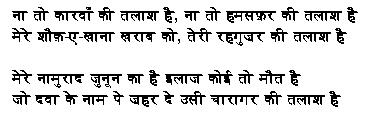
na to carvaan ki talaash hai


find the complete kawwali here

Saturday, September 16, 2006

reflection

tell me... what is the difference between melancholy and mirth ?
arent they .. parts of same picture ...ok motion picture :)

Tuesday, September 12, 2006

kamaal -- ashiq hoke sona kya

समझ बूझ दिल खोज पियारे, आशक होकर सोना क्या?
जिन नैनों से नींद गंवाई, तकिया लेफ बिछौना कया ? ।।१।।
रूखा सूखा राम का टुकड़ा, चिंकना और सलोना क्या ? ।।२।
कहत कमाल प्रेम के मारग, सीस दिया फिर रोना क्या ? ।।३।।

kamaal was son of kabir

khuda

Khuda apni had , khud jaane
ke meri had to , bas khuda hai

(courtesy: paras)

Sunday, September 03, 2006

nirbal ke bal raam

सुने री मैंने निर्बल के बल राम।
पिछली साख भरूं संतन की आड़े संवारे काम।
जबलग गज अपनो बरत्यो नेक सरो नहिं काम।
निर्बल ह्रै बल राम पुकार्यो आये आधे नाम।।
द्रु पद-सुता निर्बल भई ता दिन गहलाये निज धाम।
दु:शासन की भुजा थकित भइ वसनरूप भये श्याम।।
अप-बल, तप-बल और बाहु-बल चौथा है बल दाम।
सूर किशोर कृपा से सब बल हारे को हरिनाम।।

Saturday, September 02, 2006

tao - look and it cant be seen

"Look, and it can't be seen.
Listen, and it can't be heard.
Reach, and it can't be grasped.

Above, it isn't bright.
Below, it isn't dark.
Seamless, unnamable,
it returns to the realm of nothing.
Form that includes all forms,
image without an image,
subtle, beyond all conception.

Approach it and there is no beginning;
follow it and there is no end.
You can't know it, but you can be it,
at ease in your own life.
Just realize where you come from:
this is the essence of wisdom."


~tao te ching [14]

Sunday, August 27, 2006

vatapi ganpathim


vatapi ganpatim
is famous kriti in hansadhwani--- a carnatic raag that has been lapped up by hindustani musicians too.
on the auspcious day of ganesh chaturthi enjoy this famous dikshitar stuti--
vataphi ganpathim

the image has been taken from PP NarayanSwamis collection of kritthis

Saturday, August 19, 2006

manas- sab janat prabhu prabhuta soi

सब जानत प्रभु प्रभुता सोई। तदपि कहें बिनु रहा न कोई।।
तहाँ बेद अस कारन राखा। भजन प्रभाउ भाँति बहु भाषा।।
एक अनीह अरूप अनामा। अज सच्चिदानंद पर धामा।।
ब्यापक बिस्वरूप भगवाना। तेहिं धरि देह चरित कृत नाना।।
सो केवल भगतन हित लागी। परम कृपाल प्रनत अनुरागी।।
जेहि जन पर ममता अति छोहू। जेहिं करुना करि कीन्ह न कोहू।।
गई बहोर गरीब नेवाजू। सरल सबल साहिब रघुराजू।।
बुध बरनहिं हरि जस अस जानी। करहि पुनीत सुफल निज बानी।।
तेहिं बल मैं रघुपति गुन गाथा। कहिहउँ नाइ राम पद माथा।।
मुनिन्ह प्रथम हरि कीरति गाई। तेहिं मग चलत सुगम मोहि भाई।।

Sunday, August 13, 2006

dedication

this post is dedicated to thyagraja
and his fantabulous compostions
one of which i have fallen in love recently is
marugelara O raghava

Thursday, August 10, 2006

jay jay sur nayak

tulasi in his magnum opus makes this stuti as the stuti which led to raamavtaar
naturally its a beautiful one :-)
from baalkaaand .... and soon after this comes the my fav bhaye parkat kripaala


जय जय सुरनायक जन सुखदायक प्रनतपाल भगवंता ।
गो द्विज हितकारी जय असुरारी सिधुंसुता प्रिय कंता ॥
पालन सुर धरनी अद्भुत करनी मरम न जानइ कोई ।
जो सहज कृपाला दीनदयाला करउ अनुग्रह सोई ॥
जय जय अबिनासी सब घट बासी ब्यापक परमानंदा ।
अबिगत गोतीतं चरित पुनीतं मायारहित मुकुंदा ॥
जेहि लागि बिरागी अति अनुरागी बिगतमोह मुनिबृंदा ।
निसि बासर ध्यावहिं गुन गन गावहिं जयति सच्चिदानंदा ॥
जेहिं सृष्टि उपाई त्रिबिध बनाई संग सहाय न दूजा ।
सो करउ अघारी चिंत हमारी जानिअ भगति न पूजा ॥
जो भव भय भंजन मुनि मन रंजन गंजन बिपति बरूथा ।
मन बच क्रम बानी छाड़ि सयानी सरन सकल सुर जूथा ॥
सारद श्रुति सेषा रिषय असेषा जा कहुँ कोउ नहि जाना ।
जेहि दीन पिआरे बेद पुकारे द्रवउ सो श्रीभगवाना ॥
भव बारिधि मंदर सब बिधि सुंदर गुनमंदिर सुखपुंजा ।
मुनि सिद्ध सकल सुर परम भयातुर नमत नाथ पद कंजा ॥

जानि सभय सुरभूमि सुनि बचन समेत सनेह ।
गगनगिरा गंभीर भइ हरनि सोक संदेह ॥

Sunday, August 06, 2006

Update

find akhilandeshwari on stutimandal
with complete english translation

Saturday, August 05, 2006

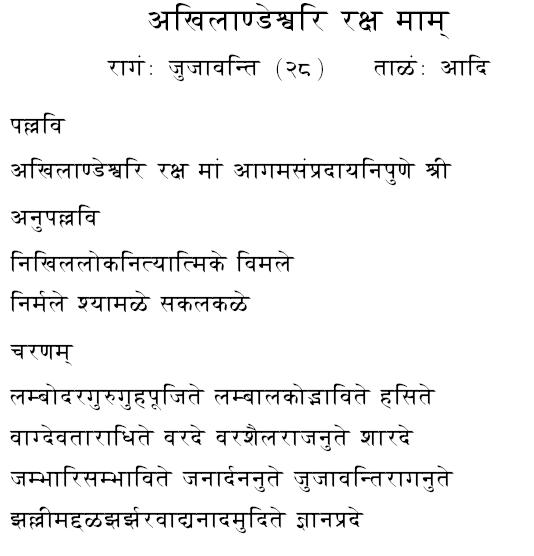
akhilandeshwari --- akhilandeswari


Dikshitar has written amazing stutis in sanskrit.
my current favorite is akhilandeshwari .

a beautiful hymn dedicated to godess; it is titled akhilandeshwari.
this is in aggrement with the hindu beleif of creation.
Akhil= entire and= egg
those who are aware of the hiranya-garbh concept will draw a quick parellel between the two.

This self-fertility or homo-conception is not new to Indian minds.
Even in vishnu sahasranaam .... vishnu is addresses as vishwa yoni (meaning, one who has the world in his womb)

It must also be noted here that while Antrhopomorphic notions of God are prevalent in Indian scriptures, divnity is not striclty tied to His human form.
enjoy akhilandeshwari

it has been taken from a compilation of dikshitkar kritis by PP Narayanswami

Tuesday, August 01, 2006

doha

एक भरोसो एक बल एक आस बिस्वास ।
एक राम घन स्याम हित चातक तुलसीदास

Monday, July 31, 2006

ravidas

just stumbeled on sant ravi das aka raidas
one of the famous saints of sant mat
He was intiatied by ramananda swami(he was also guru of mira and kabir !)

he has written many beautiful couplets
most of them figure in the holy guru granth sahib

an amazing bhajan which comes to my mind is
prabhu ji tum chandan ham pani

enjoy

प्रभुजी तुम चन्दन हम पानी, जाकी अंग अंग बास समानि .
प्रभुजी तुम घन बन हम मोरा, जैसे चितवत चन्द चकोरा .
प्रभुजी तुम दीपक हम बाती, जाकी जोति बरै दिन राती |
प्रभुजी तुम मोती हम धागा, जैसे सोने मिलत सुहागा .
प्रभुजी तुम स्वामी हम दासा, ऐसी भक्ति करै रैदासा ..

Saturday, July 29, 2006

opening slokas - ramcharit manas

slokaas from the beginning of RCM by tualsi
all of these are gems

वर्णानामर्थसंघानां रसानां छन्दसामपि।
मङ्गलानां च कर्त्तारौ वन्दे वाणीविनायकौ।।1।।
भवानीशङ्करौ वन्दे श्रद्धाविश्वासरूपिणौ।
याभ्यां विना न पश्यन्ति सिद्धाःस्वान्तःस्थमीश्वरम्।।2।।
वन्दे बोधमयं नित्यं गुरुं शङ्कररूपिणम्।
यमाश्रितो हि वक्रोऽपि चन्द्रः सर्वत्र वन्द्यते।।3।।
सीतारामगुणग्रामपुण्यारण्यविहारिणौ।
वन्दे विशुद्धविज्ञानौ कबीश्वरकपीश्वरौ।।4।।
उद्भवस्थितिसंहारकारिणीं क्लेशहारिणीम्।
सर्वश्रेयस्करीं सीतां नतोऽहं रामवल्लभाम्।।5।।
यन्मायावशवर्तिं विश्वमखिलं ब्रह्मादिदेवासुरा
यत्सत्वादमृषैव भाति सकलं रज्जौ यथाहेर्भ्रमः।
यत्पादप्लवमेकमेव हि भवाम्भोधेस्तितीर्षावतां
वन्देऽहं तमशेषकारणपरं रामाख्यमीशं हरिम्।।6।।

Friday, July 28, 2006

mat kaho aakash mein khora ghana hai

मत कहो, आकाश में कुहरा घना है,
यह किसी की व्यक्तिगत आलोचना है ।

सूर्य हमने भी नहीं देखा सुबह से,
क्या करोगे, सूर्य का क्या देखना है ।

इस सड़क पर इस क़दर कीचड़ बिछी है,
हर किसी का पाँव घुटनों तक सना है ।

पक्ष औ' प्रतिपक्ष संसद में मुखर हैं,
बात इतनी है कि कोई पुल बना है

रक्त वर्षों से नसों में खौलता है,
आप कहते हैं क्षणिक उत्तेजना है ।

हो गई हर घाट पर पूरी व्यवस्था,
शौक से डूबे जिसे भी डूबना है ।

दोस्तों ! अब मंच पर सुविधा नहीं है,
आजकल नेपथ्य में संभावना है ।

- दुष्यन्त कुमार

thanks to sanjay for reminding me of him :)
this blog to this date features 3 of his poems

dushyant kumar -- is nadi ki dhaar mein

इस नदी की धार में ठंडी हवा आती तो है,
नाव जर्जर ही सही, लहरों से टकराती तो है।

एक चिनगारी कही से ढूँढ लाओ दोस्तों,
इस दिए में तेल से भीगी हुई बाती तो है।

एक खंडहर के हृदय-सी, एक जंगली फूल-सी,
आदमी की पीर गूंगी ही सही, गाती तो है।

एक चादर साँझ ने सारे नगर पर डाल दी,
यह अंधेरे की सड़क उस भोर तक जाती तो है।

निर्वचन मैदान में लेटी हुई है जो नदी,
पत्थरों से, ओट में जा-जाके बतियाती तो है।

दुख नहीं कोई कि अब उपलब्धियों के नाम पर,
और कुछ हो या न हो, आकाश-सी छाती तो है।

- - दुष्यन्त कुमार

Thursday, July 27, 2006

Lazy

Lazy
Too lazy to be ambitious,
I let the world take care of itself.
Ten days' worth of rice in my bag;
a bundle of twigs by the fireplace.
Why chatter about delusion and enlightenment?
Listening to the night rain on my roof,
I sit comfortably, with both legs stretched out.

Monday, July 24, 2006

sunahu raam ab kahan niketaa

a great prasang from manas
in exile raama pays a visit to valmiki (yes the author of original ramayan)
and he asks for a sutiable dwelling spot in the forest
and valmiki replies beautifully with sunahu raam ab kahan niketaa ..meaning o raam hear from me now where thou shall live ....will be translated sometime !
or may be hosted on stutimandal.

सुनि मुनि बचन प्रेम रस साने। सकुचि राम मन महुँ मुसुकाने।।
बालमीकि हँसि कहहिं बहोरी। बानी मधुर अमिअ रस बोरी।।
सुनहु राम अब कहउँ निकेता। जहाँ बसहु सिय लखन समेता।।
जिन्ह के श्रवन समुद्र समाना। कथा तुम्हारि सुभग सरि नाना।।
भरहिं निरंतर होहिं न पूरे। तिन्ह के हिय तुम्ह कहुँ गृह रूरे।।
लोचन चातक जिन्ह करि राखे। रहहिं दरस जलधर अभिलाषे।।
निदरहिं सरित सिंधु सर भारी। रूप बिंदु जल होहिं सुखारी।।
तिन्ह के हृदय सदन सुखदायक। बसहु बंधु सिय सह रघुनायक।।
दो0-जसु तुम्हार मानस बिमल हंसिनि जीहा जासु।
मुकुताहल गुन गन चुनइ राम बसहु हियँ तासु।।128।।
–*–*–
प्रभु प्रसाद सुचि सुभग सुबासा। सादर जासु लहइ नित नासा।।
तुम्हहि निबेदित भोजन करहीं। प्रभु प्रसाद पट भूषन धरहीं।।
सीस नवहिं सुर गुरु द्विज देखी। प्रीति सहित करि बिनय बिसेषी।।
कर नित करहिं राम पद पूजा। राम भरोस हृदयँ नहि दूजा।।
चरन राम तीरथ चलि जाहीं। राम बसहु तिन्ह के मन माहीं।।
मंत्रराजु नित जपहिं तुम्हारा। पूजहिं तुम्हहि सहित परिवारा।।
तरपन होम करहिं बिधि नाना। बिप्र जेवाँइ देहिं बहु दाना।।
तुम्ह तें अधिक गुरहि जियँ जानी। सकल भायँ सेवहिं सनमानी।।
दो0-सबु करि मागहिं एक फलु राम चरन रति होउ।
तिन्ह कें मन मंदिर बसहु सिय रघुनंदन दोउ।।129।।
–*–*–
काम कोह मद मान न मोहा। लोभ न छोभ न राग न द्रोहा।।
जिन्ह कें कपट दंभ नहिं माया। तिन्ह कें हृदय बसहु रघुराया।।
सब के प्रिय सब के हितकारी। दुख सुख सरिस प्रसंसा गारी।।
कहहिं सत्य प्रिय बचन बिचारी। जागत सोवत सरन तुम्हारी।।
तुम्हहि छाड़ि गति दूसरि नाहीं। राम बसहु तिन्ह के मन माहीं।।
जननी सम जानहिं परनारी। धनु पराव बिष तें बिष भारी।।
जे हरषहिं पर संपति देखी। दुखित होहिं पर बिपति बिसेषी।।
जिन्हहि राम तुम्ह प्रानपिआरे। तिन्ह के मन सुभ सदन तुम्हारे।।
दो0-स्वामि सखा पितु मातु गुर जिन्ह के सब तुम्ह तात।
मन मंदिर तिन्ह कें बसहु सीय सहित दोउ भ्रात।।130।।
–*–*–
अवगुन तजि सब के गुन गहहीं। बिप्र धेनु हित संकट सहहीं।।
नीति निपुन जिन्ह कइ जग लीका। घर तुम्हार तिन्ह कर मनु नीका।।
गुन तुम्हार समुझइ निज दोसा। जेहि सब भाँति तुम्हार भरोसा।।
राम भगत प्रिय लागहिं जेही। तेहि उर बसहु सहित बैदेही।।
जाति पाँति धनु धरम बड़ाई। प्रिय परिवार सदन सुखदाई।।
सब तजि तुम्हहि रहइ उर लाई। तेहि के हृदयँ रहहु रघुराई।।
सरगु नरकु अपबरगु समाना। जहँ तहँ देख धरें धनु बाना।।
करम बचन मन राउर चेरा। राम करहु तेहि कें उर डेरा।।
दो0-जाहि न चाहिअ कबहुँ कछु तुम्ह सन सहज सनेहु।
बसहु निरंतर तासु मन सो राउर निज गेहु।।131।।

Friday, July 21, 2006

uudho karman ki gati nyari --surdas

sometimes soor also gets philosophical :)

ऊधो, कर्मन की गति न्यारी।।
सब नदियां जल भरि-भरि रहियां
सागर केहि बिध खारी।।
उज्ज्वल पंख दिये बगुला को,
कोयल केहि गुन कारी।
सुन्दर नयन मृगा को दीन्हे,
बन-बन फिरत उजारी ।।
मूरख मूरख राजे कीन्हे,
पंडित फिरत भिखारी।
सूर श्याम मिलने की आशा,
छिन-छिन बीतत भारी ।।

jake priya ram vaidehi

tulasi again and from vinya patrika :)

जाके प्रिय न राम वैदेही।
सो छॉँड़िये कोटि बैरी सम, जद्यपि परम सनेही।।
तज्यो पिता प्रहलाद, बिभीषण बन्धु, भरत महतारी।
बलि गुरु तज्यो, कंत व्रजबनितनि, भये मुद-मंगलकारी।।
नाते नेह राम के मनियत सुह्रद सुसेव्य जहां लौं।
अंजन कहा आखि जेहि फूटै, बहुतक कहौं कहां लौं।।
तुलसी सो सब भांति परमहित पूज्य प्रान ते प्यारो।
जासों होय सनेह रामपद, एतो मतो हमारो।।

Thursday, July 20, 2006

Rudrashtak --sung by

rudrashtak is beautiful stuti composed by tulsi daas ji in honour of Lord Shiv
find the sanskrit text and english trans here

hear the audio of this stuti here.

Vinya Patrika -- Madhav Moh Phaans kyon toote

while tulasi is better known for his ramcharitmanas
and probably even better for hanuman chalisa :)
one of his best creation in my opinion is Vinay Patrika (विनयपत्रिका)
this is beautiful eulogy from Vinay Patrika ! a saintly self analysis --typical of saint from bhakti movement


माधव! मोह-फाँस क्यों टूटै ।
बाहिर कोटि उपाय करिय, अभ्यंतर ग्रन्थि न छूटै ॥ १ ॥

घृतपूरन कराह अंतरगत ससि-प्रतिबिंब दिखावै ।
ईंधन अनल लगाय कलपसत, औटत नास न पावै ॥ २ ॥

तरु-कोटर महँ बस बिहंग तरु काटे मरै न जैसे ।
साधन करिय बिचार-हीन मन सुद्ध होइ नहिं तैसे ॥ ३ ॥

अंतर मलिन बिषय मन अति, तन पावन करिय पखारे ।
मरइ न उरग अनेक जतन बलमीकि बिबिध बिधि मारे ॥ ४ ॥

तुलसिदास हरि-गुरु-करुना बिनु बिमल बिबेक न होई ।
बिनु बिबेक संसार-घोर-निधि पार न पावै कोई ॥ ५ ॥

Tuesday, July 18, 2006

vishnu shasranaam --vishnu shastranaam

शुक्लांबरधरं विष्णुं शशिवर्णं चतुर्भुजम् ।
प्रसन्नवदनं ध्यायेत सर्वविघ्नोपशान्तये ॥ १ ॥
यस्य द्विरदवक्त्राद्याः पारिषद्याः परः शतम्‌ ।
विघ्नं निघ्नन्ति सततं विष्वकसेनं तमाश्रये ॥ २ ॥
व्यासं वसिष्ठनप्तारं शक्तेः पौत्रमकल्मषम्‌ ।
पराशरात्मजं वन्दे शुकतातं तपोनिधिम ॥ ३ ॥
व्यासाय विष्णुरूपाय व्यासरूपाय विष्णवे ।
नमो वै ब्रह्मनिधये वासिष्ठाय नमो नमः ॥ ४ ॥
अविकाराय शुद्धाय नित्याय परमात्मने ।
सदैकरूपरूपाय विष्णवे सर्वजिष्णवे ॥ ५ ॥
यस्य स्मरणमात्रेण जन्मसंसारबन्धनात् ।
विमुच्यते नमस्तस्मै विष्णवे प्रभविष्णवे ॥ ६ ॥
ॐ नमो विष्णवे प्रभविष्णवे ।

श्रीवैशम्पायन उवाच ---
श्रुत्वा धर्मानशेषेण पावनानि च सर्वशः ।
युधिष्ठिरः शान्तनवं पुनरेवाभ्यभाषत ॥ ७ ॥

युधिष्ठिर उवाच ---
किमेकं दैवतं लोके किं वाप्येकं परायणम् ।
स्तुवन्तः कं कमर्चन्तः प्राप्नुयुर्मानवाः शुभम् ॥ ८ ॥
को धर्मः सर्वधर्माणां भवतः परमो मतः ।
किं जपन्मुच्यते जन्तुर्जन्मसंसारबन्धनात् ॥ ९ ॥

भीष्म उवाच ---
जगत्प्रभुं देवदेवमनन्तं पुरुषोत्तमम् ।
स्तुवन नामसहस्रेण पुरुषः सततोत्थितः ॥ १० ॥
तमेव चार्चयन्नित्यं भक्त्या पुरुषमव्ययम् ।
ध्यायन स्तुवन नमस्यंश्च यजमानस्तमेव च ॥ ११ ॥
अनादिनिधनं विष्णुं सर्वलोकमहेश्वरम् ।
लोकाध्यक्षं स्तुवन्नित्यं सर्वदुःखातिगो भवेत् ॥ १२ ॥
ब्रह्मण्यं सर्वधर्मज्ञं लोकानां कीर्तिवर्धनम् ।
लोकनाथं महद्भूतं सर्वभूतभवोद्भवम् ॥ १३ ॥
एष मे सर्वधर्माणां धर्मोऽधिकतमो मतः ।
यद्भक्त्या पुण्डरीकाक्षं स्तवैरर्चेन्नरः सदा ॥ १४ ॥
परमं यो महत्तेजः परमं यो महत्तपः ।
परमं यो महद्ब्रह्म परमं यः परायणम् ॥ १५ ॥
पवित्राणां पवित्रं यो मङ्गलानां च मङ्गलम् ।
दैवतं दैवतानां च भूतानां योऽव्ययः पिता ॥ १६ ॥
यतः सर्वाणि भूतानि भवन्त्यादियुगागमे ।
यस्मिंश्च प्रलयं यान्ति पुनरेव युगक्षये ॥ १७ ॥
तस्य लोकप्रधानस्य जगन्नाथस्य भूपते ।
विष्णोर्नामसहस्रं मे शृणु पापभयापहम् ॥ १८ ॥
यानि नामानि गौणानि विख्यातानि महात्मनः ।
ऋषिभिः परिगीतानि तानि वक्ष्यामि भूतये ॥ १९ ॥
ऋषिर्नाम्नां सहस्रस्य वेदव्यासो महामुनिः ।
छन्दोऽनुष्टुप् तथा देवो भगवान् देवकीसुतः ॥ २० ॥
अमृतांशूद्भवो बीजं शक्तिर्देवकिनन्दनः ।
त्रिसामा हृदयं तस्य शान्त्यर्थे विनियोज्यते ॥ २१ ॥
विष्णुं जिष्णुं महाविष्णुं प्रभविष्णुं महेश्वरम्‌ ।
अनेकरूप दैत्यान्तं नमामि पुरुषोत्तमं ॥ २२ ॥


॥ श्रीविष्णुसहस्रनामस्तोत्रम्‌ ॥

॥ स्तोत्रम्‌ ॥
॥ हरिः ॐ ॥

विश्वं विष्णुर्वषट्कारो भूतभव्यभवत्प्रभुः ।
भूतकृद्भूतभृद्भावो भूतात्मा भूतभावनः ॥ १ ॥
पूतात्मा परमात्मा च मुक्तानां परमा गतिः ।
अव्ययः पुरुषः साक्षी क्षेत्रज्ञोऽक्षर एव च ॥ २ ॥
योगो योगविदां नेता प्रधानपुरुषेश्वरः ।
नारसिंहवपुः श्रीमान् केशवः पुरुषोत्तमः ॥ ३ ॥
सर्वः शर्वः शिवः स्थाणुर्भूतादिर्निधिरव्ययः ।
संभवो भावनो भर्ता प्रभवः प्रभुरीश्वरः ॥ ४ ॥
स्वयंभूः शम्भुरादित्यः पुष्कराक्षो महास्वनः ।
अनादिनिधनो धाता विधाता धातुरुत्तमः ॥ ५ ॥
अप्रमेयो हृषीकेशः पद्मनाभोऽमरप्रभुः ।
विश्वकर्मा मनुस्त्वष्टा स्थविष्ठः स्थविरो ध्रुवः ॥ ६ ॥
अग्राह्यः शाश्वतः कृष्णो लोहिताक्षः प्रतर्दनः ।
प्रभूतस्त्रिककुब्धाम पवित्रं मङ्गलं परम् ॥ ७ ॥
ईशानः प्राणदः प्राणो ज्येष्ठः श्रेष्ठः प्रजापतिः ।
हिरण्यगर्भो भूगर्भो माधवो मधुसूदनः ॥ ८ ॥
ईश्वरो विक्रमी धन्वी मेधावी विक्रमः क्रमः ।
अनुत्तमो दुराधर्षः कृतज्ञः कृतिरात्मवान् ॥ ९ ॥
सुरेशः शरणं शर्म विश्वरेताः प्रजाभवः ।
अहः संवत्सरो व्यालः प्रत्ययः सर्वदर्शनः ॥ १० ॥
अजः सर्वेश्वरः सिद्धः सिद्धिः सर्वादिरच्युतः ।
वृषाकपिरमेयात्मा सर्वयोगविनिःसृतः ॥ ११ ॥
वसुर्वसुमनाः सत्यः समात्माऽसम्मितः समः ।
अमोघः पुण्डरीकाक्षो वृषकर्मा वृषाकृतिः ॥ १२ ॥
रुद्रो बहुशिरा बभ्रुर्विश्वयोनिः शुचिश्रवाः ।
अमृतः शाश्वत स्थाणुर्वरारोहो महातपाः ॥ १३ ॥
सर्वगः सर्वविद्भानुर्विष्वक्सेनो जनार्दनः ।
वेदो वेदविदव्यङ्गो वेदाङ्गो वेदवित् कविः ॥ १४ ॥
लोकाध्यक्षः सुराध्यक्षो धर्माध्यक्षः कृताकृतः ।
चतुरात्मा चतुर्व्यूहश्चतुर्दंष्ट्रश्चतुर्भुजः ॥ १५ ॥
भ्राजिष्णुर्भोजनं भोक्ता सहिष्णुर्जगदादिजः ।
अनघो विजयो जेता विश्वयोनिः पुनर्वसुः ॥ १६ ॥
उपेन्द्रो वामनः प्रांशुरमोघः शुचिरूर्जितः ।
अतीन्द्रः संग्रहः सर्गो धृतात्मा नियमो यमः ॥ १७ ॥
वेद्यो वैद्यः सदायोगी वीरहा माधवो मधुः ।
अतीन्द्रियो महामायो महोत्साहो महाबलः ॥ १८ ॥
महाबुद्धिर्महावीर्यो महाशक्तिर्महाद्युतिः ।
अनिर्देश्यवपुः श्रीमानमेयात्मा महाद्रिधृक् ॥ १९ ॥
महेष्वासो महीभर्ता श्रीनिवासः सतां गतिः ।
अनिरुद्धः सुरानन्दो गोविन्दो गोविदां पतिः ॥ २० ॥
मरीचिर्दमनो हंसः सुपर्णो भुजगोत्तमः ।
हिरण्यनाभः सुतपाः पद्मनाभः प्रजापतिः ॥ २१ ॥
अमृत्युः सर्वदृक् सिंहः सन्धाता सन्धिमान् स्थिरः ।
अजो दुर्मर्षणः शास्ता विश्रुतात्मा सुरारिहा ॥ २२ ॥
गुरुर्गुरुतमो धाम सत्यः सत्यपराक्रमः ।
निमिषोऽनिमिषः स्रग्वी वाचस्पतिरुदारधीः ॥ २३ ॥
अग्रणीर्ग्रामणीः श्रीमान् न्यायो नेता समीरणः ।
सहस्रमूर्धा विश्वात्मा सहस्राक्षः सहस्रपात् ॥ २४ ॥
आवर्तनो निवृत्तात्मा संवृतः संप्रमर्दनः ।
अहः संवर्तको वह्निरनिलो धरणीधरः ॥ २५ ॥
सुप्रसादः प्रसन्नात्मा विश्वधृग्विश्वभुग्विभुः ।
सत्कर्ता सत्कृतः साधुर्जह्नुर्नारायणो नरः ॥ २६ ॥
असंख्येयोऽप्रमेयात्मा विशिष्टः शिष्टकृच्छुचिः ।
सिद्धार्थः सिद्धसंकल्पः सिद्धिदः सिद्धिसाधनः ॥ २७ ॥
वृषाही वृषभो विष्णुर्वृषपर्वा वृषोदरः ।
वर्धनो वर्धमानश्च विविक्तः श्रुतिसागरः ॥ २८ ॥
सुभुजो दुर्धरो वाग्मी महेन्द्रो वसुदो वसुः ।
नैकरूपो बृहद्रूपः शिपिविष्टः प्रकाशनः ॥ २९ ॥
ओजस्तेजोद्युतिधरः प्रकाशात्मा प्रतापनः ।
ऋद्धः स्पष्टाक्षरो मन्त्रश्चन्द्रांशुर्भास्करद्युतिः ॥ ३० ॥
अमृतांशूद्भवो भानुः शशबिन्दुः सुरेश्वरः ।
औषधं जगतः सेतुः सत्यधर्मपराक्रमः ॥ ३१ ॥
भूतभव्यभवन्नाथः पवनः पावनोऽनलः ।
कामहा कामकृत्कान्तः कामः कामप्रदः प्रभुः ॥ ३२ ॥
युगादिकृद्युगावर्तो नैकमायो महाशनः ।
अदृश्यो व्यक्तरूपश्च सहस्रजिदनन्तजित् ॥ ३३ ॥
इष्टोऽविशिष्टः शिष्टेष्टः शिखण्डी नहुषो वृषः ।
क्रोधहा क्रोधकृत्कर्ता विश्वबाहुर्महीधरः ॥ ३४ ॥
अच्युतः प्रथितः प्राणः प्राणदो वासवानुजः ।
अपांनिधिरधिष्ठानमप्रमत्तः प्रतिष्ठितः ॥ ३५ ॥
स्कन्दः स्कन्दधरो धुर्यो वरदो वायुवाहनः ।
वासुदेवो बृहद्भानुरादिदेवः पुरन्दरः ॥ ३६ ॥
अशोकस्तारणस्तारः शूरः शौरिर्जनेश्वरः ।
अनुकूलः शतावर्तः पद्मी पद्मनिभेक्षणः ॥ ३७ ॥
पद्मनाभोऽरविन्दाक्षः पद्मगर्भः शरीरभृत् ।
महर्द्धिरृद्धो वृद्धात्मा महाक्षो गरुडध्वजः ॥ ३८ ॥
अतुलः शरभो भीमः समयज्ञो हविर्हरिः ।
सर्वलक्षणलक्षण्यो लक्ष्मीवान् समितिञ्जयः ॥ ३९ ॥
विक्षरो रोहितो मार्गो हेतुर्दामोदरः सहः ।
महीधरो महाभागो वेगवानमिताशनः ॥ ४० ॥
उद्भवः क्षोभणो देवः श्रीगर्भः परमेश्वरः ।
करणं कारणं कर्ता विकर्ता गहनो गुहः ॥ ४१ ॥
व्यवसायो व्यवस्थानः संस्थानः स्थानदो ध्रुवः ।
परर्द्धिः परमस्पष्टस्तुष्टः पुष्टः शुभेक्षणः ॥ ४२ ॥
रामो विरामो विरजो मार्गो नेयो नयोऽनयः । or विरामो विरतो
वीरः शक्तिमतां श्रेष्ठो धर्मो धर्मविदुत्तमः ॥ ४३ ॥
वैकुण्ठः पुरुषः प्राणः प्राणदः प्रणवः पृथुः ।
हिरण्यगर्भः शत्रुघ्नो व्याप्तो वायुरधोक्षजः ॥ ४४ ॥
ऋतुः सुदर्शनः कालः परमेष्ठी परिग्रहः ।
उग्रः संवत्सरो दक्षो विश्रामो विश्वदक्षिणः ॥ ४५ ॥
विस्तारः स्थावरस्थाणुः प्रमाणं बीजमव्ययम् ।
अर्थोऽनर्थो महाकोशो महाभोगो महाधनः ॥ ४६ ॥
अनिर्विण्णः स्थविष्ठोऽभूर्धर्मयूपो महामखः ।
नक्षत्रनेमिर्नक्षत्री क्षमः क्षामः समीहनः ॥ ४७ ॥
यज्ञ इज्यो महेज्यश्च क्रतुः सत्रं सतां गतिः ।
सर्वदर्शी विमुक्तात्मा सर्वज्ञो ज्ञानमुत्तमम् ॥ ४८ ॥
सुव्रतः सुमुखः सूक्ष्मः सुघोषः सुखदः सुहृत् ।
मनोहरो जितक्रोधो वीरबाहुर्विदारणः ॥ ४९ ॥
स्वापनः स्ववशो व्यापी नैकात्मा नैककर्मकृत् ।
वत्सरो वत्सलो वत्सी रत्नगर्भो धनेश्वरः ॥ ५० ॥
धर्मगुब्धर्मकृद्धर्मी सदसत्क्षरमक्षरम् ।
अविज्ञाता सहस्रांशुर्विधाता कृतलक्षणः ॥ ५१ ॥
गभस्तिनेमिः सत्त्वस्थः सिंहो भूतमहेश्वरः ।
आदिदेवो महादेवो देवेशो देवभृद्गुरुः ॥ ५२ ॥
उत्तरो गोपतिर्गोप्ता ज्ञानगम्यः पुरातनः ।
शरीरभूतभृद्भोक्ता कपीन्द्रो भूरिदक्षिणः ॥ ५३ ॥
सोमपोऽमृतपः सोमः पुरुजित्पुरुसत्तमः ।
विनयो जयः सत्यसंधो दाशार्हः सात्त्वतांपतिः ॥ ५४ ॥
जीवो विनयिता साक्षी मुकुन्दोऽमितविक्रमः ।
अम्भोनिधिरनन्तात्मा महोदधिशयोऽन्तकः ॥ ५५ ॥
अजो महार्हः स्वाभाव्यो जितामित्रः प्रमोदनः ।
आनन्दो नन्दनो नन्दः सत्यधर्मा त्रिविक्रमः ॥ ५६ ॥
महर्षिः कपिलाचार्यः कृतज्ञो मेदिनीपतिः ।
त्रिपदस्त्रिदशाध्यक्षो महाशृङ्गः कृतान्तकृत् ॥ ५७ ॥
महावराहो गोविन्दः सुषेणः कनकाङ्गदी ।
गुह्यो गभीरो गहनो गुप्तश्चक्रगदाधरः ॥ ५८ ॥
वेधाः स्वाङ्गोऽजितः कृष्णो दृढः संकर्षणोऽच्युतः ।
वरुणो वारुणो वृक्षः पुष्कराक्षो महामनाः ॥ ५९ ॥
भगवान् भगहाऽऽनन्दी वनमाली हलायुधः ।
आदित्यो ज्योतिरादित्यः सहिष्णुर्गतिसत्तमः ॥ ६० ॥
सुधन्वा खण्डपरशुर्दारुणो द्रविणप्रदः ।
दिवःस्पृक् सर्वदृग्व्यासो वाचस्पतिरयोनिजः ॥ ६१ ॥
त्रिसामा सामगः साम निर्वाणं भेषजं भिषक् ।
संन्यासकृच्छमः शान्तो निष्ठा शान्तिः परायणम् ॥ ६२ ॥
शुभाङ्गः शान्तिदः स्रष्टा कुमुदः कुवलेशयः ।
गोहितो गोपतिर्गोप्ता वृषभाक्षो वृषप्रियः ॥ ६३ ॥
अनिवर्ती निवृत्तात्मा संक्षेप्ता क्षेमकृच्छिवः ।
श्रीवत्सवक्षाः श्रीवासः श्रीपतिः श्रीमतांवरः ॥ ६४ ॥
श्रीदः श्रीशः श्रीनिवासः श्रीनिधिः श्रीविभावनः ।
श्रीधरः श्रीकरः श्रेयः श्रीमाँल्लोकत्रयाश्रयः ॥ ६५ ॥
स्वक्षः स्वङ्गः शतानन्दो नन्दिर्ज्योतिर्गणेश्वरः ।
विजितात्माऽविधेयात्मा सत्कीर्तिश्छिन्नसंशयः ॥ ६६ ॥
उदीर्णः सर्वतश्चक्षुरनीशः शाश्वतस्थिरः ।
भूशयो भूषणो भूतिर्विशोकः शोकनाशनः ॥ ६७ ॥
अर्चिष्मानर्चितः कुम्भो विशुद्धात्मा विशोधनः ।
अनिरुद्धोऽप्रतिरथः प्रद्युम्नोऽमितविक्रमः ॥ ६८ ॥
कालनेमिनिहा वीरः शौरिः शूरजनेश्वरः ।
त्रिलोकात्मा त्रिलोकेशः केशवः केशिहा हरिः ॥ ६९ ॥
कामदेवः कामपालः कामी कान्तः कृतागमः ।
अनिर्देश्यवपुर्विष्णुर्वीरोऽनन्तो धनंजयः ॥ ७० ॥
ब्रह्मण्यो ब्रह्मकृद् ब्रह्मा ब्रह्म ब्रह्मविवर्धनः ।
ब्रह्मविद् ब्राह्मणो ब्रह्मी ब्रह्मज्ञो ब्राह्मणप्रियः ॥ ७१ ॥
महाक्रमो महाकर्मा महातेजा महोरगः ।
महाक्रतुर्महायज्वा महायज्ञो महाहविः ॥ ७२ ॥
स्तव्यः स्तवप्रियः स्तोत्रं स्तुतिः स्तोता रणप्रियः ।
पूर्णः पूरयिता पुण्यः पुण्यकीर्तिरनामयः ॥ ७३ ॥
मनोजवस्तीर्थकरो वसुरेता वसुप्रदः ।
वसुप्रदो वासुदेवो वसुर्वसुमना हविः ॥ ७४ ॥
सद्गतिः सत्कृतिः सत्ता सद्भूतिः सत्परायणः ।
शूरसेनो यदुश्रेष्ठः सन्निवासः सुयामुनः ॥ ७५ ॥
भूतावासो वासुदेवः सर्वासुनिलयोऽनलः ।
दर्पहा दर्पदो दृप्तो दुर्धरोऽथापराजितः ॥ ७६ ॥
विश्वमूर्तिर्महामूर्तिर्दीप्तमूर्तिरमूर्तिमान् ।
अनेकमूर्तिरव्यक्तः शतमूर्तिः शताननः ॥ ७७ ॥
एको नैकः सवः कः किं यत् तत्पदमनुत्तमम् ।
लोकबन्धुर्लोकनाथो माधवो भक्तवत्सलः ॥ ७८ ॥
सुवर्णवर्णो हेमाङ्गो वराङ्गश्चन्दनाङ्गदी ।
वीरहा विषमः शून्यो घृताशीरचलश्चलः ॥ ७९ ॥
अमानी मानदो मान्यो लोकस्वामी त्रिलोकधृक् ।
सुमेधा मेधजो धन्यः सत्यमेधा धराधरः ॥ ८० ॥
तेजोवृषो द्युतिधरः सर्वशस्त्रभृतां वरः ।
प्रग्रहो निग्रहो व्यग्रो नैकशृङ्गो गदाग्रजः ॥ ८१ ॥
चतुर्मूर्तिश्चतुर्बाहुश्चतुर्व्यूहश्चतुर्गतिः ।
चतुरात्मा चतुर्भावश्चतुर्वेदविदेकपात् ॥ ८२ ॥
समावर्तोऽनिवृत्तात्मा दुर्जयो दुरतिक्रमः ।
दुर्लभो दुर्गमो दुर्गो दुरावासो दुरारिहा ॥ ८३ ॥
शुभाङ्गो लोकसारङ्गः सुतन्तुस्तन्तुवर्धनः ।
इन्द्रकर्मा महाकर्मा कृतकर्मा कृतागमः ॥ ८४ ॥
उद्भवः सुन्दरः सुन्दो रत्ननाभः सुलोचनः ।
अर्को वाजसनः शृङ्गी जयन्तः सर्वविज्जयी ॥ ८५ ॥
सुवर्णबिन्दुरक्षोभ्यः सर्ववागीश्वरेश्वरः ।
महाह्रदो महागर्तो महाभूतो महानिधिः ॥ ८६ ॥
कुमुदः कुन्दरः कुन्दः पर्जन्यः पावनोऽनिलः ।
अमृतांशोऽमृतवपुः सर्वज्ञः सर्वतोमुखः ॥ ८७ ॥
सुलभः सुव्रतः सिद्धः शत्रुजिच्छत्रुतापनः ।
न्यग्रोधोऽदुम्बरोऽश्वत्थश्चाणूरान्ध्रनिषूदनः ॥ ८८ ॥
सहस्रार्चिः सप्तजिह्वः सप्तैधाः सप्तवाहनः ।
अमूर्तिरनघोऽचिन्त्यो भयकृद्भयनाशनः ॥ ८९ ॥
अणुर्बृहत्कृशः स्थूलो गुणभृन्निर्गुणो महान् ।
अधृतः स्वधृतः स्वास्यः प्राग्वंशो वंशवर्धनः ॥ ९० ॥
भारभृत् कथितो योगी योगीशः सर्वकामदः ।
आश्रमः श्रमणः क्षामः सुपर्णो वायुवाहनः ॥ ९१ ॥
धनुर्धरो धनुर्वेदो दण्डो दमयिता दमः ।
अपराजितः सर्वसहो नियन्ताऽनियमोऽयमः ॥ ९२ ॥
सत्त्ववान् सात्त्विकः सत्यः सत्यधर्मपरायणः ।
अभिप्रायः प्रियार्होऽर्हः प्रियकृत् प्रीतिवर्धनः ॥ ९३ ॥
विहायसगतिर्ज्योतिः सुरुचिर्हुतभुग्विभुः ।
रविर्विरोचनः सूर्यः सविता रविलोचनः ॥ ९४ ॥
अनन्तो हुतभुग्भोक्ता सुखदो नैकजोऽग्रजः ।
अनिर्विण्णः सदामर्षी लोकाधिष्ठानमद्भुतः ॥ ९५ ॥
सनात्सनातनतमः कपिलः कपिरव्ययः ।
स्वस्तिदः स्वस्तिकृत्स्वस्ति स्वस्तिभुक्स्वस्तिदक्षिणः ॥ ९६ ॥
अरौद्रः कुण्डली चक्री विक्रम्यूर्जितशासनः ।
शब्दातिगः शब्दसहः शिशिरः शर्वरीकरः ॥ ९७ ॥
अक्रूरः पेशलो दक्षो दक्षिणः क्षमिणांवरः ।
विद्वत्तमो वीतभयः पुण्यश्रवणकीर्तनः ॥ ९८ ॥
उत्तारणो दुष्कृतिहा पुण्यो दुःस्वप्ननाशनः ।
वीरहा रक्षणः सन्तो जीवनः पर्यवस्थितः ॥ ९९ ॥
अनन्तरूपोऽनन्तश्रीर्जितमन्युर्भयापहः ।
चतुरश्रो गभीरात्मा विदिशो व्यादिशो दिशः ॥ १०० ॥
अनादिर्भूर्भुवो लक्ष्मीः सुवीरो रुचिराङ्गदः ।
जननो जनजन्मादिर्भीमो भीमपराक्रमः ॥ १०१ ॥
आधारनिलयोऽधाता पुष्पहासः प्रजागरः ।
ऊर्ध्वगः सत्पथाचारः प्राणदः प्रणवः पणः ॥ १०२ ॥
प्रमाणं प्राणनिलयः प्राणभृत्प्राणजीवनः ।
तत्त्वं तत्त्वविदेकात्मा जन्ममृत्युजरातिगः ॥ १०३ ॥
भूर्भुवःस्वस्तरुस्तारः सविता प्रपितामहः ।
यज्ञो यज्ञपतिर्यज्वा यज्ञाङ्गो यज्ञवाहनः ॥ १०४ ॥
यज्ञभृद् यज्ञकृद् यज्ञी यज्ञभुग् यज्ञसाधनः ।
यज्ञान्तकृद् यज्ञगुह्यमन्नमन्नाद एव च ॥ १०५ ॥
आत्मयोनिः स्वयंजातो वैखानः सामगायनः ।
देवकीनन्दनः स्रष्टा क्षितीशः पापनाशनः ॥ १०६ ॥
शङ्खभृन्नन्दकी चक्री शार्ङ्गधन्वा गदाधरः ।
रथाङ्गपाणिरक्षोभ्यः सर्वप्रहरणायुधः ॥ १०७ ॥
सर्वप्रहरणायुध ॐ नम इति ।
वनमाली गदी शार्ङ्गी शङ्खी चक्री च नन्दकी ।
श्रीमान् नारायणो विष्णुर्वासुदेवोऽभिरक्षतु ॥ १०८ ॥
श्री वासुदेवोऽभिरक्षतु ॐ नम इति ।

Sunday, July 09, 2006

Bhavayami Gopalbalam ---- bhavayaami gopaalbaalam


Sung by my friends sister --Sindhu -- when she was 11 years old !!!
classic stuti by annamacharya find
sanskrit text and its translation here

Rafi song


most indian songs are stitched in the script and u invariably feel the discontinuity lurking and sometimes it irks you.one of the remarkable ways in which this problem can be circumvented is by getting conversational songs

i have very few examples of such songs ...

here is one such cute song ...like most of my choices this one too is an oldie ---a cute patch up song -- between two romantics; rafi starts in his trademark style and then lata as usual delivers perfectly, right after.

ah yes one recent song in this category was this song from Farhan Akhtars Lakshya
"Agar main kahaun mujhe tumse mohabbat hai --- to tum kya kahogi "
lyrics wise, its run of the mill, like most songs of Mr.Javed Akhtar --music wise minimal but non offesive :-) -- to the say the least :P but atlest it makes sense

it cud be nice you guys send me ur views on the comparison

notice how Lataji delivers last line ..
"hum tumhe maan gaye tum bade wo ho ha *pause * to "
with the pause adding an extra charma and sensitivity ..its called "yati" in chhanda or viraam also sometimes

Saturday, July 08, 2006

vaishnav jan to


written by great saint from gujrat and popularized by Gandhiji
this bhajan is profound-simple-touching-deep and i fall short of adjectives
read the lyrics carefully to testify yourself

and here is the translation

He is a Vaishnava who feels for the suffering of another And forgets the good he does to another, never taking pride in it.
Who cares not for the praise and condemnation of the world nor himself indulges in it.
He is not attached to women and wealth; such a one is praiseworthy and a jewel to his family.

He is the same to all, is desireless and the women of others he considers like unto his mother.

He never speaks falsehood nor has he his eye on another one's wealth.

He is no slave of any passion or attachment, and the spirit of renunciation rules his mind.

His heart is fixed on the Lord, whom he is restless to meet, really his body is indeed a pilgrim's garb.

He is neither avaricious, nor vile nor a victim to wrath and desire.

Says Narsi, verily that such a person shall find release from the cycle of rebirth.

Monday, July 03, 2006

kaagaz

वो:
सफ़ेद कागज पर सफ़ेद से मत लिखो
ऐसा कहां दिखता है ?

मै:
अरे ! सवाल तो लिख्नने का है
दिखने का खयाल तो एक दम झूठा है
और फिर सफ़ेद कागज़ पर तो
सफ़ेद से ही लिख्नना भाता है
ऐसे चाहे कितना ही लिखो
कगाज़ सफ़ेद ही रह जाता है !


He:
safed kagaz par
safed se mat likho
aisa likhna kahan diktha hai ?

Me:
are ! swaaal to likhne ka hai
dikhne ka khayal to ekdum jhooota hai
safed kaagaz par to
safed se hi likhna bhaata hai
aise chahe kitna bhi likho
kaagaz safeed hi reh jaata hai