Tuesday, October 02, 2007

Yamuna

Having seen Ganga in its mountain phase, in its enchanting rupaas and felt its energetic presence my loyalites had always been with Jhanavai until i went to Gujarat.The land of jai shri krishna. Soon stutimandal came into existence and a beautiful stuti was discovered. Yamunashtakam by Shankara. Who else!


A true poetic beauty made me wonder if I ignored the younger sister of Ganga.
Ganga and Yamnua both complement each other. Ganga, white & majestic, adorns the head of the Karpoor Gauram mostly calm and composed Shiva. Yamuna dark and playful no wonder, enjoys Krishnas company. If Yamuna is the Pingala Ganga would be the Ida of the annamaya kosha.

While ransacking youtube for audio of the amazing stuti.
I also found that lands of Cauvery, Krishna and Godavari also miss Yamuna !

Here is one gem by Ghantashala and one by Ilaiyaraaja.

The Ghantashala one is much more moving. And I should also not ignore my West Indian influence so enjoy this famous famous bhajan too by Oza ji.

To Ganga and Yamuna for gushing open the saraswati within :)

Quiz: guess the chhanda of Yamunashtakam :)

Sunday, September 30, 2007

spine

what is spine ?
but your lute
wholes it has seven
who can refute?

hold the breath
let me be torn
if music be,
the food of love
play on.

Wednesday, September 26, 2007

Funny Subhashit on doctors


O doctor, kin brother of Yamaraj ,I bow to you.
Yama takes away life, but you money too :)

exercise: Indentify all the vibhaktis

Tuesday, September 25, 2007

A Matter of Taste


It all started, with my association with Vishwanathan Balasubramanian. The comely tambrahm who was exiled to snowy peaks of Switzerland. Much like any Indian boy, both of us hardly knew how to cook. I was experimental and made daal on the first day, right away. With some effort and luck it was, it was, it was "A Victory". It was OK, digestible. The tambrahm however if I understand correctly was a little skeptical in taking initiative and was trying to postpone his agni pareeksha (in kitchen) by exhausting his Chennai packed puliodarai (have I spelled it correctly?). Yeah we had a girl colleague who was our “Mother of all sorts”, but both of us resisted to take cooking lessons from her. And, after all, we are, MEN of HONOUR! I, Cuba Gooding was I think trusting my failed experiments and Vishwanathan (Robert de Niro) Fate.

After a few months of independent experiments we realized that we can divide and rule this hunger- nutrition need. I cooked dal and vegetable, mostly and Vishwa rice(notice). It was easy. The Agastyar from Himalayas was already invading the Dravidian stomach. I took strange liberties, with my interest in nutrition and taste, I was dishing out Nutrela (soya nuggets), pakodas, mutter paneer etc. Things went well, my client ate with the kind of gratitude and satisfaction, South Indians show when they make a trip to Thirumala, their wishes granted. Some things which I remember found special favor with the “thayir sadam” boy were chole, rajma, palak and baingan sabzi.

I understand how much the boy must have craved for sambhar vattal kozumbu and other things that I don’t know (but want to know!) but what could I do. Anyhow, one fine day I made bhindi sabzi to which the boy responded with some visible disagreement. I said kya hua, is it not okay ? He quipped, "how does your mother make it" ? Oh, I was never Mama’s boy u see and paid little attention to “Mothers Recipes”. I said don’t know may be she cooks it the same way.

Finally the Chennai roots of the boy sprung forth, he blurted out his disapproval, how can u make bhindi daaaaa (yaar) sans coconut? This came to me as a shock, Coconut? What is this man talking about? Why would some one put coconut in bhindi ? May be he realized its bad manners to speak thus about food, he lightly said its okay, but politely added "your mother surely must be putting coconut in vegetables". Okay, I was ignorant, but not that much, I had never seen my mother using coconut anywhere except to make mithais or sweet rice.

Finally the enlightenment dawned on me, in his part of the world coconut is to vegetable what chai patti is to tea. I realized, how some things can change but some things could remain same. Daal makhani could be tolerated but it needed to admit kari patta(generously). Tandori roti could be relished, but curd rice should follow. Lassi and Jal Jeera might be "cool" but filter kaapi is also "haaat". The true national integration happens in our stomachs(mouths?) before it happens in our hearts.

Do u know now Sangeetha restaurant in Chennai serves Chettinad Paneer Kurma!

The proof of pudding, will well, still be, in the eating but to some it should be served on plantain leaf.

To Vishwanathan, and to all those memories where tongue rolled as “a matter of taste”.

PS: No offense is meant to any culture state or region. These are private emotions on private net-space.

Saturday, September 22, 2007

eyes

the beginning:
aa piya in nainan mein jo palak dhaanp tohe lun
na main dekhun aur ko, na tohe dekhan dun
chhap tilak sab chheni ..... re tose naina milaike

-Sufi Verse from Khusro

interval:
samam kaya-siro-grivam dharayann acalam sthirah
sampreksya nasikagram svam disas canavalokayan

-gita ch 6 V13

towards the ending:

The Vedas, the Shastras and the Puranas are like prostitutes [attainable to all]. The shambhavi mudra, however, is like a chaste woman, carefully guarded.

-hath yog pradipika Ch 14 V 35

Finally:
na cha shrota jivye na cha ghraan netre
na cha vyom bhurmi na tejo na vuyuhu
chidananda rupah Shivoham Shivoham

- Atmashtakam Shankara Virachitam

Tuesday, September 18, 2007

hriday ka dwar

hriday ka dwar
khola hai tere liye
kya aaoge
tum aaoge
ek bar
darshan doge!

kya jeevan
yun hi jaayegaa
bina darshan
tere bhagwan!!

din aur raat prabhu
din aur raat
dekhun teri baat din aur raat.

PY-Cosmic chants

Monday, September 17, 2007

Kali

Kaun kehta hai tu kaali ?
O Ma Jagadambe
Laakhon ravi chandra teri
Kaya se hain chamakte !

-by PY (who else)

ananda-dhara

Cool in my head
Hot down there
soothing in the middle
and sweet and painful in the neck
U move in me
Is this the way
u respond to my love ?

Friday, September 14, 2007

think

I think
I think why i think ?
Then i think am just I a thought ?
To whom are these thoughts happening ?
and does that whom exist independent of these thoughts.
and is it possible to know it through thoughts ?

Monday, September 10, 2007

panch prana

It has always been a mystery to me how yogis just by "being" could have such intellectual clarity 5000 years ago, which collective human effort of "doing" has failed to achieve in thousands of years.

Most know about the categorization of prana, few know the techniques to manipulate them, even fewer have felt them and to even few are open the subtle mysteries of of prana.

This great samvaad from Prashna Upanishad is one such dialogue between those very few.

Kausalya, son of Asvala, questioned Pippalada: "O Bhagavan Pippalada:
Whence is this Prana born? How does it come into this body? How does
it abide after it has divided itself? How does it go out? How does it
support what is without? How does it support all within the body?"

He replied: "You ask questions about transcendental matters. I will
explain to thee because you are a great enquirer of Brahman.

This Prana is born of the Atman. As is this shadow in the man, so is
this Prana in the Atman. By the action of the mind this enters into
this body.

As a king commands his officers, saying to them: 'Govern these or
those villages', so does this Prana dispose the other Pranas, each
for their separate allotted work.

The Apana dwells in the organs of excretion and generation: the Prana
itself abides in the eye, ear, mouth and nose. In the middle is
Samana. It distributes the food supplied equally and the seven flames
proceed from it.

This Atman is in the heart. Here there are a hundred and one nerves
(arteries). Each of them has a hundred branches; again every one of
these has seventy-two thousand sub-branches. In these the Vyana
moves.

Again, through one other, the Udana ascending, leads us upwards to
the virtuous world by good work; to sinful worlds by sin: and to the
world of men by virtue and sin combined.

The sun verily is the external Prana. He rises and assists the Prana
in the eye. The goddess of the earth attracts Apana downwards. The
other (between the sun and the earth) is Samana. The wind is Vyana.

The external fire indeed is Udana. Therefore, he whose fire has gone
out, enters another body with his senses absorbed in the mind.

Whatever his thought (at the time of death), with that he attains
Prana: and the Prana united with Udana together with the Jivatma,
leads on to the world thought of. The learned man who knows Prana
thus-his offspring does not perish and he becomes immortal.

He who knows the origin, the entry, the seat, the fivefold
distribution of Prana and its internal state in the body, obtains
immortality, yea, obtains immortality".

Monday, June 04, 2007

Vaastu

In my research on vaastu i am trying to connect vaastu with human spinal centres
and established properties of panch mahabuta.
i will come up with a draft in a fort nights time.
if any of u are intrested in sharing ideas on the above mentioned or contributing
or reading the draft let me know.

Friday, January 26, 2007

mantra

those looking for some internal guidance
can find this mantra powerful

OM
Si Va Ya Na Ma
Ya Na Va Si Ma
Ma Va Ya Na Si
Si Ya Na Ma Va
Va Si Ma Ya Na
OM

yojaka tatra durlabha

Amantram akhraro nasthi
Nasthi moolam anoushdham
Ayogya purushonasthi
Yojaka : tatra durlabha :

Meaning :
There is no word that has no effect of a mantra
There is no herb which has no medicinal effect
There no person who is worthless, but,
Rare indeed is the nourisher and net worker/organizer of talents.

Sunday, December 31, 2006

eternal

whats new gets old
whats old, makes way for new
at some point every thing was new
at some point every thing will be old
the game of time
played in your mind
never lets you see
the eternal

Thursday, December 28, 2006

bliss

seed of breath
sown prayerfullly
watered by tears
guarded by awareness
finally flowered
bliss unfolded

Saturday, December 16, 2006

श्रवण मंगलम श्रीमदादतम भुविगनातिते वृहद जनम्
तव कथामॄतम तप्त जीवनम कवीभिरीडीतम कल्म शापहम

TAV KATHAMRITAM TAPT JIVANAM KAVIBHIRIDITAM KALM SHAPAHAM |
SHRAVAN MANGALAM SHRIMADATATAM, BHUVIGANATITE BHURIDA JANAM

Thursday, December 14, 2006

O Arjuna Be a Yogi !

तपस्विभ्योऽधिको योगी ज्ञानिभ्योऽपि मतोऽधिकः ।
कर्मिभ्यश्चाधिको योगी तस्माद्योगी भवार्जुन ॥६- ४६॥

Friday, December 08, 2006

mangal karani

मंगल करनि कलि मल हरनि तुलसी कथा रघुनाथ की ॥
गति कूर कबिता सरित की ज्यों सरित पावन पाथ की ॥
प्रभु सुजस संगति भनिति भलि होइहि सुजन मन भावनी ॥
भव अंग भूति मसान की सुमिरत सुहावनि पावनी ॥

Thursday, December 07, 2006

drops

drop from your ocean fell on my head
and drops rolled down from my eyes
as the drops slid on my cheek
i dropped everything
and i realized i was holding you
the game of drop finally caught on
-ashu

Wednesday, December 06, 2006

tagore

Time is endless in your hands, my infinite Being.
There is none to count your minutes.
Days and nights pass and ages bloom and fade like flowers.
You know how to wait.
Your centuries follow each other perfecting a small wild flower.
We have no time to lose, and having no time we must scramble for our chances.
We are too poor to be late.
And so it is that time goes by while I give it to every querulous man who claims it, and your altar is empty of all offerings to the last.
At the end of the day, I hasten in fear lest your gate be shut;
But I find that yet there is time.

var veena

raag mohanam has beautiful kriti by appaya dikshitar
known as var veena

वर वीणा मृदु पाणी वर रुह लोचन राणी
सुरुचिर बम्भर वेणी सुरनुत कल्याणी
निरुपम शुभ गुण लोल निरतिशय प्रद शीला
वरदाप्रिय रंगनायक वांचित फल दायकि
सरसिजसन जननी जय जय जय

Tuesday, October 17, 2006

talent un-limited

few things in life are beautiful as this !
god bless the child and his guardians... you can watch more his stupendous performance...
just check other videos by the same uploader !

ah yes this also is nice in hansdhwani-sitarkhani .

Wah Ustad Wah !!!!

Sunday, October 15, 2006

Wednesday, October 11, 2006

Ramana Speaks 2 - Grace of Guru

Grace of Guru

Question: "What is the Grace of the Guru?"

Sri Ramana: "The Guru is the Self. At sometime a man grows dissatisfied with his life and, not content with what he has, seeks the satisfaction of his desires
through prayer to Godi. His mind is gradually purified until he longs to know God, more to obtain His Grace than to satisfy worldly desires. Then God's Grace begins to manifest. God takes the form of a Guru and appears to the devotee, teaches him the Truth and, moreover, purifies his mind by association with him.
The devotee's mind thus gains strength and is then able to turn inward. By meditation it is further purified until it remains calm without the least ripple. That calm Expanse is the Self.

The Guru is both outer and inner. From outside he gives a push to the mind to turn inward while from inside he pulls the mind towards the Self and helps in quieting it. That is the Grace of the Guru. There is no difference between God, Guru and Self."

Friday, October 06, 2006

yaman bhajan

enjoy this brilliant bhajan
very well sung .....raag is simple beautiful timless yaman

Sunday, October 01, 2006

master speaks

The Master once asked one of the monks, “What keeps the earth from shooting out
into space, away from the sun?” The disciple answered, “The power of gravity in the
sun, Sir.” The Master then queried, “Then what keeps it from being drawn back into
the sun?” and the monk replied, “That’s its centrifugal force, Sir, which makes it want
to keep shooting out into space, away from the sun.”
The Master smiled significantly. Much later the monk recalled the conversation,
and realized that the Master was speaking in allegory of God and man.

Tuesday, September 26, 2006

being the female

Knowing the male, being the female,
Being the course through which flows the World,
One embraces unfailing Love
And is again as a newborn.
Knowing the light, being the dark,
Being the World,
One becomes unerring Love
And returns to Tao.
Knowing honour, being humble,
Being the valley of the World,
Love suffices,
And one is as unshaped wood.

When wood is shaped it becomes tools.
Used by the sage, tools become powerful;
So a good carpenter wastes little.

Friday, September 22, 2006

ab mujhse hai

teri hasti ki pehchaan ab mujhse hai
tauheed aur imaan ab mujhse hai
mariyam ki, isa ki shaan ab mujhse hai
teri bandagi tera naam ab mujhse hai

Sunday, September 17, 2006

ramana speaks-1

A Swami asked: I feel toothache. Is it only a thought?
M.: Yes.
D.: Why can I not think that there is no toothache and thus cure
myself?
M.: When engrossed in other thoughts one does not feel the toothache.
When one sleeps toothache is not felt.
D.: But toothache remains all the same.
M.: Such is the firm conviction of the reality of the world that it is
not easily shaken off. The world does not become, for that reason,
any more real than the individual himself.
D.: Now there is the Sino-Japanese war. If it is only in imagination,
can or will Sri Bhagavan imagine the contrary and put an end to
the war?
M.: The Bhagavan of the questioner is as much a thought as the Sino-
Japanese war. (Laughter.)

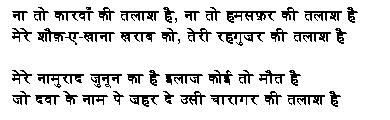
M: ramana maharishi

na to carvaan ki talaash hai


find the complete kawwali here

Saturday, September 16, 2006

reflection

tell me... what is the difference between melancholy and mirth ?
arent they .. parts of same picture ...ok motion picture :)

Tuesday, September 12, 2006

kamaal -- ashiq hoke sona kya

समझ बूझ दिल खोज पियारे, आशक होकर सोना क्या?
जिन नैनों से नींद गंवाई, तकिया लेफ बिछौना कया ? ।।१।।
रूखा सूखा राम का टुकड़ा, चिंकना और सलोना क्या ? ।।२।
कहत कमाल प्रेम के मारग, सीस दिया फिर रोना क्या ? ।।३।।

kamaal was son of kabir

khuda

Khuda apni had , khud jaane
ke meri had to , bas khuda hai

(courtesy: paras)

Sunday, September 03, 2006

nirbal ke bal raam

सुने री मैंने निर्बल के बल राम।
पिछली साख भरूं संतन की आड़े संवारे काम।
जबलग गज अपनो बरत्यो नेक सरो नहिं काम।
निर्बल ह्रै बल राम पुकार्यो आये आधे नाम।।
द्रु पद-सुता निर्बल भई ता दिन गहलाये निज धाम।
दु:शासन की भुजा थकित भइ वसनरूप भये श्याम।।
अप-बल, तप-बल और बाहु-बल चौथा है बल दाम।
सूर किशोर कृपा से सब बल हारे को हरिनाम।।

Saturday, September 02, 2006

tao - look and it cant be seen

"Look, and it can't be seen.
Listen, and it can't be heard.
Reach, and it can't be grasped.

Above, it isn't bright.
Below, it isn't dark.
Seamless, unnamable,
it returns to the realm of nothing.
Form that includes all forms,
image without an image,
subtle, beyond all conception.

Approach it and there is no beginning;
follow it and there is no end.
You can't know it, but you can be it,
at ease in your own life.
Just realize where you come from:
this is the essence of wisdom."


~tao te ching [14]

Sunday, August 27, 2006

vatapi ganpathim


vatapi ganpatim
is famous kriti in hansadhwani--- a carnatic raag that has been lapped up by hindustani musicians too.
on the auspcious day of ganesh chaturthi enjoy this famous dikshitar stuti--
vataphi ganpathim

the image has been taken from PP NarayanSwamis collection of kritthis

Saturday, August 19, 2006

manas- sab janat prabhu prabhuta soi

सब जानत प्रभु प्रभुता सोई। तदपि कहें बिनु रहा न कोई।।
तहाँ बेद अस कारन राखा। भजन प्रभाउ भाँति बहु भाषा।।
एक अनीह अरूप अनामा। अज सच्चिदानंद पर धामा।।
ब्यापक बिस्वरूप भगवाना। तेहिं धरि देह चरित कृत नाना।।
सो केवल भगतन हित लागी। परम कृपाल प्रनत अनुरागी।।
जेहि जन पर ममता अति छोहू। जेहिं करुना करि कीन्ह न कोहू।।
गई बहोर गरीब नेवाजू। सरल सबल साहिब रघुराजू।।
बुध बरनहिं हरि जस अस जानी। करहि पुनीत सुफल निज बानी।।
तेहिं बल मैं रघुपति गुन गाथा। कहिहउँ नाइ राम पद माथा।।
मुनिन्ह प्रथम हरि कीरति गाई। तेहिं मग चलत सुगम मोहि भाई।।

Sunday, August 13, 2006

dedication

this post is dedicated to thyagraja
and his fantabulous compostions
one of which i have fallen in love recently is
marugelara O raghava

Thursday, August 10, 2006

jay jay sur nayak

tulasi in his magnum opus makes this stuti as the stuti which led to raamavtaar
naturally its a beautiful one :-)
from baalkaaand .... and soon after this comes the my fav bhaye parkat kripaala


जय जय सुरनायक जन सुखदायक प्रनतपाल भगवंता ।
गो द्विज हितकारी जय असुरारी सिधुंसुता प्रिय कंता ॥
पालन सुर धरनी अद्भुत करनी मरम न जानइ कोई ।
जो सहज कृपाला दीनदयाला करउ अनुग्रह सोई ॥
जय जय अबिनासी सब घट बासी ब्यापक परमानंदा ।
अबिगत गोतीतं चरित पुनीतं मायारहित मुकुंदा ॥
जेहि लागि बिरागी अति अनुरागी बिगतमोह मुनिबृंदा ।
निसि बासर ध्यावहिं गुन गन गावहिं जयति सच्चिदानंदा ॥
जेहिं सृष्टि उपाई त्रिबिध बनाई संग सहाय न दूजा ।
सो करउ अघारी चिंत हमारी जानिअ भगति न पूजा ॥
जो भव भय भंजन मुनि मन रंजन गंजन बिपति बरूथा ।
मन बच क्रम बानी छाड़ि सयानी सरन सकल सुर जूथा ॥
सारद श्रुति सेषा रिषय असेषा जा कहुँ कोउ नहि जाना ।
जेहि दीन पिआरे बेद पुकारे द्रवउ सो श्रीभगवाना ॥
भव बारिधि मंदर सब बिधि सुंदर गुनमंदिर सुखपुंजा ।
मुनि सिद्ध सकल सुर परम भयातुर नमत नाथ पद कंजा ॥

जानि सभय सुरभूमि सुनि बचन समेत सनेह ।
गगनगिरा गंभीर भइ हरनि सोक संदेह ॥

Sunday, August 06, 2006

Update

find akhilandeshwari on stutimandal
with complete english translation

Saturday, August 05, 2006

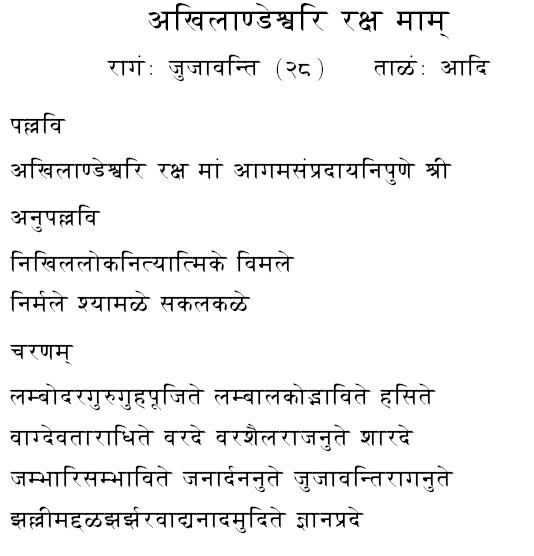
akhilandeshwari --- akhilandeswari


Dikshitar has written amazing stutis in sanskrit.
my current favorite is akhilandeshwari .

a beautiful hymn dedicated to godess; it is titled akhilandeshwari.
this is in aggrement with the hindu beleif of creation.
Akhil= entire and= egg
those who are aware of the hiranya-garbh concept will draw a quick parellel between the two.

This self-fertility or homo-conception is not new to Indian minds.
Even in vishnu sahasranaam .... vishnu is addresses as vishwa yoni (meaning, one who has the world in his womb)

It must also be noted here that while Antrhopomorphic notions of God are prevalent in Indian scriptures, divnity is not striclty tied to His human form.
enjoy akhilandeshwari

it has been taken from a compilation of dikshitkar kritis by PP Narayanswami

Tuesday, August 01, 2006

doha

एक भरोसो एक बल एक आस बिस्वास ।
एक राम घन स्याम हित चातक तुलसीदास

Monday, July 31, 2006

ravidas

just stumbeled on sant ravi das aka raidas
one of the famous saints of sant mat
He was intiatied by ramananda swami(he was also guru of mira and kabir !)

he has written many beautiful couplets
most of them figure in the holy guru granth sahib

an amazing bhajan which comes to my mind is
prabhu ji tum chandan ham pani

enjoy

प्रभुजी तुम चन्दन हम पानी, जाकी अंग अंग बास समानि .
प्रभुजी तुम घन बन हम मोरा, जैसे चितवत चन्द चकोरा .
प्रभुजी तुम दीपक हम बाती, जाकी जोति बरै दिन राती |
प्रभुजी तुम मोती हम धागा, जैसे सोने मिलत सुहागा .
प्रभुजी तुम स्वामी हम दासा, ऐसी भक्ति करै रैदासा ..

Saturday, July 29, 2006

opening slokas - ramcharit manas

slokaas from the beginning of RCM by tualsi
all of these are gems

वर्णानामर्थसंघानां रसानां छन्दसामपि।
मङ्गलानां च कर्त्तारौ वन्दे वाणीविनायकौ।।1।।
भवानीशङ्करौ वन्दे श्रद्धाविश्वासरूपिणौ।
याभ्यां विना न पश्यन्ति सिद्धाःस्वान्तःस्थमीश्वरम्।।2।।
वन्दे बोधमयं नित्यं गुरुं शङ्कररूपिणम्।
यमाश्रितो हि वक्रोऽपि चन्द्रः सर्वत्र वन्द्यते।।3।।
सीतारामगुणग्रामपुण्यारण्यविहारिणौ।
वन्दे विशुद्धविज्ञानौ कबीश्वरकपीश्वरौ।।4।।
उद्भवस्थितिसंहारकारिणीं क्लेशहारिणीम्।
सर्वश्रेयस्करीं सीतां नतोऽहं रामवल्लभाम्।।5।।
यन्मायावशवर्तिं विश्वमखिलं ब्रह्मादिदेवासुरा
यत्सत्वादमृषैव भाति सकलं रज्जौ यथाहेर्भ्रमः।
यत्पादप्लवमेकमेव हि भवाम्भोधेस्तितीर्षावतां
वन्देऽहं तमशेषकारणपरं रामाख्यमीशं हरिम्।।6।।

Friday, July 28, 2006

mat kaho aakash mein khora ghana hai

मत कहो, आकाश में कुहरा घना है,
यह किसी की व्यक्तिगत आलोचना है ।

सूर्य हमने भी नहीं देखा सुबह से,
क्या करोगे, सूर्य का क्या देखना है ।

इस सड़क पर इस क़दर कीचड़ बिछी है,
हर किसी का पाँव घुटनों तक सना है ।

पक्ष औ' प्रतिपक्ष संसद में मुखर हैं,
बात इतनी है कि कोई पुल बना है

रक्त वर्षों से नसों में खौलता है,
आप कहते हैं क्षणिक उत्तेजना है ।

हो गई हर घाट पर पूरी व्यवस्था,
शौक से डूबे जिसे भी डूबना है ।

दोस्तों ! अब मंच पर सुविधा नहीं है,
आजकल नेपथ्य में संभावना है ।

- दुष्यन्त कुमार

thanks to sanjay for reminding me of him :)
this blog to this date features 3 of his poems

dushyant kumar -- is nadi ki dhaar mein

इस नदी की धार में ठंडी हवा आती तो है,
नाव जर्जर ही सही, लहरों से टकराती तो है।

एक चिनगारी कही से ढूँढ लाओ दोस्तों,
इस दिए में तेल से भीगी हुई बाती तो है।

एक खंडहर के हृदय-सी, एक जंगली फूल-सी,
आदमी की पीर गूंगी ही सही, गाती तो है।

एक चादर साँझ ने सारे नगर पर डाल दी,
यह अंधेरे की सड़क उस भोर तक जाती तो है।

निर्वचन मैदान में लेटी हुई है जो नदी,
पत्थरों से, ओट में जा-जाके बतियाती तो है।

दुख नहीं कोई कि अब उपलब्धियों के नाम पर,
और कुछ हो या न हो, आकाश-सी छाती तो है।

- - दुष्यन्त कुमार

Thursday, July 27, 2006

Lazy

Lazy
Too lazy to be ambitious,
I let the world take care of itself.
Ten days' worth of rice in my bag;
a bundle of twigs by the fireplace.
Why chatter about delusion and enlightenment?
Listening to the night rain on my roof,
I sit comfortably, with both legs stretched out.

Monday, July 24, 2006

sunahu raam ab kahan niketaa

a great prasang from manas
in exile raama pays a visit to valmiki (yes the author of original ramayan)
and he asks for a sutiable dwelling spot in the forest
and valmiki replies beautifully with sunahu raam ab kahan niketaa ..meaning o raam hear from me now where thou shall live ....will be translated sometime !
or may be hosted on stutimandal.

सुनि मुनि बचन प्रेम रस साने। सकुचि राम मन महुँ मुसुकाने।।
बालमीकि हँसि कहहिं बहोरी। बानी मधुर अमिअ रस बोरी।।
सुनहु राम अब कहउँ निकेता। जहाँ बसहु सिय लखन समेता।।
जिन्ह के श्रवन समुद्र समाना। कथा तुम्हारि सुभग सरि नाना।।
भरहिं निरंतर होहिं न पूरे। तिन्ह के हिय तुम्ह कहुँ गृह रूरे।।
लोचन चातक जिन्ह करि राखे। रहहिं दरस जलधर अभिलाषे।।
निदरहिं सरित सिंधु सर भारी। रूप बिंदु जल होहिं सुखारी।।
तिन्ह के हृदय सदन सुखदायक। बसहु बंधु सिय सह रघुनायक।।
दो0-जसु तुम्हार मानस बिमल हंसिनि जीहा जासु।
मुकुताहल गुन गन चुनइ राम बसहु हियँ तासु।।128।।
–*–*–
प्रभु प्रसाद सुचि सुभग सुबासा। सादर जासु लहइ नित नासा।।
तुम्हहि निबेदित भोजन करहीं। प्रभु प्रसाद पट भूषन धरहीं।।
सीस नवहिं सुर गुरु द्विज देखी। प्रीति सहित करि बिनय बिसेषी।।
कर नित करहिं राम पद पूजा। राम भरोस हृदयँ नहि दूजा।।
चरन राम तीरथ चलि जाहीं। राम बसहु तिन्ह के मन माहीं।।
मंत्रराजु नित जपहिं तुम्हारा। पूजहिं तुम्हहि सहित परिवारा।।
तरपन होम करहिं बिधि नाना। बिप्र जेवाँइ देहिं बहु दाना।।
तुम्ह तें अधिक गुरहि जियँ जानी। सकल भायँ सेवहिं सनमानी।।
दो0-सबु करि मागहिं एक फलु राम चरन रति होउ।
तिन्ह कें मन मंदिर बसहु सिय रघुनंदन दोउ।।129।।
–*–*–
काम कोह मद मान न मोहा। लोभ न छोभ न राग न द्रोहा।।
जिन्ह कें कपट दंभ नहिं माया। तिन्ह कें हृदय बसहु रघुराया।।
सब के प्रिय सब के हितकारी। दुख सुख सरिस प्रसंसा गारी।।
कहहिं सत्य प्रिय बचन बिचारी। जागत सोवत सरन तुम्हारी।।
तुम्हहि छाड़ि गति दूसरि नाहीं। राम बसहु तिन्ह के मन माहीं।।
जननी सम जानहिं परनारी। धनु पराव बिष तें बिष भारी।।
जे हरषहिं पर संपति देखी। दुखित होहिं पर बिपति बिसेषी।।
जिन्हहि राम तुम्ह प्रानपिआरे। तिन्ह के मन सुभ सदन तुम्हारे।।
दो0-स्वामि सखा पितु मातु गुर जिन्ह के सब तुम्ह तात।
मन मंदिर तिन्ह कें बसहु सीय सहित दोउ भ्रात।।130।।
–*–*–
अवगुन तजि सब के गुन गहहीं। बिप्र धेनु हित संकट सहहीं।।
नीति निपुन जिन्ह कइ जग लीका। घर तुम्हार तिन्ह कर मनु नीका।।
गुन तुम्हार समुझइ निज दोसा। जेहि सब भाँति तुम्हार भरोसा।।
राम भगत प्रिय लागहिं जेही। तेहि उर बसहु सहित बैदेही।।
जाति पाँति धनु धरम बड़ाई। प्रिय परिवार सदन सुखदाई।।
सब तजि तुम्हहि रहइ उर लाई। तेहि के हृदयँ रहहु रघुराई।।
सरगु नरकु अपबरगु समाना। जहँ तहँ देख धरें धनु बाना।।
करम बचन मन राउर चेरा। राम करहु तेहि कें उर डेरा।।
दो0-जाहि न चाहिअ कबहुँ कछु तुम्ह सन सहज सनेहु।
बसहु निरंतर तासु मन सो राउर निज गेहु।।131।।

Friday, July 21, 2006

uudho karman ki gati nyari --surdas

sometimes soor also gets philosophical :)

ऊधो, कर्मन की गति न्यारी।।
सब नदियां जल भरि-भरि रहियां
सागर केहि बिध खारी।।
उज्ज्वल पंख दिये बगुला को,
कोयल केहि गुन कारी।
सुन्दर नयन मृगा को दीन्हे,
बन-बन फिरत उजारी ।।
मूरख मूरख राजे कीन्हे,
पंडित फिरत भिखारी।
सूर श्याम मिलने की आशा,
छिन-छिन बीतत भारी ।।

jake priya ram vaidehi

tulasi again and from vinya patrika :)

जाके प्रिय न राम वैदेही।
सो छॉँड़िये कोटि बैरी सम, जद्यपि परम सनेही।।
तज्यो पिता प्रहलाद, बिभीषण बन्धु, भरत महतारी।
बलि गुरु तज्यो, कंत व्रजबनितनि, भये मुद-मंगलकारी।।
नाते नेह राम के मनियत सुह्रद सुसेव्य जहां लौं।
अंजन कहा आखि जेहि फूटै, बहुतक कहौं कहां लौं।।
तुलसी सो सब भांति परमहित पूज्य प्रान ते प्यारो।
जासों होय सनेह रामपद, एतो मतो हमारो।।

Thursday, July 20, 2006

Rudrashtak --sung by

rudrashtak is beautiful stuti composed by tulsi daas ji in honour of Lord Shiv
find the sanskrit text and english trans here

hear the audio of this stuti here.

Vinya Patrika -- Madhav Moh Phaans kyon toote

while tulasi is better known for his ramcharitmanas
and probably even better for hanuman chalisa :)
one of his best creation in my opinion is Vinay Patrika (विनयपत्रिका)
this is beautiful eulogy from Vinay Patrika ! a saintly self analysis --typical of saint from bhakti movement


माधव! मोह-फाँस क्यों टूटै ।
बाहिर कोटि उपाय करिय, अभ्यंतर ग्रन्थि न छूटै ॥ १ ॥

घृतपूरन कराह अंतरगत ससि-प्रतिबिंब दिखावै ।
ईंधन अनल लगाय कलपसत, औटत नास न पावै ॥ २ ॥

तरु-कोटर महँ बस बिहंग तरु काटे मरै न जैसे ।
साधन करिय बिचार-हीन मन सुद्ध होइ नहिं तैसे ॥ ३ ॥

अंतर मलिन बिषय मन अति, तन पावन करिय पखारे ।
मरइ न उरग अनेक जतन बलमीकि बिबिध बिधि मारे ॥ ४ ॥

तुलसिदास हरि-गुरु-करुना बिनु बिमल बिबेक न होई ।
बिनु बिबेक संसार-घोर-निधि पार न पावै कोई ॥ ५ ॥

Tuesday, July 18, 2006

vishnu shasranaam --vishnu shastranaam

शुक्लांबरधरं विष्णुं शशिवर्णं चतुर्भुजम् ।
प्रसन्नवदनं ध्यायेत सर्वविघ्नोपशान्तये ॥ १ ॥
यस्य द्विरदवक्त्राद्याः पारिषद्याः परः शतम्‌ ।
विघ्नं निघ्नन्ति सततं विष्वकसेनं तमाश्रये ॥ २ ॥
व्यासं वसिष्ठनप्तारं शक्तेः पौत्रमकल्मषम्‌ ।
पराशरात्मजं वन्दे शुकतातं तपोनिधिम ॥ ३ ॥
व्यासाय विष्णुरूपाय व्यासरूपाय विष्णवे ।
नमो वै ब्रह्मनिधये वासिष्ठाय नमो नमः ॥ ४ ॥
अविकाराय शुद्धाय नित्याय परमात्मने ।
सदैकरूपरूपाय विष्णवे सर्वजिष्णवे ॥ ५ ॥
यस्य स्मरणमात्रेण जन्मसंसारबन्धनात् ।
विमुच्यते नमस्तस्मै विष्णवे प्रभविष्णवे ॥ ६ ॥
ॐ नमो विष्णवे प्रभविष्णवे ।

श्रीवैशम्पायन उवाच ---
श्रुत्वा धर्मानशेषेण पावनानि च सर्वशः ।
युधिष्ठिरः शान्तनवं पुनरेवाभ्यभाषत ॥ ७ ॥

युधिष्ठिर उवाच ---
किमेकं दैवतं लोके किं वाप्येकं परायणम् ।
स्तुवन्तः कं कमर्चन्तः प्राप्नुयुर्मानवाः शुभम् ॥ ८ ॥
को धर्मः सर्वधर्माणां भवतः परमो मतः ।
किं जपन्मुच्यते जन्तुर्जन्मसंसारबन्धनात् ॥ ९ ॥

भीष्म उवाच ---
जगत्प्रभुं देवदेवमनन्तं पुरुषोत्तमम् ।
स्तुवन नामसहस्रेण पुरुषः सततोत्थितः ॥ १० ॥
तमेव चार्चयन्नित्यं भक्त्या पुरुषमव्ययम् ।
ध्यायन स्तुवन नमस्यंश्च यजमानस्तमेव च ॥ ११ ॥
अनादिनिधनं विष्णुं सर्वलोकमहेश्वरम् ।
लोकाध्यक्षं स्तुवन्नित्यं सर्वदुःखातिगो भवेत् ॥ १२ ॥
ब्रह्मण्यं सर्वधर्मज्ञं लोकानां कीर्तिवर्धनम् ।
लोकनाथं महद्भूतं सर्वभूतभवोद्भवम् ॥ १३ ॥
एष मे सर्वधर्माणां धर्मोऽधिकतमो मतः ।
यद्भक्त्या पुण्डरीकाक्षं स्तवैरर्चेन्नरः सदा ॥ १४ ॥
परमं यो महत्तेजः परमं यो महत्तपः ।
परमं यो महद्ब्रह्म परमं यः परायणम् ॥ १५ ॥
पवित्राणां पवित्रं यो मङ्गलानां च मङ्गलम् ।
दैवतं दैवतानां च भूतानां योऽव्ययः पिता ॥ १६ ॥
यतः सर्वाणि भूतानि भवन्त्यादियुगागमे ।
यस्मिंश्च प्रलयं यान्ति पुनरेव युगक्षये ॥ १७ ॥
तस्य लोकप्रधानस्य जगन्नाथस्य भूपते ।
विष्णोर्नामसहस्रं मे शृणु पापभयापहम् ॥ १८ ॥
यानि नामानि गौणानि विख्यातानि महात्मनः ।
ऋषिभिः परिगीतानि तानि वक्ष्यामि भूतये ॥ १९ ॥
ऋषिर्नाम्नां सहस्रस्य वेदव्यासो महामुनिः ।
छन्दोऽनुष्टुप् तथा देवो भगवान् देवकीसुतः ॥ २० ॥
अमृतांशूद्भवो बीजं शक्तिर्देवकिनन्दनः ।
त्रिसामा हृदयं तस्य शान्त्यर्थे विनियोज्यते ॥ २१ ॥
विष्णुं जिष्णुं महाविष्णुं प्रभविष्णुं महेश्वरम्‌ ।
अनेकरूप दैत्यान्तं नमामि पुरुषोत्तमं ॥ २२ ॥


॥ श्रीविष्णुसहस्रनामस्तोत्रम्‌ ॥

॥ स्तोत्रम्‌ ॥
॥ हरिः ॐ ॥

विश्वं विष्णुर्वषट्कारो भूतभव्यभवत्प्रभुः ।
भूतकृद्भूतभृद्भावो भूतात्मा भूतभावनः ॥ १ ॥
पूतात्मा परमात्मा च मुक्तानां परमा गतिः ।
अव्ययः पुरुषः साक्षी क्षेत्रज्ञोऽक्षर एव च ॥ २ ॥
योगो योगविदां नेता प्रधानपुरुषेश्वरः ।
नारसिंहवपुः श्रीमान् केशवः पुरुषोत्तमः ॥ ३ ॥
सर्वः शर्वः शिवः स्थाणुर्भूतादिर्निधिरव्ययः ।
संभवो भावनो भर्ता प्रभवः प्रभुरीश्वरः ॥ ४ ॥
स्वयंभूः शम्भुरादित्यः पुष्कराक्षो महास्वनः ।
अनादिनिधनो धाता विधाता धातुरुत्तमः ॥ ५ ॥
अप्रमेयो हृषीकेशः पद्मनाभोऽमरप्रभुः ।
विश्वकर्मा मनुस्त्वष्टा स्थविष्ठः स्थविरो ध्रुवः ॥ ६ ॥
अग्राह्यः शाश्वतः कृष्णो लोहिताक्षः प्रतर्दनः ।
प्रभूतस्त्रिककुब्धाम पवित्रं मङ्गलं परम् ॥ ७ ॥
ईशानः प्राणदः प्राणो ज्येष्ठः श्रेष्ठः प्रजापतिः ।
हिरण्यगर्भो भूगर्भो माधवो मधुसूदनः ॥ ८ ॥
ईश्वरो विक्रमी धन्वी मेधावी विक्रमः क्रमः ।
अनुत्तमो दुराधर्षः कृतज्ञः कृतिरात्मवान् ॥ ९ ॥
सुरेशः शरणं शर्म विश्वरेताः प्रजाभवः ।
अहः संवत्सरो व्यालः प्रत्ययः सर्वदर्शनः ॥ १० ॥
अजः सर्वेश्वरः सिद्धः सिद्धिः सर्वादिरच्युतः ।
वृषाकपिरमेयात्मा सर्वयोगविनिःसृतः ॥ ११ ॥
वसुर्वसुमनाः सत्यः समात्माऽसम्मितः समः ।
अमोघः पुण्डरीकाक्षो वृषकर्मा वृषाकृतिः ॥ १२ ॥
रुद्रो बहुशिरा बभ्रुर्विश्वयोनिः शुचिश्रवाः ।
अमृतः शाश्वत स्थाणुर्वरारोहो महातपाः ॥ १३ ॥
सर्वगः सर्वविद्भानुर्विष्वक्सेनो जनार्दनः ।
वेदो वेदविदव्यङ्गो वेदाङ्गो वेदवित् कविः ॥ १४ ॥
लोकाध्यक्षः सुराध्यक्षो धर्माध्यक्षः कृताकृतः ।
चतुरात्मा चतुर्व्यूहश्चतुर्दंष्ट्रश्चतुर्भुजः ॥ १५ ॥
भ्राजिष्णुर्भोजनं भोक्ता सहिष्णुर्जगदादिजः ।
अनघो विजयो जेता विश्वयोनिः पुनर्वसुः ॥ १६ ॥
उपेन्द्रो वामनः प्रांशुरमोघः शुचिरूर्जितः ।
अतीन्द्रः संग्रहः सर्गो धृतात्मा नियमो यमः ॥ १७ ॥
वेद्यो वैद्यः सदायोगी वीरहा माधवो मधुः ।
अतीन्द्रियो महामायो महोत्साहो महाबलः ॥ १८ ॥
महाबुद्धिर्महावीर्यो महाशक्तिर्महाद्युतिः ।
अनिर्देश्यवपुः श्रीमानमेयात्मा महाद्रिधृक् ॥ १९ ॥
महेष्वासो महीभर्ता श्रीनिवासः सतां गतिः ।
अनिरुद्धः सुरानन्दो गोविन्दो गोविदां पतिः ॥ २० ॥
मरीचिर्दमनो हंसः सुपर्णो भुजगोत्तमः ।
हिरण्यनाभः सुतपाः पद्मनाभः प्रजापतिः ॥ २१ ॥
अमृत्युः सर्वदृक् सिंहः सन्धाता सन्धिमान् स्थिरः ।
अजो दुर्मर्षणः शास्ता विश्रुतात्मा सुरारिहा ॥ २२ ॥
गुरुर्गुरुतमो धाम सत्यः सत्यपराक्रमः ।
निमिषोऽनिमिषः स्रग्वी वाचस्पतिरुदारधीः ॥ २३ ॥
अग्रणीर्ग्रामणीः श्रीमान् न्यायो नेता समीरणः ।
सहस्रमूर्धा विश्वात्मा सहस्राक्षः सहस्रपात् ॥ २४ ॥
आवर्तनो निवृत्तात्मा संवृतः संप्रमर्दनः ।
अहः संवर्तको वह्निरनिलो धरणीधरः ॥ २५ ॥
सुप्रसादः प्रसन्नात्मा विश्वधृग्विश्वभुग्विभुः ।
सत्कर्ता सत्कृतः साधुर्जह्नुर्नारायणो नरः ॥ २६ ॥
असंख्येयोऽप्रमेयात्मा विशिष्टः शिष्टकृच्छुचिः ।
सिद्धार्थः सिद्धसंकल्पः सिद्धिदः सिद्धिसाधनः ॥ २७ ॥
वृषाही वृषभो विष्णुर्वृषपर्वा वृषोदरः ।
वर्धनो वर्धमानश्च विविक्तः श्रुतिसागरः ॥ २८ ॥
सुभुजो दुर्धरो वाग्मी महेन्द्रो वसुदो वसुः ।
नैकरूपो बृहद्रूपः शिपिविष्टः प्रकाशनः ॥ २९ ॥
ओजस्तेजोद्युतिधरः प्रकाशात्मा प्रतापनः ।
ऋद्धः स्पष्टाक्षरो मन्त्रश्चन्द्रांशुर्भास्करद्युतिः ॥ ३० ॥
अमृतांशूद्भवो भानुः शशबिन्दुः सुरेश्वरः ।
औषधं जगतः सेतुः सत्यधर्मपराक्रमः ॥ ३१ ॥
भूतभव्यभवन्नाथः पवनः पावनोऽनलः ।
कामहा कामकृत्कान्तः कामः कामप्रदः प्रभुः ॥ ३२ ॥
युगादिकृद्युगावर्तो नैकमायो महाशनः ।
अदृश्यो व्यक्तरूपश्च सहस्रजिदनन्तजित् ॥ ३३ ॥
इष्टोऽविशिष्टः शिष्टेष्टः शिखण्डी नहुषो वृषः ।
क्रोधहा क्रोधकृत्कर्ता विश्वबाहुर्महीधरः ॥ ३४ ॥
अच्युतः प्रथितः प्राणः प्राणदो वासवानुजः ।
अपांनिधिरधिष्ठानमप्रमत्तः प्रतिष्ठितः ॥ ३५ ॥
स्कन्दः स्कन्दधरो धुर्यो वरदो वायुवाहनः ।
वासुदेवो बृहद्भानुरादिदेवः पुरन्दरः ॥ ३६ ॥
अशोकस्तारणस्तारः शूरः शौरिर्जनेश्वरः ।
अनुकूलः शतावर्तः पद्मी पद्मनिभेक्षणः ॥ ३७ ॥
पद्मनाभोऽरविन्दाक्षः पद्मगर्भः शरीरभृत् ।
महर्द्धिरृद्धो वृद्धात्मा महाक्षो गरुडध्वजः ॥ ३८ ॥
अतुलः शरभो भीमः समयज्ञो हविर्हरिः ।
सर्वलक्षणलक्षण्यो लक्ष्मीवान् समितिञ्जयः ॥ ३९ ॥
विक्षरो रोहितो मार्गो हेतुर्दामोदरः सहः ।
महीधरो महाभागो वेगवानमिताशनः ॥ ४० ॥
उद्भवः क्षोभणो देवः श्रीगर्भः परमेश्वरः ।
करणं कारणं कर्ता विकर्ता गहनो गुहः ॥ ४१ ॥
व्यवसायो व्यवस्थानः संस्थानः स्थानदो ध्रुवः ।
परर्द्धिः परमस्पष्टस्तुष्टः पुष्टः शुभेक्षणः ॥ ४२ ॥
रामो विरामो विरजो मार्गो नेयो नयोऽनयः । or विरामो विरतो
वीरः शक्तिमतां श्रेष्ठो धर्मो धर्मविदुत्तमः ॥ ४३ ॥
वैकुण्ठः पुरुषः प्राणः प्राणदः प्रणवः पृथुः ।
हिरण्यगर्भः शत्रुघ्नो व्याप्तो वायुरधोक्षजः ॥ ४४ ॥
ऋतुः सुदर्शनः कालः परमेष्ठी परिग्रहः ।
उग्रः संवत्सरो दक्षो विश्रामो विश्वदक्षिणः ॥ ४५ ॥
विस्तारः स्थावरस्थाणुः प्रमाणं बीजमव्ययम् ।
अर्थोऽनर्थो महाकोशो महाभोगो महाधनः ॥ ४६ ॥
अनिर्विण्णः स्थविष्ठोऽभूर्धर्मयूपो महामखः ।
नक्षत्रनेमिर्नक्षत्री क्षमः क्षामः समीहनः ॥ ४७ ॥
यज्ञ इज्यो महेज्यश्च क्रतुः सत्रं सतां गतिः ।
सर्वदर्शी विमुक्तात्मा सर्वज्ञो ज्ञानमुत्तमम् ॥ ४८ ॥
सुव्रतः सुमुखः सूक्ष्मः सुघोषः सुखदः सुहृत् ।
मनोहरो जितक्रोधो वीरबाहुर्विदारणः ॥ ४९ ॥
स्वापनः स्ववशो व्यापी नैकात्मा नैककर्मकृत् ।
वत्सरो वत्सलो वत्सी रत्नगर्भो धनेश्वरः ॥ ५० ॥
धर्मगुब्धर्मकृद्धर्मी सदसत्क्षरमक्षरम् ।
अविज्ञाता सहस्रांशुर्विधाता कृतलक्षणः ॥ ५१ ॥
गभस्तिनेमिः सत्त्वस्थः सिंहो भूतमहेश्वरः ।
आदिदेवो महादेवो देवेशो देवभृद्गुरुः ॥ ५२ ॥
उत्तरो गोपतिर्गोप्ता ज्ञानगम्यः पुरातनः ।
शरीरभूतभृद्भोक्ता कपीन्द्रो भूरिदक्षिणः ॥ ५३ ॥
सोमपोऽमृतपः सोमः पुरुजित्पुरुसत्तमः ।
विनयो जयः सत्यसंधो दाशार्हः सात्त्वतांपतिः ॥ ५४ ॥
जीवो विनयिता साक्षी मुकुन्दोऽमितविक्रमः ।
अम्भोनिधिरनन्तात्मा महोदधिशयोऽन्तकः ॥ ५५ ॥
अजो महार्हः स्वाभाव्यो जितामित्रः प्रमोदनः ।
आनन्दो नन्दनो नन्दः सत्यधर्मा त्रिविक्रमः ॥ ५६ ॥
महर्षिः कपिलाचार्यः कृतज्ञो मेदिनीपतिः ।
त्रिपदस्त्रिदशाध्यक्षो महाशृङ्गः कृतान्तकृत् ॥ ५७ ॥
महावराहो गोविन्दः सुषेणः कनकाङ्गदी ।
गुह्यो गभीरो गहनो गुप्तश्चक्रगदाधरः ॥ ५८ ॥
वेधाः स्वाङ्गोऽजितः कृष्णो दृढः संकर्षणोऽच्युतः ।
वरुणो वारुणो वृक्षः पुष्कराक्षो महामनाः ॥ ५९ ॥
भगवान् भगहाऽऽनन्दी वनमाली हलायुधः ।
आदित्यो ज्योतिरादित्यः सहिष्णुर्गतिसत्तमः ॥ ६० ॥
सुधन्वा खण्डपरशुर्दारुणो द्रविणप्रदः ।
दिवःस्पृक् सर्वदृग्व्यासो वाचस्पतिरयोनिजः ॥ ६१ ॥
त्रिसामा सामगः साम निर्वाणं भेषजं भिषक् ।
संन्यासकृच्छमः शान्तो निष्ठा शान्तिः परायणम् ॥ ६२ ॥
शुभाङ्गः शान्तिदः स्रष्टा कुमुदः कुवलेशयः ।
गोहितो गोपतिर्गोप्ता वृषभाक्षो वृषप्रियः ॥ ६३ ॥
अनिवर्ती निवृत्तात्मा संक्षेप्ता क्षेमकृच्छिवः ।
श्रीवत्सवक्षाः श्रीवासः श्रीपतिः श्रीमतांवरः ॥ ६४ ॥
श्रीदः श्रीशः श्रीनिवासः श्रीनिधिः श्रीविभावनः ।
श्रीधरः श्रीकरः श्रेयः श्रीमाँल्लोकत्रयाश्रयः ॥ ६५ ॥
स्वक्षः स्वङ्गः शतानन्दो नन्दिर्ज्योतिर्गणेश्वरः ।
विजितात्माऽविधेयात्मा सत्कीर्तिश्छिन्नसंशयः ॥ ६६ ॥
उदीर्णः सर्वतश्चक्षुरनीशः शाश्वतस्थिरः ।
भूशयो भूषणो भूतिर्विशोकः शोकनाशनः ॥ ६७ ॥
अर्चिष्मानर्चितः कुम्भो विशुद्धात्मा विशोधनः ।
अनिरुद्धोऽप्रतिरथः प्रद्युम्नोऽमितविक्रमः ॥ ६८ ॥
कालनेमिनिहा वीरः शौरिः शूरजनेश्वरः ।
त्रिलोकात्मा त्रिलोकेशः केशवः केशिहा हरिः ॥ ६९ ॥
कामदेवः कामपालः कामी कान्तः कृतागमः ।
अनिर्देश्यवपुर्विष्णुर्वीरोऽनन्तो धनंजयः ॥ ७० ॥
ब्रह्मण्यो ब्रह्मकृद् ब्रह्मा ब्रह्म ब्रह्मविवर्धनः ।
ब्रह्मविद् ब्राह्मणो ब्रह्मी ब्रह्मज्ञो ब्राह्मणप्रियः ॥ ७१ ॥
महाक्रमो महाकर्मा महातेजा महोरगः ।
महाक्रतुर्महायज्वा महायज्ञो महाहविः ॥ ७२ ॥
स्तव्यः स्तवप्रियः स्तोत्रं स्तुतिः स्तोता रणप्रियः ।
पूर्णः पूरयिता पुण्यः पुण्यकीर्तिरनामयः ॥ ७३ ॥
मनोजवस्तीर्थकरो वसुरेता वसुप्रदः ।
वसुप्रदो वासुदेवो वसुर्वसुमना हविः ॥ ७४ ॥
सद्गतिः सत्कृतिः सत्ता सद्भूतिः सत्परायणः ।
शूरसेनो यदुश्रेष्ठः सन्निवासः सुयामुनः ॥ ७५ ॥
भूतावासो वासुदेवः सर्वासुनिलयोऽनलः ।
दर्पहा दर्पदो दृप्तो दुर्धरोऽथापराजितः ॥ ७६ ॥
विश्वमूर्तिर्महामूर्तिर्दीप्तमूर्तिरमूर्तिमान् ।
अनेकमूर्तिरव्यक्तः शतमूर्तिः शताननः ॥ ७७ ॥
एको नैकः सवः कः किं यत् तत्पदमनुत्तमम् ।
लोकबन्धुर्लोकनाथो माधवो भक्तवत्सलः ॥ ७८ ॥
सुवर्णवर्णो हेमाङ्गो वराङ्गश्चन्दनाङ्गदी ।
वीरहा विषमः शून्यो घृताशीरचलश्चलः ॥ ७९ ॥
अमानी मानदो मान्यो लोकस्वामी त्रिलोकधृक् ।
सुमेधा मेधजो धन्यः सत्यमेधा धराधरः ॥ ८० ॥
तेजोवृषो द्युतिधरः सर्वशस्त्रभृतां वरः ।
प्रग्रहो निग्रहो व्यग्रो नैकशृङ्गो गदाग्रजः ॥ ८१ ॥
चतुर्मूर्तिश्चतुर्बाहुश्चतुर्व्यूहश्चतुर्गतिः ।
चतुरात्मा चतुर्भावश्चतुर्वेदविदेकपात् ॥ ८२ ॥
समावर्तोऽनिवृत्तात्मा दुर्जयो दुरतिक्रमः ।
दुर्लभो दुर्गमो दुर्गो दुरावासो दुरारिहा ॥ ८३ ॥
शुभाङ्गो लोकसारङ्गः सुतन्तुस्तन्तुवर्धनः ।
इन्द्रकर्मा महाकर्मा कृतकर्मा कृतागमः ॥ ८४ ॥
उद्भवः सुन्दरः सुन्दो रत्ननाभः सुलोचनः ।
अर्को वाजसनः शृङ्गी जयन्तः सर्वविज्जयी ॥ ८५ ॥
सुवर्णबिन्दुरक्षोभ्यः सर्ववागीश्वरेश्वरः ।
महाह्रदो महागर्तो महाभूतो महानिधिः ॥ ८६ ॥
कुमुदः कुन्दरः कुन्दः पर्जन्यः पावनोऽनिलः ।
अमृतांशोऽमृतवपुः सर्वज्ञः सर्वतोमुखः ॥ ८७ ॥
सुलभः सुव्रतः सिद्धः शत्रुजिच्छत्रुतापनः ।
न्यग्रोधोऽदुम्बरोऽश्वत्थश्चाणूरान्ध्रनिषूदनः ॥ ८८ ॥
सहस्रार्चिः सप्तजिह्वः सप्तैधाः सप्तवाहनः ।
अमूर्तिरनघोऽचिन्त्यो भयकृद्भयनाशनः ॥ ८९ ॥
अणुर्बृहत्कृशः स्थूलो गुणभृन्निर्गुणो महान् ।
अधृतः स्वधृतः स्वास्यः प्राग्वंशो वंशवर्धनः ॥ ९० ॥
भारभृत् कथितो योगी योगीशः सर्वकामदः ।
आश्रमः श्रमणः क्षामः सुपर्णो वायुवाहनः ॥ ९१ ॥
धनुर्धरो धनुर्वेदो दण्डो दमयिता दमः ।
अपराजितः सर्वसहो नियन्ताऽनियमोऽयमः ॥ ९२ ॥
सत्त्ववान् सात्त्विकः सत्यः सत्यधर्मपरायणः ।
अभिप्रायः प्रियार्होऽर्हः प्रियकृत् प्रीतिवर्धनः ॥ ९३ ॥
विहायसगतिर्ज्योतिः सुरुचिर्हुतभुग्विभुः ।
रविर्विरोचनः सूर्यः सविता रविलोचनः ॥ ९४ ॥
अनन्तो हुतभुग्भोक्ता सुखदो नैकजोऽग्रजः ।
अनिर्विण्णः सदामर्षी लोकाधिष्ठानमद्भुतः ॥ ९५ ॥
सनात्सनातनतमः कपिलः कपिरव्ययः ।
स्वस्तिदः स्वस्तिकृत्स्वस्ति स्वस्तिभुक्स्वस्तिदक्षिणः ॥ ९६ ॥
अरौद्रः कुण्डली चक्री विक्रम्यूर्जितशासनः ।
शब्दातिगः शब्दसहः शिशिरः शर्वरीकरः ॥ ९७ ॥
अक्रूरः पेशलो दक्षो दक्षिणः क्षमिणांवरः ।
विद्वत्तमो वीतभयः पुण्यश्रवणकीर्तनः ॥ ९८ ॥
उत्तारणो दुष्कृतिहा पुण्यो दुःस्वप्ननाशनः ।
वीरहा रक्षणः सन्तो जीवनः पर्यवस्थितः ॥ ९९ ॥
अनन्तरूपोऽनन्तश्रीर्जितमन्युर्भयापहः ।
चतुरश्रो गभीरात्मा विदिशो व्यादिशो दिशः ॥ १०० ॥
अनादिर्भूर्भुवो लक्ष्मीः सुवीरो रुचिराङ्गदः ।
जननो जनजन्मादिर्भीमो भीमपराक्रमः ॥ १०१ ॥
आधारनिलयोऽधाता पुष्पहासः प्रजागरः ।
ऊर्ध्वगः सत्पथाचारः प्राणदः प्रणवः पणः ॥ १०२ ॥
प्रमाणं प्राणनिलयः प्राणभृत्प्राणजीवनः ।
तत्त्वं तत्त्वविदेकात्मा जन्ममृत्युजरातिगः ॥ १०३ ॥
भूर्भुवःस्वस्तरुस्तारः सविता प्रपितामहः ।
यज्ञो यज्ञपतिर्यज्वा यज्ञाङ्गो यज्ञवाहनः ॥ १०४ ॥
यज्ञभृद् यज्ञकृद् यज्ञी यज्ञभुग् यज्ञसाधनः ।
यज्ञान्तकृद् यज्ञगुह्यमन्नमन्नाद एव च ॥ १०५ ॥
आत्मयोनिः स्वयंजातो वैखानः सामगायनः ।
देवकीनन्दनः स्रष्टा क्षितीशः पापनाशनः ॥ १०६ ॥
शङ्खभृन्नन्दकी चक्री शार्ङ्गधन्वा गदाधरः ।
रथाङ्गपाणिरक्षोभ्यः सर्वप्रहरणायुधः ॥ १०७ ॥
सर्वप्रहरणायुध ॐ नम इति ।
वनमाली गदी शार्ङ्गी शङ्खी चक्री च नन्दकी ।
श्रीमान् नारायणो विष्णुर्वासुदेवोऽभिरक्षतु ॥ १०८ ॥
श्री वासुदेवोऽभिरक्षतु ॐ नम इति ।

Sunday, July 09, 2006

Bhavayami Gopalbalam ---- bhavayaami gopaalbaalam


Sung by my friends sister --Sindhu -- when she was 11 years old !!!
classic stuti by annamacharya find
sanskrit text and its translation here

Rafi song


most indian songs are stitched in the script and u invariably feel the discontinuity lurking and sometimes it irks you.one of the remarkable ways in which this problem can be circumvented is by getting conversational songs

i have very few examples of such songs ...

here is one such cute song ...like most of my choices this one too is an oldie ---a cute patch up song -- between two romantics; rafi starts in his trademark style and then lata as usual delivers perfectly, right after.

ah yes one recent song in this category was this song from Farhan Akhtars Lakshya
"Agar main kahaun mujhe tumse mohabbat hai --- to tum kya kahogi "
lyrics wise, its run of the mill, like most songs of Mr.Javed Akhtar --music wise minimal but non offesive :-) -- to the say the least :P but atlest it makes sense

it cud be nice you guys send me ur views on the comparison

notice how Lataji delivers last line ..
"hum tumhe maan gaye tum bade wo ho ha *pause * to "
with the pause adding an extra charma and sensitivity ..its called "yati" in chhanda or viraam also sometimes

Saturday, July 08, 2006

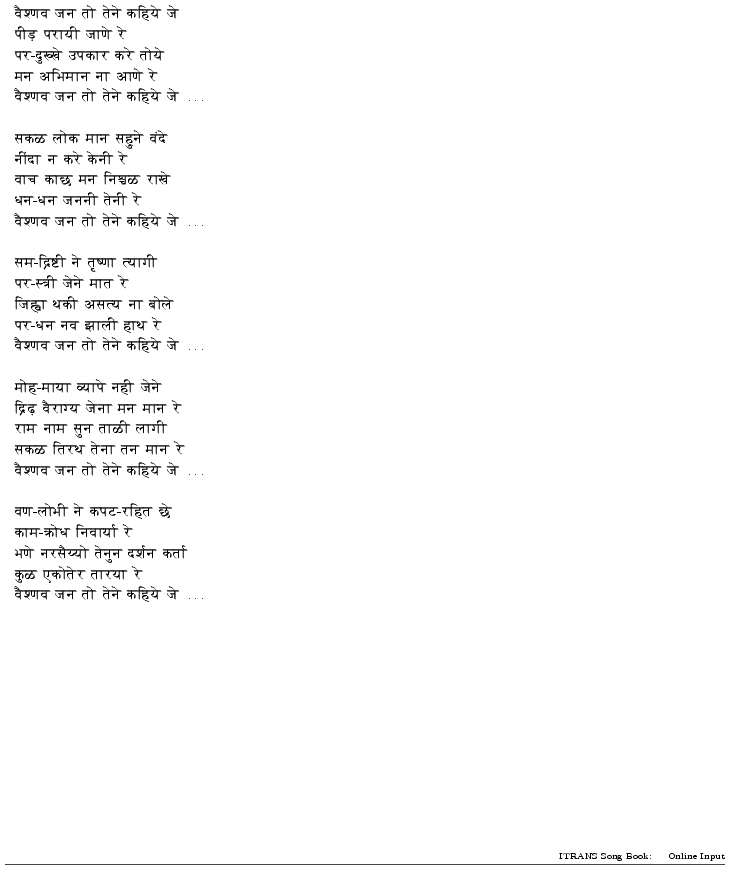
vaishnav jan to


written by great saint from gujrat and popularized by Gandhiji
this bhajan is profound-simple-touching-deep and i fall short of adjectives
read the lyrics carefully to testify yourself

and here is the translation

He is a Vaishnava who feels for the suffering of another And forgets the good he does to another, never taking pride in it.
Who cares not for the praise and condemnation of the world nor himself indulges in it.
He is not attached to women and wealth; such a one is praiseworthy and a jewel to his family.

He is the same to all, is desireless and the women of others he considers like unto his mother.

He never speaks falsehood nor has he his eye on another one's wealth.

He is no slave of any passion or attachment, and the spirit of renunciation rules his mind.

His heart is fixed on the Lord, whom he is restless to meet, really his body is indeed a pilgrim's garb.

He is neither avaricious, nor vile nor a victim to wrath and desire.

Says Narsi, verily that such a person shall find release from the cycle of rebirth.

Monday, July 03, 2006

kaagaz

वो:
सफ़ेद कागज पर सफ़ेद से मत लिखो
ऐसा कहां दिखता है ?

मै:
अरे ! सवाल तो लिख्नने का है
दिखने का खयाल तो एक दम झूठा है
और फिर सफ़ेद कागज़ पर तो
सफ़ेद से ही लिख्नना भाता है
ऐसे चाहे कितना ही लिखो
कगाज़ सफ़ेद ही रह जाता है !


He:
safed kagaz par
safed se mat likho
aisa likhna kahan diktha hai ?

Me:
are ! swaaal to likhne ka hai
dikhne ka khayal to ekdum jhooota hai
safed kaagaz par to
safed se hi likhna bhaata hai
aise chahe kitna bhi likho
kaagaz safeed hi reh jaata hai

Saturday, May 20, 2006

ramchandra-slokaas-normally sung at the end of shasranam

ॐ आपदामपहर्तारं दातारं सर्वसंपदाम् ।
लोकाभिरामं श्रीरामं भूयो भूयो नमाम्यहम् ॥
आर्तानामार्तिहन्तारं भीतानां भीतिनाशनम् ।
द्विषतां कालदण्डं तं रामचन्द्रं नमाम्यहम् ॥
नमः कोदण्डहस्ताय सन्धीकृतशराय च ।
खण्डिताखिलदैत्याय रामायऽऽपन्निवारिणे ॥
रामाय रामभद्राय रामचंद्राय वेधसे ।
रघुनाथाय नाथाय सीतायाः पतये नमः ॥
अग्रतः पृष्ठतश्चैव पार्श्वतश्च महाबलौ ।
आकर्णपूर्णधन्वानौ रक्षेतां रामलक्ष्मणौ ॥
सन्नद्धः कवची खड्गी चापबाणधरो युवा ।
गच्छन ममाग्रतो नित्यं रामः पातु सलक्ष्मणः ॥
अच्युतानन्तगोविन्द नामोच्चारणभेषजात ।
नश्यन्ति सकला रोगास्सत्यं सत्यं वदाम्यहम् ॥
सत्यं सत्यं पुनस्सत्यमुद्धृत्य भुजमुच्यते ।
वेदाच्छास्त्रं परं नास्ति न देवं केशवात्परम् ॥
शरीरे जर्झरीभूते व्याधिग्रस्ते कळेवरे ।
औषधं जाह्नवीतोयं वैद्यो नारायणो हरिः ॥
आलोड्य सर्वशास्त्राणि विचार्य च पुनः पुनः ।
इदमेकं सुनिष्पन्नं ध्येयो नारायणो हरिः ॥
यदक्षरपदभ्रष्टं मात्राहीनं तु यद्भवेत ।
तत्सर्व क्षम्यतां देव नारायण नमोऽस्तु ते ॥
विसर्गबिन्दुमात्राणि पदपादाक्षराणि च ।
न्यूनानि चातिरिक्तानि क्षमस्व पुरुषोत्तम् ॥

Wednesday, May 10, 2006

nida fazli

कुछ भी ना बचा कहने को हर बात हो गयी
आओ कहीं शराब पीयें रात हो गयी

सूरज को चोंच में लिये मुर्गा खडा रहा
खिड्की के पर्दे खीच दिये रात हो गयी

रस्ते में वो मिला था मैं बच कर गुज़र गया
उसकी फटी कमीज़ मेरे साथ हो गयी

मुद्दत से थी तलाश मिलें , और मिल लिये
दो पल रुके, सलाम हुआ, बात हो गयी

नकशा उठा के कोइ नया शहर ढुंडिये
इस शहर मे तो सबसे मुलाकात हो गयी

Wednesday, May 03, 2006

khusro

o ji maula ...
ap laakh silai jaati hai
seenon mein chupai jaati
tauheed ki mai saagar se nahin //tauheed is beleif in one god
aakhon se pilai jaati hai

is talaash o tajussus mein
kho gaya hun main
jo main nahin hun
to kyun hun ?
jo hun? to kya hun main ?


saaki tujhe kasam hai ...janebe amir ki

aahe *man kunto maula
fa ali ali un maula *

ishq kya shai hai
kisi kaamil se poocha chahiye
kis tarah jaata hai dil
ye dil se poocha chahiye

*words of nabi-of special significance*

Saturday, April 22, 2006

JagadanandaKaraka

Pallavi
Jagadaanandakaarakaa Jaya Jaanaki Praana Naayakaa

Anupallavi
Gaganaadipat Kulajaraaja Rajeshwara
Sugunaakara Sura Sevya Bhavya Daayakaa Sadaa Sakala

Charanam

Amarataaraka Nichaya Kumudahita Paripoorna Anagha Sura Sura
Bhooja Dadi Payodhi Vaasaharana Sundaratara Vadhana Sudhaamayavacho
Brinda Govinda Saananda Maavara Ajaraapta Shubhakaraa Aneka (Jagadaa)

Nigama Neerajamrutaja Poshaka Animisha Vairi Vaaridha Sameerana
Khaga Turanga Satkavi Hrudaalaya Aganita Vaanaraadhipa Nataanghriyuga (Jagadaa)

Indra Neelamani Sannibhaapaghana Chandra Surya Nayanaaprameya

Vaageendra Janaka Sakalesha Shubhra Naagendra Shayana Shamana Vairi Sannuta (Jagadaa)

Monday, April 10, 2006

rabia

call of sufi mystic rabia

O God! Whatever share of this world
Thou hast allotted to me,
bestow it on Thine enemies.
and whatever share of the next world
Thou hast allotted to me,
bestow it on Thy friends.
Thou art enough for me."

"O God! If I worship Thee in fear of Hell,
burn me in Hell;
and if I worship Thee in hope of Paradise,
exclude me from Paradise;
but if I worship Thee for Thine own sake
withhold not Thine Everlasting Beauty!

Sunday, April 09, 2006

bhavayami gopalbalam

an immortal stuti by annamacharya
Kirtanam :

भावयामि गोपाल बालम् मनसेवितम
तत पदम चिन्त्येयम सदा
कटी घटीत मेघला खचित मणी घण्टिका
पटल निन देन विभ्राजमानं
कुटिल पद घटित संकुल सिंजितेन तम
चटुल नटना समुज्ज्वल विलासम

निरत कर कलिता नवनीतम ब्रह्मादि
सुर निरकर भावना शोभित पदम
तिरुवेंकटा चल स्थ्तिम अनुपमम् हरिम्
परमा पुरुषम गोपलबालम

- श्री अन्नामचार्य

Friday, March 24, 2006

narendra sharma

आज के बिछुड़े न जाने कब मिलेंगे?

आज के बिछुड़े न जाने कब मिलेंगे?
आज से दो प्रेम योगी, अब वियोगी ही रहेंगे!
आज के बिछुड़े न जाने कब मिलेंगे?

सत्य हो यदि, कल्प की भी कल्पना कर, धीर बांधूँ,
किन्तु कैसे व्यर्थ की आशा लिये, यह योग साधूँ!
जानता हूँ, अब न हम तुम मिल सकेंगे!
आज के बिछुड़े न जाने कब मिलेंगे?

आयेगा मधुमास फिर भी, आयेगी श्यामल घटा घिर,
आँख भर कर देख लो अब, मैं न आऊँगा कभी फिर!
प्राण तन से बिछुड़ कर कैसे रहेंगे!
आज के बिछुड़े न जाने कब मिलेंगे?

अब न रोना, व्यर्थ होगा, हर घड़ी आँसू बहाना,
आज से अपने वियोगी, हृदय को हँसना सिखाना,
अब न हँसने के लिये, हम तुम मिलेंगे!
आज के बिछुड़े न जाने कब मिलेंगे?

आज से हम तुम गिनेंगे एक ही नभ के सितारे
दूर होंगे पर सदा को, ज्यों नदी के दो किनारे
सिन्धुतट पर भी न दो जो मिल सकेंगे!
आज के बिछुड़े न जाने कब मिलेंगे?

तट नदी के, भग्न उर के, दो विभागों के सदृश हैं,
चीर जिनको, विश्व की गति बह रही है, वे विवश है!
आज अथइति पर न पथ में,मिल सकेंगे!
आज के बिछुड़े न जाने कब मिलेंगे?

यदि मुझे उस पार का भी मिलन का विश्वास होता,
सच कहूँगा, न मैं असहाय या निरुपाय होता,
किन्तु क्या अब स्वप्न में भी मिल सकेंगे?
आज के बिछुड़े न जाने कब मिलेंगे?

आज तक हुआ सच स्वप्न, जिसने स्वप्न देखा?
कल्पना के मृदुल कर से मिटी किसकी भाग्यरेखा?
अब कहाँ सम्भव कि हम फिर मिल सकेंगे!
आज के बिछुड़े न जाने कब मिलेंगे?

आह! अन्तिम रात वह, बैठी रहीं तुम पास मेरे,
शीश कांधे पर धरे, घन कुन्तलों से गात घेरे,
क्षीण स्वर में कहा था, "अब कब मिलेंगे?"
आज के बिछुड़े न जाने कब मिलेंगे?

"कब मिलेंगे", पूछ्ता मैं, विश्व से जब विरह कातर,
"कब मिलेंगे", गूँजते प्रतिध्वनिनिनादित व्योम सागर,
"कब मिलेंगे", प्रश्न उत्तर "कब मिलेंगे"!
आज के बिछुड़े न जाने कब मिलेंगे?

thanks to bagru for reminding me of this!

Sunday, March 12, 2006

"Time is...
too Slow for those who Wait,
too Swift for those who Fear,
too Long for those who Grieve,
too Short for those who Rejoice;

"But for those who Love...
Time is eternity."

by henry van dyke

Wednesday, February 08, 2006

dushyant kumar

apart from the lyricist pradeep
here is another poet who has done some
amazing patriotic and inspirational poetry
Dushyant Kumar


हो गई है पीर पर्वत सी पिघलनी चहिये
इस हिमलय से कोइ गंगा निकलनी चाहिये

आज ये दीवर परदों की तरह् हिलने लगी
शर्त लेकिन थी की ये बुनीयाद जलनी चाहिये

हर सडक पर हर गली में हर नगर हर र्गाँव मे
हाथ लहराते हुए हर लाश चलनी चाहिये

सिर्फ हंगामा खडा करना मेरा मकसद नहीं
मेरी कोशिश है की ये सूरत बदलनी चाहिये

मेरे सीने में नही तो तेरे सीने मे सही
हो कहीं भी आग, लेकिन आग जलनी चाहिये


bagru thanks for reminding me of him

Sunday, February 05, 2006

neerah again

सपने झरे फूल से
मीत चुभे शूल से
लुट गये सिंगार सभी
बाग के बबूल से
और हम खडे खडे
बहार देखते रहे
कारवाँ गुज़र गया
गुबार देखते रहे

नींद भी खुली न थी
कि है धूप ढल गयी
पांव जब तलक उठे
की जिन्दगी फिसल गयी
पात पात झर गये
शाख शाख जल गयी
गीत अश्क़ बन गये
स्वप्न हो दफ़न गये
साथ के सभी दिये
धुआं पहन पहन गये

और हम झुके झुके
मोड पर रुके रुके
उम्र के चढाव का
उतार देखते रहे
कारवाँ गुज़र गया
गुबार देखते रहे


क्या शबाब था की
फूल-फूल प्यार कर उठा
क्या कमाल था की देख
आइना सहर उठा
इस तरफ़ जमीं
और आस्मां उधर उठा

थम कर जिगर उठा
कि जो मिला नजर उठा
एक दिन मगर यहां
ऐसी कुछ हवा चली
लुट गयी कली कली
घुट गयी गली गली
और हम लुटे लुटे
वक्त् से पिटे पिटे
साज की शराब का
खुमार देखते रहे
कारवाँ गुज़र गया
गुबार देखते रहे

हाथ थे मिले की ज़ुल्फ़
चांद की संवार दूं
होंठ थे खिले के हर
बहार को पुकार दूं
दर्द था दिया गया की
हर दुखी को प्यार दूं
और सांस यूं के स्वर्ग
भूमी पे उतार दूं

हो सका ना कुछ मगर
शाम बन गयी सहर
वो उठी लहर की ढै
गये किले बिखर बिखर
और हम डरे डरे
नीर नैन मे भरे
ओढ कर कफ़न पडे
मजार देखते रहे
कारवाँ गुज़र गया
गुबार देखते रहे


-----no tranlation request please ---even my best will be grotesque----
and the remaning part coming soon

insaan kahan hain?

kaun batayein kisse poochein
sab to hain insaan kahan hain
aisa kyon hain wasie kyon hain
ye sab kuch hai kaisa kyon hain
aaj bhi kal ke jaisa kyon hain

kaun batayein kisse poochein
sab to hain insaan kahan hain

jale hue ye ghar kiske hain
kate hue ye sar kiske hain
naaze aur khanjar kiske hain?
ye khooni manzar kiske hain?

kaun batayein kisse poochein
sab to hain insaan kahan hain


kaun batayein kisse poochein
sab to hain insaan kahan hain

dharam kahan imaan kahan?
kuda kahan bagwan kahan
are sach poocho to insaan kahan?
mera pyaara hindustaan kahan hai

kaun batayein kisse poochein
sab to hain insaan kahan hain

********************************************

madir bhi le lo
masjid bhi le lo
magar tum hamare
laho se na khelo

mandir se gar jo
khuda hai nadardad
aur masjidion mein
nahin hai jo ishwar
to phir aadmi ke liye dharm kya hai
jahan aadmi ke liye uthne hain khanjar


khuda ko bhi le lo
ishwar ko bhi le lo
tum ram le lo
babar bhi le lo

kaun bataayein kisse poochein
sab to hain insaan kahan hai

Saturday, February 04, 2006

neeraj


gopal daas neeraj has the skill to do
romantic poetry in colloquial language
this is a flimy lyric touching the heights of
imagery

shokhiyon mein ghola jaaye phulon ka shabad
usme phir milai jaaye thodi si sharaab
hoga jo nasha tayyar wo pyaar hai


view the gif for the complete song
(incidentally the ISB coder has made an error-the lyrics penned by neeraj)

Friday, February 03, 2006

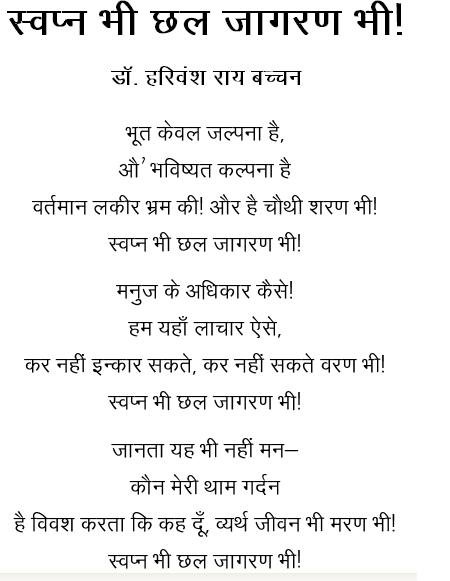
bacchan


another great poem bacchan
-courtesy jaya

Wednesday, February 01, 2006

rummi

"One went to the door of the Beloved and
knocked. A voice asked, 'Who is there?'
He answered, 'It is I.'

The voice said, 'There is no room for Me and Thee.'
The door was shut.

After a year of solitude and deprivation he returned and knocked.
A voice from within asked, 'Who is there?'
The man said, 'It is Thee.'
The door was opened for him."


-- Jelaluddin Rumi


*************************************************************************

In your light I learn how to love.

In your beauty, how to make poems.

You dance inside my chest,

where no one sees you,

but sometimes I do,

and that sight becomes this art.

****************************************************************
The breeze at dawn has secrets to tell you.
Don't go back to sleep.
You must ask for what you really want.
Don't go back to sleep.
People are going back and forth across the doorsill
where the two worlds touch.
The door is round and open.
Don't go back to sleep.
*****************************************************************

how very close

is your soul with mine

i know for sure

everything you think

goes through my mind


i am with you

now and doomsday

not like a host

caring for you

at a feast alone


with you i am happy

all the times

the time i offer my life

or the time

you gift me your love


offering my life

is a profitable venture

each life i give

you pay in turn

a hundred lives again


in this house

there are a thousand

dead and still souls

making you stay

as this will be yours


a handful of earth

cries aloud

i used to be hair or

i used to be bones


and just the moment

when you are all confused

leaps forth a voice

hold me close

i'm love and

i'm always yours

***********************************************************************

Never be without rememberance of Him,
for His rememberance
gives strength and wings
to the bird of the Spirit.
If that objective of yours
is fully realized, that is
"Light upon Light"...

...But at the very least, by
practicing God's rememberance
your inner being
will be illuminated
little by little and
you will achieve
some measure of detachment
from the world.

-- Jelaluddin Rumi

************************************************************

Thursday, January 19, 2006

Wednesday, January 18, 2006

ETERNITY IN AN HOUR

ETERNITY IN AN HOUR

To see a World in a grain of sand,
And a Heaven in a wild flower,
Hold Infinity in the palm of your hand,
And Eternity in an hour....

The bat that flits at close of eve
Has left the brain that won't believe.
The owl that calls upon the night
Speaks the unbeliever's fright....

Joy and woe are woven fine,
A clothing for the soul divine;
Under every grief and pine
Runs a joy with silken twine....

Every tear from every eye
Becomes a babe in Eternity....

The bleat, the bark, bellow, and roar
Are waves that beat on Heaven's shore....

He who doubts from what he sees
Will ne'er believe, do what you please.
If the Sun and Moon should doubt,
They'd immediately go out....

God appears, and God is Light,
To those poor souls who dwell in Night;
But does a Human Form display
To those who dwell in realms of Day.

WILLIAM BLAKE

Tuesday, January 17, 2006

Narsi Mehta


i think must have either heard or hopefully appreciated the famous song vaishnav jan to
here are some tit bits about its lyrcist
Narsi Mehta
Considered to be the foremost poet-saint of Gujarat, Narsi Mehta's (A.D. 1414-1480) songs (padas) are full of devotion of Lord Krsna. They describe in a most vivid and passionate manner the early life of Krsna, his love-play with the Gopis of Gokula and the basic philosophy of early bhakti cult. Narsi Mehta's style is both simple and moving, and consequently the impact of his songs can still be felt in the villages of Saurashtra (Gujarat) where they have become part of the folk tradition.

"Besides being a poet, devotee and saint, Narsi Mehta was also a social reformer. Though born as an orthodox Nagar Brahmin, he was one of the strongest critics of the caste system and its evils. His naturally sensitive and loving nature revolted against the treatment of untouchables by his castemen. Narsi knew no caste distinctions; he looked upon all human beings as the children of Hari (Harijana).

"A hundred songs, representative of Narsi Mehta's philosophy, social message and the portrayal of love-play between Radha and Krsna (Radha-Krsna lila) are for the first time translated into simple and direct English verse." (jacket)

Monday, January 09, 2006

ek purana mausam lauta

Ek Purana Mausam lauta,
yaad bhari purvayee bhi

Aisa to kam hota hai,
who bhi ho tanhayee bhi

yadaon ki bauchaaron se,
jab palken bheegnelagti hain
kitni saundhi lagti hai tab
maji ki ruswai bhi

Ek Purana Mausam lauta,
yaad bhari purvayee bhi

Do do shaklen dikhtee hain
is bahke se aaine mein
Mere saath chala aaya hai
aapka ek saudayee bhi

Tuesday, December 20, 2005

badal ko ghirte dekha hai

अमल धवल गिरि के शिखरों पर,
बादल को घिरते देखा है।
छोटे-छोटे मोती जैसे
उसके शीतल तुहिन कणों को,
मानसरोवर के उन स्वर्णिम
कमलों पर गिरते देखा है,
बादल को घिरते देखा है।

तुंग हिमालय के कंधों पर
छोटी बड़ी कई झीलें हैं,
उनके श्यामल नील सलिल में
समतल देशों ले आ-आकर
पावस की उमस से आकुल
तिक्त-मधुर बिसतंतु खोजते
हंसों को तिरते देखा है।
बादल को घिरते देखा है।

ऋतु वसंत का सुप्रभात था
मंद-मंद था अनिल बह रहा
बालारुण की मृदु किरणें थीं
अगल-बगल स्वर्णाभ शिखर थे
एक-दूसरे से विरहित हो
अलग-अलग रहकर ही जिनको
सारी रात बितानी होती,
निशा-काल से चिर-अभिशापित
बेबस उस चकवा-चकई का
बंद हुआ क्रंदन, फिर उनमें
उस महान् सरवर के तीरे
शैवालों की हरी दरी पर
प्रणय-कलह छिड़ते देखा है।
बादल को घिरते देखा है।

दुर्गम बर्फानी घाटी में
शत-सहस्र फुट ऊँचाई पर
अलख नाभि से उठने वाले
निज के ही उन्मादक परिमल-
के पीछे धावित हो-होकर
तरल-तरुण कस्तूरी मृग को
अपने पर चिढ़ते देखा है,
बादल को घिरते देखा है।

कहाँ गय धनपति कुबेर वह
कहाँ गई उसकी वह अलका
नहीं ठिकाना कालिदास के
व्योम-प्रवाही गंगाजल का,
ढूँढ़ा बहुत किन्तु लगा क्या
मेघदूत का पता कहीं पर,
कौन बताए वह छायामय
बरस पड़ा होगा न यहीं पर,
जाने दो वह कवि-कल्पित था,
मैंने तो भीषण जाड़ों में
नभ-चुंबी कैलाश शीर्ष पर,
महामेघ को झंझानिल से
गरज-गरज भिड़ते देखा है,
बादल को घिरते देखा है।

शत-शत निर्झर-निर्झरणी कल
मुखरित देवदारु कनन में,
शोणित धवल भोज पत्रों से
छाई हुई कुटी के भीतर,
रंग-बिरंगे और सुगंधित
फूलों की कुंतल को साजे,
इंद्रनील की माला डाले
शंख-सरीखे सुघड़ गलों में,
कानों में कुवलय लटकाए,
शतदल लाल कमल वेणी में,
रजत-रचित मणि खचित कलामय
पान पात्र द्राक्षासव पूरित
रखे सामने अपने-अपने
लोहित चंदन की त्रिपटी पर,
नरम निदाग बाल कस्तूरी
मृगछालों पर पलथी मारे
मदिरारुण आखों वाले उन
उन्मद किन्नर-किन्नरियों की
मृदुल मनोरम अँगुलियों को
वंशी पर फिरते देखा है।
बादल को घिरते देखा है।

courtsey jaya jha

Saturday, December 10, 2005

raskhan

धुरि भरे अति सोहत स्याम जू, तैसी बनी सिर सुंदर चोटी।
खेलत खात फिरैं अँगना, पग पैंजनी बाजति, पीरी कछोटी॥
वा छबि को रसखान बिलोकत, वारत काम कला निधि कोटी।
काग के भाग बड़े सजनी, हरि हाथ सों लै गयो माखन रोटी॥

a million thanks to bagru for reminding me of this

Friday, December 09, 2005

nirvan shatkam

a gem by shakara was written when his was age eight!

Mano Buddhi-ahankaara Chithaani Naaham
Na Cha Shrotra Jihve Na Cha Ghraana Netre
Na Cha Vyoma Bhoomir Na Tejo Na Vaayuhu
Chidaananda Roopah Shivoham Shivoham

I am not the mind, intellect, ego, or memory.
(the 4 aspects of Antah Karanaas)
Nor am I the ears, tongue, nose, eyes (and skin)
(the 5 organs of perception)
I am not the space, earth, fire, air (and water)-
(the 5 great elements)
I am pure Knowledge and Bliss.
I am the self spiritual joy of pure
Consciousness Shiva, Shivoham, Shivoham.

Na Cha Praana Samjno Na Vai Pancha Vaayuhu
Na Va Sapta Dhaatur Na Va Pancha Koshah
Na Vaak Paani Paadau Na Chopastha Paayuh
Chidaananda Roopah Shivoham Shivoham

I am not the Praana,
I am not the 5 vital airs.
I am not indeed the 7 materials,
Surely not the 5 sheaths,
Not the organ of speech, nor
hand, nor leg,
And not the genital organ, nor the anus.
I am of the nature of pure Knowledge and Bliss. I am Shiva, the most
Auspicious, I am Shiva.

Na Me Dvesha Raagau Na Me Lobha Mohau
Mado Naiva Me Naiva Maatsarya Bhaavah
Na Dharmo Na Chaartho Na Kaamo Na Mokshah
Chidaananda Roopah Shivoham Shivoham

I have neither hatred nor liking,
I have neither greed nor delusion,
I have indeed neither pride
nor jealousy,
I have no duty (to perform),
nor any wealth (to acquire),
I have no craving (for pleasure),
I am not being bound (for
liberation),
I am of the nature of Pure
Consciousness and Bliss,
I am all Auspiciousness,
I am Shiva.

Na Punyam Na Paapam Na Saukhyam Na Dukham
Na Mantro Na Teertham Na Vedo Na Yajnaha
Aham Bhojanam Naiva Bhojyam Na Bhoktaa
Chidaananda Roopah Shivoham Shivoham

I have neither virtue nor vice,
nor pleasure, nor pain,
nor the sacred chant of
mantras nor pilgrimage,
nor the scriptures,
nor the sacrificial rituals,
I am neither the act of enjoying,
nor the enjoyable object,
nor the enjoyer,
I am pure Knowledge and Bliss,
I am shiva, the
Auspiciousness itself.

Na Me Mrityu Shankaa Na Me Jaati Bhedah
Pita Naiva Me Naiva Maataa Na Janma
Na Bandhur Na Mitram Gurur Naiva Shishyah
Chidaananda Roopah Shivoham Shivoham

I have no fear of death,
nor have I any distinction
of Caste,
I have neither father,
nor mother, nor even birth,
nor relation, nor friend,
no teacher, no disciple,
I am pure Knowledge and Bliss,
I am all Auspiciousness,
I am Shiva.

Aham Nirvikalpo Niraakaara Roopaha
Vibhur Vyaapya Sarvatra Sarvendriyaanaam
Sadaa Me Samatvam Na Muktir Na Bandhah
Chidaananda Roopah Shivoham Shivoham

I am devoid of dualities,
and I am formless,
I exist everywhere,
pervading all the senses,
always I am the same,
I have neither freedom nor
bondage,
I am pure Knowledge and Bliss,
I am Auspiciousness,
I am Shiva.

Wednesday, December 07, 2005

jindagii

this one is to Dr.(soon to be)prakash :

Ab tho kuch apni tabiyat bhi juda lagti hai
Saans letha hoon to zakhmon ko hawa lagti hai

Kabhi raazi to kabhi mujhse khafa lagti hai
Zindagi too hi bata tu meri kya lagti hai?"

Najane kyun tera milkar bichadna yaad aata hai
main ro padtha hoon jab guzraa zamana yaad aata hai

Main aksar dekh kar shaanon ko apne rone lagta hoon
mujhe jab pyaar se sar tera rakhna yaad aata hai

Koi jab muskurata hai to dil par chot lagti hai
wo aanchal men tera jab muskurana yaad aata hai

nahin bhoola hoon main ab tak tujhe wo bhool ne wale
bata tujh ko bhi kya mera fasana yaad aata hai

Teri tasveer ko bas dekh the hi bewafa mujh ko
mujhe wo pyaar ka mausam suhana yaad aata hai

Sunday, December 04, 2005

julm e ulfat

another great one from sahir

Jurm-e-Ulfat Pe Hummein Loog Saza Detay Hein
Kaisey Nadaan Hein, Sholoun Ko Hawa Detay Hein

Hum Se Deewaney Kahien Tarq-e-Wafa Kartey Hein
Jaan Jaaye Kay Rahey Baat Nibbha Detay Hein

Aap Doulat Kay Tarazu Mein Dilloun Ko Toulein
Hum Mohabbat Se Mohabbat Ka Sila Detay Hein

Takht Kya Cheez Hai Aur Lal-o-Juahir Kya Hein
Ishq Waley Tou Khudai Bhi Lutta Detay Hein

Hum Ney Dil Dey Bhi Diya, Ehad-e-Wafa Lay Bhi Liya
Aap Ab Shouq Se Dey Lein Jo Saza Detay Hein

Poet: Sahir Ludhiyanvi

Tuesday, October 11, 2005

Culture, culture on the wall

what better way to restart blogging...than by this post
and no wonder it comes from one of my teachers

Culture, culture on the wall...

SHIV VISVANATHAN


CULTURE is a word that quakes and trembles today. People in their forties and fifties are worried about it. They talk of culture as if it has caught a cold, gone tubercular or just attended a biopsy. I love the fear and trembling model of culture. It smacks of nostalgia. It reminds me of my grandfather.

My grandfather oozed high culture and wrote a book on the ‘Grammar of South Indian Music’ that would have made any Calvinist or Brahmo happy. He had trained his yawns to emanate as ragas and when he yawned at night, children knew it was time to hide. He willed his grandchildren his prized stradivarius. Not one of them accepted the offer and I believe a pair of mice eventually lived happily in it.

It was not the ‘strad’ we objected to, it was my grandfather. But in my mind both were intertwined: the classical power and that whiff of authoritarianism. This culture was what you did in drawing rooms. It was exquisite, fragile, well-behaved, even a shade brahmanic. It was official and it reprimanded all those who read comic books. I loved comics and Shakespeare. I would recite reams of Macbeth, but Donald Duck and Tom and Jerry were characters from my midsummer night’s dream.

References to culture sounded sonorous. I still remember President Radhakrishnan defining the purpose of culture as ‘to educate, to entertain and to elevate the spirit of man.’ It was only later that I discovered that culture was anything you did and thought. It was not just an anthropological definition for tribal societies but for the tribal in me. I found it tremendously liberating to have Shakespeare and Mad Magazine cheek by jowl. But I must admit that this classic notion of culture had strengths. Officially, it was painful but domestically it was fun. Culture was something everyday from the rangoli or kollam you did (no one went to finishing school), the food you cooked (Tarla Dalal would have been a non-event), to the music you learnt. You just grew with it. It blended with religion, ritual, food and festival. I still remember Bismillah insisting his shehnai didn’t sound right till it had the flavour of kebabs in it. Maybe this culture was horribly gendered. Remember it was a world where boys did science and girls home-science. The icons were clear-cut – Tagore, Ravi Shankar, MS, DK, Balasaraswati, Semangudi.

There were no special music critics. Every consumer was his own discerning critic, citing chapter and verse from earlier performances. The folklore of music was as refined as that of cricket. Every performance of MS had its followers, its lore as detailed and obsessive as that of cricket. I can still hear my father talking of the first time MS sang as a young girl at a marriage festival. He was assigned the task of bringing her to the pandal.

Culture like politics was consensual and culture like the Indian National Congress had its greats. One knew them, lived them, recognized them and respected them. The nadaswaram at the temple, the Nehru cap, Hamlet, the Conjeevaram sari, the veena and the sitars – each had its immaculate, iconic place. There were minor disturbances. The nouveau riche still entered at the wrong time and clapped at the wrong places. These were minor irritants becoming jokes which were passed again and again like the story of the socialite who asked the scientist C.V. Raman, ‘Believe you have something to do with diamonds?’ True it was also elitist. We were ecstatic about Bharatnatyam after Rukmini Arundale had poured antiseptic on it and we knew little about the mythic power of Terrukoothu.

Today all this sounds like nostalgia but remember nostalgia is a particular kind of ritual. It mourns that which isn’t fully dead. It is not death that nostalgia mourns but demographic decline. But nostalgia also kills because it refuses to recognize and understand the new. When it hears the new raga of Iliya Raja, it mourns for the lost record of Pattamal. Nostalgia is not the grief for the old but the dirge for the new which in turn is tone deaf to its grief. Talk nostalgically of T.N. Krishnan’s first music academy performance and the new generation belts out ‘Who wants yesterday’s newspaper?’


In some ways, there are strange similarities between the classical culture and the Congress. Both of them were happily contradictory and encouraged mixed and parallel economies. You went to the Gwalior festival, listened to Lata Mangeshkar, and vibed with Ellington and the Beatles. They were rituals for separate places and you also had coping rituals. You were dismissive about Hindi movies but could not resist seeing them a fourth time. Nargis and Madhubala were still pristine faces. Filmfare dismissed them but you merely went to see what the excitement was about or you justified it by saying Vyjanthi had classical Bharatnatyam training. Or you saw Sholay for the eighth time to see how Sippy had imitated Kurosawa. A few ritual japams to Kurosawa excused your enthusiasm for a tall, young star with a classical baritone. But even there one asked, wasn’t he Harivansh Rai Bachchan’s son and hadn’t he acted in the Shakespeare society plays?


The classical culture had its own theory of violence. The Mahabharata was the paradigm but it was the attitude of spectators rather than warriors that was relevant. Sanjaya more than Karna or Arjuna was the hero, the first detached commentator.

The old ‘culture’ lost to a new consensus, which was more open and tolerant. No one today can ignore the democratic role of the Hindi movie. Dismissed for years as populist, sentimental, surreal, fraudulent, imitative, the Hindi movie offered the first real frame for cultural democracy. It merged classical and folk, it stole from Hollywood and yet made fun of the English. It upheld law and order but realized that love went beyond it. It upheld the myths of upward mobility. It recognized the intellectual death of village and the power of the city long before our social scientists and politicians. It was the classical upholder of ethnic identity and yet defended the citizenship of Amar, Akbar and Anthony.

In fact it was the newspaper, the English ones, that were both elitist and official. The newspaper as landscape protected official frames and categories. For example, The Hindu was the greatest exponent of Science, State and Nation. Science was central; the folk arts were confined to Sunday supplements. The Hindi movie editorialized from a plurality of perspectives. Its theory of doubles would accommodate the dualisms of urban/rural, criminal/legal, official/unofficial but the newspaper through the 1960s, ’70s and ’80s reflected the statist consensus committed to modernization, nationalism and security.

The English newspaper was the official mask while the Hindi movie played the happy unconscious ready to engage with any contradiction. Laughed at, laughable, it represented the cultural consensus of a democratizing society when the brahmanic idea of culture was turning repressive and arid. What was utterly fascinating was the Hindi movies’ approach to violence. It saw violence as a ritual of culture, as a consequence of the feud, an act of revenge. Hindi movies never took class violence seriously. Marxism was a poor theory of revenge, a poor narrative about the recovery of honour. Secondly, by ritualising violence it controlled it, like the stylized fight or the ritual closure as the police arrive on the scene.


But even the Hindi movie with its Roberts and Amitabhs, its Latas and Burmans was incapable of coping with the emerging global paradigm. The work of Rahman or Rakesh Roshan were desperate innovative leaps which show that the consensus is broken, that the NRI has taken over from the Indian citizen. The myth of the diaspora, the story of successful Indian migrants winning prizes at everything from banking exams and spelling bees to science quizzes reflects the end of the Hindi movie as consensus. The Hindi movie is a celebration of nostalgia. The innovations of Ghai and Desai can no longer provide the mythic consensus that democracy and mobility need.

I feel the Hindi movie will collapse like the Indian Congress. It can no longer provide something for everybody. Its constituency will fragment like the Congress – the Dalits, Muslims, OBCs each finding their own form of political entertainment. The cinema theatre will be a thing of the past and it will be put to better use in other real estate exercises. Maybe as a video centre, cybercafe, a fast food joint or even a pool table. Today’s cinema audiences will split into a series of entertainment constituencies. The A.R. Rahmans and Rajiv Menons will have to produce designer movies for separate niches.

Just as the magazine trade is niching into separate readerships, the movie world also will also fragment. The India Today equivalent of the movie will be difficult to invent. The mythic power of the Hindi movies will be taken over by soap opera TV, stage shows as happenings, cricket matches. What we now face is a world where neither elite culture, nor mass culture nor folk culture is alive and thriving.


Neither classical culture or cinematic culture have a paradigm for the emerging violence. It is the relation between the new kitsch and violence that we must understand. Violence here offers no resolution or redemption. It cumulates in a fragmented form without ritual control. Let us also be clear that this is not the violence of fascism. It is fragmentary violence that cumulates geologically and behaves tectonically. It is a violence hidden by our boyscout sentimentality or security management concepts.

Violence in the city is like fragments in film, but the city overall is an unfilmable film. The forms of violence juxtapose each other. There is the communal riot, rape, incest, disaster, displacement, the sheer survival of slum. No myth holds all of them; only kitsch can and does and kitsch is debased myth. What we face are a new cast of characters – fundamentalists with MBAs, terrorists in finance capital, diasporic revivalists, paramilitary cultural groups, NGOs and mercenaries, cops applying draconian laws along with the incendiarism of unemployed youth and Ph.D plugged to cyberspace. It has a boyscout adolescence. Kitsch celebrates the new violence of the city struggling under old myths. The statistics are there in cyberspace but the cyber relief stops there. Westside Story in Hindi or Kung-fu rituals or even older cinematic criminality has little to say about this violence. There is no theory, no frame holding it.


The fragmentation one sees, the transit subcultures, the desperate hybridizations are all a part of this anomie. Filmi space was a whole that cyberspace as a mindset has broken. We face today an insurrection of constituencies without a powerful mythic consensus. The fragment is all and the fragment is celebrated as a totalizing icon till the next release. Central to the recovery is a new imagination for the city that must work for the new idea of culture to work. Hybridized or hyphenated music, the cybercages are all transient experiments. The city will have to invent varieties of cultural entertainment as homes will get smaller, transport more difficult, energy more expensive. The city will be caught between boredom and violence and our cultures have no response to this urban violence.

Nostalgia, religion, shuffling of cultures, rise of new sects or fascist cadres might provide alternatives to the movie and the newspaper. At a time when we need consensus most, the newspaper, the Congress and the Hindi movie will fail us. Our belief that Indian civilization will digest this new invasion, will add to the crisis. Maybe involvement in violence or authoritarianism will provide new forms of involvement.

It is this wider picture rather than the idiocies of Gulshan Kumar, TOI supplements, music mixes, empty socialites, the idiocy of fashion shows, that frightens one. The transit cultures of today have no answer to this cultural anomie while living off it.

Wednesday, May 25, 2005

Madhu Kishwar

tho i dont complete agree with madhu kishwar .. i must mention that she has a remarkable way of putting things accross when it comes to indian culture.

for those who dont know she is w/o lord swaraj paul .. they got married few months ago :)
WOMEN OF VISION
The Unfailing Power Of Female Fidelity
Lord Rama's tragic treatment of his chaste wife Sita show women which men to avoid
By Madhu Kishwar

I grew up thinking that Sita, heroine of the Ramayana, was a slavish wife without a mind of her own who deserved the shabby treatment of her husband, Lord Ram. It took me a long time to understand that it is not Indian women's masochism which makes Sita appear an appealing role model. It is her supreme loyalty, combined with her dignified refusal to go through the humiliation of a second fire ordeal. She makes Ram appear so uncouth and unreasonable that this one injustice has not been forgiven all these centuries.

During Ramanand Sagar's "Ramayan" telecast on TV, as the episode approached when Sita's fidelity was to be tested with an agnipariksha (fire ordeal), the serial makers were flooded in advance with so many letters protesting the depiction of Sita going through the agnipariksha that he had to deviate from his text and show a mock agnipariksha, with the TV Ram making it clear that he did not doubt Sita's chastity. Clearly, Ram's injustice to Sita hung so heavily on the collective conscience of Indians that they willingly demanded even a sacred text be altered.

I witnessed the power of Sita's story to move men's hearts in Maharashtra. I was working on the Lakshmi Mukti program to persuade peasants of the organization, Shetkari Sangathana, to empower women by voluntarily transferring a portion of the family land in the name of the wife. During our campaign, Sangathana leader Sharad Joshi pointed out to men how their wives toil for them selflessly, how crucial their wives' labor and care is for the well-being of the family. He would ask his audience: "But how do we men treat our Lakshmi's? [Sita is an incarnation of Lakshmi]. Often no better than Ram treated Sita! When Ram was banished for 14 years Sita could have stayed back, but she insisted, 'Wherever goes Ram, there goes Sita. My place is by your side.' She suffered numerous privations for him joyfully. Though Ram's enemy, Ravan, respected her chastity when she was captured by him, and did not violate Sita against her wishes, her own husband subjected her to the cruel humiliation of agnipariksha to prove her chastity. Even fire could not touch her. But on their return to his kingdom, at the mere hint of a slanderous remark by a laundryman, Ram asks Lakshman to take away Sita and leave her in a forest without explanation. Maharani (Great Queen) Sita became a beggar overnight because her husband turned against her. It did not occur to him to tell his subjects, 'If Sita is not good enough to be your queen, then my place is by her side. I cannot stay here either.' He left her destitute even while she was pregnant with his children."

Joshi told his audience that the purpose of the Lakshmi Mukti program was to see that no modern-day Sita would ever have to suffer the fate of Ram's Sita, left without anything to call her own. By transferring land to their wives, they were paying off "a long overdue debt." In village after village I would see men reduced to tears listening to Sita's story. In 15 months more than 613 villages carried out the Lakshmi Mukti program of land transfer to wives celebrating the occasion as though it were a festival. Men felt good atoning for the wrongdoing of Ram. An additional two thousand villages volunteered to accept the Lakshmi Mukti Program, but the leadership somehow lost momentum.

People will say approvingly, "He is a Ram-like son or a Ram-like brother or a Ram-like king," but almost never say in approval, "He is a Ram-like husband." Women do not wish a Ram-like husband, even while they wish to be as loyal as Sita. Likewise, no woman wants a Krishna or a Vishnu, for Krishna is seen as a Casanova who kept many women dangling after him. Women often pray for a Krishna-like child, but almost never pray that they get a
Krishna type husband.

Siva alone of all the Gods is considered the most desirable type of husband. Unmarried women fast on Mondays praying to Siva that He bless them with Parvati's good fortune. Why? Because Siva is single minded in his devotion to Parvati. He has no eye for any other woman. When she immolates herself as Sati to protest her father's insult of her husband, Siva is ready to burn down the whole world and rests only after he has brought her back to life. She carries tremendous influence in his activities, a companion and advisor rather than a servile wife. They are our mythology's most celebrated and happy couple, representing perfect joy in togetherness, including in their sexual union. Yet, Parvati had not been able to seduce him with her physical charm. She did rigorous austerities to win him.

Why do women want a Siva-like husband and not a Krishna or Ram? At the heart of this choice is the awareness that women's well-being requires a stable family and a man who will act responsibly towards his wife and his children. Most women shudder at the prospect of being a single parent, like Sita. Nor do they want to be a wife like Rukmini, who is forever waiting for her husband, who is too busy with his various dalliances. For a stable family life, sexual loyalty and restraint are a pre-condition. Even while preaching its virtue to women, most men have found it hard to live by those norms. And women have had a hard time trying to hold men to it by making their own lives examples to be emulated in this respect. Some succeed partially, some well, some not at all. But most keep trying because they know if they give up or take to the ways of men, there is little possibility of finding an emotionally stable family life for themselves and their children.

MADHU KISHWAR, 47, New Delhi, editor of Manushi, India's leading magazine on human issues, especially women right's, is an erudite activist in the effort to raise up the qualify of life in India.

Thursday, May 19, 2005

Vali and Sri Ram: an esoteric explanation

Consider the episode where Sri Ram, after being hidden Himself behind a tree shoots the monkey king Vali, while Vali was engaged in a fight with his brother Sugreeva. This episode has a deep mystical significance.

Vali, the immoral and vicious brother represents Lust, the lower nature of man. Sugreeva, the moral and virtuous brother represents man’s higher and nobler nature.

Vali had earned through austerity a boon by which half the strength of his enemy was transferred to him as soon as an enemy confronted him in a battle. Similarly the power of lust becomes invulnerable the moment man comes in direct contact with the object of lust. The sense objects overpower man and they leave him a helpless victim of temptation. To avoid this, and to overcome successfully the disastrous influence of the sense objects, man has to stay away physically from the objects in the initial stages i.e. before he gains an absolute hold and control over them. So long as man remains in the midst of sense objects and tries to exercise his self control over those objects, he can never be successful since the power of the sense objects is almost invincible.

To indicate this great truth, Sri Ram is described as hiding behind a tree i.e. physically keeping away from Vali, and shooting him from a distance.

Sri Ram’s bow and arrows symbolise his preparedness and strength to maintain peace, and justice, both within and without. Sri Ram is the ideal of "aggressive goodness" as opposed to "weak and passive goodness". He stands for righteousness. He opposes and destroys all that is unrighteous.

Adhyatma Ramayana

Wednesday, May 18, 2005

samundar: Vaseem Barelvi Saheb

finally back from that long hiatus
here is something i am sure u all will like
by Vaseem Barelvi Saheb,

******************
Kya dukh hai samundar ko bataa bhi nahin sakta
Aansoo ki taraha aankh mein aa bhi nahin sakta!

Tu choRh raha hai to khata is mein teri kya
Har Shakhs mera saath nibha bhi nahin sakta!

Lagaa ke dekh le jo bhi hisaab aata ho
Mujhe ghata ke wo ginti mein rah nahin sakta!

Vaise to ek aansoo hi bahakar mujhe le jaaye
Aise koi Toofan hilaa bhi nahin sakta!

Tuesday, May 03, 2005

excerpt from kamayani

For some sweet, endearing moments
read kaamyaani, i have given an excerpt of the poem.
kamaayani is considered the greatest creative height after tulsi's ramcharitmanas
in Hindi litreature

haappy reading :-)

"हाँ, ठीक, परन्तु बताओगी मेरे जीवन का पथ क्या है?
इस निविड़ निशा में संसृति की आलोकमयी रेखा क्या है?
यह आज समझ तो पाई हूँ मैं दुर्बलता में नारी हूँ,
अवयव की सुन्दर कोमलता लेकर मैं सबसे हारी हूँ।
पर मन भी क्यों इतना ढीला अपने ही होता जाता है,
घनश्याम-खंड-सी आँखों में क्यों सहसा जल भर आता है?
सर्वस्व-समर्पण करने की विश्वास-महा-तरु-छाया में,
चुपचाप पड़ी रहने की क्यों ममता जगती हैं माया में?
छायापथ में तारक-द्युति सी झिलमिल करने की मधु-लीला,
अभिनय करती क्यों इस मन में कोमल निरीहता श्रम-शीला?
निस्संबल होकर तिरती हूँ इस मानस की गहराई में,
चाहती नहीं जागरण कभी सपने की इस सुघराई में।
नारी जीवन की चित्र यही क्या? विकल रंग भर देती हो,
अस्फुट रेखा की सीमा में आकार कला को देती हो।
रुकती हूँ और ठहरती हूँ पर सोच-विचार न कर सकती,
पगली-सी कोई अंतर में बैठी जैसे अनुदित बकती।
मैं जभी तोलने का करती उपचार स्वयं तुल जाती हूँ,
भुजलता फँसा कर नर-तरु से झूले-सी झोंके खाती हूँ।
इस अर्पण में कुछ और नहीं केवल उत्सर्ग छलकता है,
मैं दे दूँ और न फिर कुछ लूँ, इतना ही सरल झलकता है।
"क्या कहती हो ठहरो नारी! संकल्प-अश्रु जल से अपने -
तुम दान कर चुकी पहले ही जीवन के सोने-से सपने।
नारी! तुम केवल श्रद्धा हो विश्वास-रजत-नग पगतल में,
पीयूष-स्रोत बहा करो जीवन के सुंदर समतल में।
देवों की विजय, दानवों की हारों का होता युद्ध रहा,
संघर्ष सदा उर-अंतर में जीवित रह नित्य-विरुद्ध रहा।
आँसू से भींगे अंचल पर मन का सब कुछ रखना होगा -
तुमको अपनी स्मित रेखा से यह संधिपत्र लिखना होगा।"
- जयशंकर प्रसाद